

Why The Color Of Some Salmon Is Fake
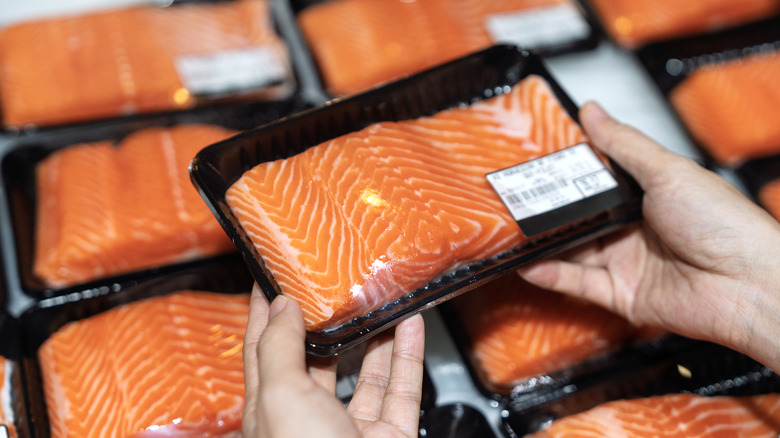
One of the most enticing things about salmon is its beautiful color. It can range from light pink to a vibrant reddish orange, creating a gorgeous pop of color on your plate. But what gives salmon its distinctive shade anyways? It's actually a pigment called astaxanthin, and it's the same thing that gives flamingos their pretty pink hues. Wild salmon get their astaxanthin from the shrimp, krill, and other crustaceans they eat. The brighter the color of the salmon, the more astaxanthin is present in the fish.
But the majority of salmon sold in grocery stores are farmed, and among the other differences between farmed and wild salmon, these salmon do not have access to the shrimp, krill, and algae that naturally provide the pigment. Without the cartenoids giving salmon their color, farmed salmon would be a white color, similar to most other fish. It's a safe bet that white salmon wouldn't sell as well as pink, so farmers add astaxanthin pigment to the feed that they use. This helps the farmed salmon develop a pink color that mimics the hue of salmon in the wild. Farmed salmon usually look more pink while wild have more of a bright orange or reddish color.
Is astaxanthin safe?
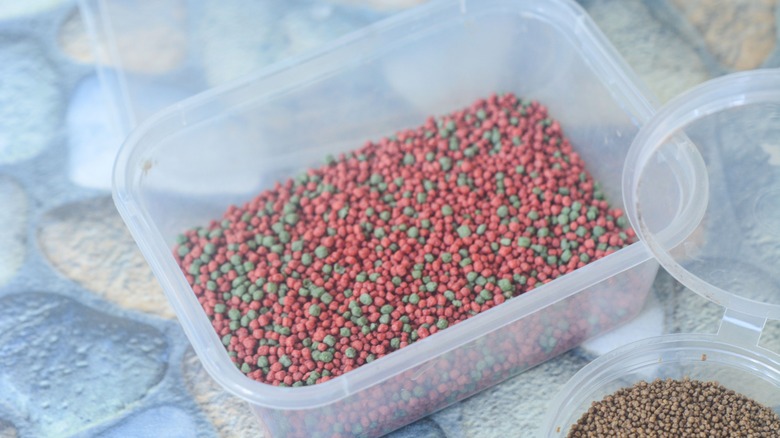
Salmon farmers use either natural or synthetic astaxanthin in their feed, and though both are considered safe, the long-term effects of synthetic astaxanthin are still unknown. For farmers going the natural route, pigment is achieved by adding ground up crustaceans to salmon feed. Alternatively, a chemical cartenoid is added. This is why many people believe that red dye has been added to their salmon, which is not exactly true, but it is true that a synthetic pigment has been added to the feed.
It's a healthier choice to eat farmed salmon that have been fed natural sources of cartenoids. The problem is that naturally derived astaxanthin is four times as expensive as synthetic, so the majority of farmed salmon has been fed pellets with chemicals. It's impossible to know whether your farmed salmon was fed naturally derived or synthetic pigment without doing research on the company that raised it, and sadly, regulations around labelling salmon as farmed are not strictly enforced. This is one of the reasons why you might want to avoid buying farmed salmon.
If you purchase wild salmon, you can rest assured that the color was naturally derived from the food it found in the ocean. Wild salmon are also significantly smaller than the farmed salmon, so they could be considered one of the fish with lowest mercury levels.