

The First Thing To Consider Before You Start Planning An Outdoor Kitchen
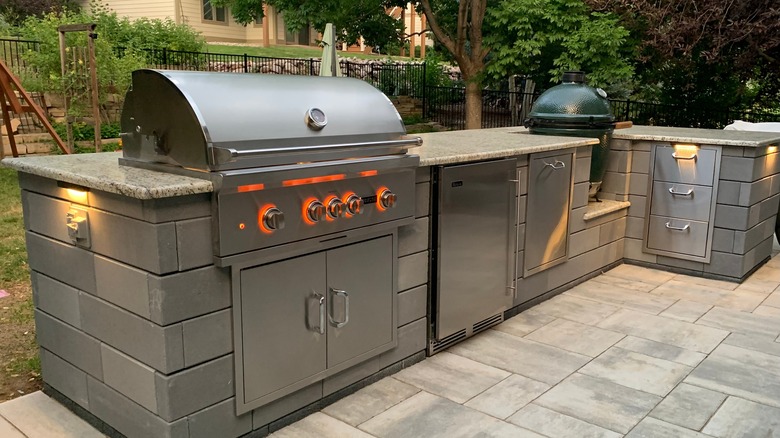
Fantasies of cooking homemade pizza and focaccia in the wood-fired oven and grilling in the open air make it tempting to pull the trigger on committing to an outdoor kitchen. If you have the patio or backyard space, why not? It seems straightforward enough — a table for eating, counter space for food prep, and a grill or outdoor oven. While outdoor kitchens are typically not as extensive as indoor ones, there's a crucial step you may be overlooking before you start planning out a design.
Chowhound spoke to Michel Hidalgo, director of BBQGuys PRO Sales, to understand what most people tend to skip over when designing an outdoor kitchen, and it's ascertaining whether you need a permit. Hidalgo explained, "Whether or not you need a permit for an outdoor kitchen depends largely on the scope of the project and local regulations." He added, "Requirements can vary significantly from state to state, and even between municipalities, so it's essential for homeowners to check with their local building department before beginning any work."
In general, you will likely need a permit if your outdoor kitchen involves more major construction, such as electrical or plumbing work, installing gas lines, and building a larger, more permanent structure, such as a roofed patio or pergola. Even if a permit is not required for any of this where you live, you may need HOA approval before breaking ground. Failing to get the proper permits can result in fines and even cause issues with insuring your home. If working with a contractor, they should be familiar with local codes and can assist with this process.
Designing an outdoor kitchen where permits are not needed
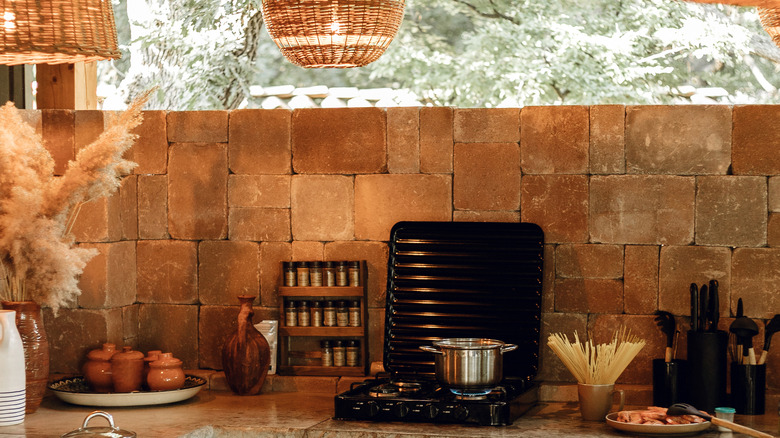
If getting a permit sounds like a pain, you can skip the process by using a design that doesn't involve permanent changes or new utility or water lines. While installing and connecting gas lines requires permits, a freestanding gas grill would not. A portable sink or any electric appliances plugged into existing outdoor outlets, such as a mini fridge, usually don't require approval. With that in mind, it makes sense that many outdoor kitchen designs are modular and are not permanently anchored to the ground.
Even though permits vary throughout the country, in general, as long as you're not digging, pouring concrete, building overhead structures, or installing gas, water, or new electrical connections, you're usually in the clear. If you rent your home, you typically wouldn't be able to do any of these things anyway! It's possible to purchase pre-fabricated kitchen kits that come on wheels or platforms, which help skirt the need for a permit — perfect for renters and those who don't want to commit to something permanent. You could even repurpose a stainless steel cart for your outdoor kitchen, using it for counter or storage space.
Michel Hidalgo leaves us with one more piece of parting advice for designing an ideal outdoor kitchen: "Don't rush into equipment purchases before fully understanding your space, layout, and use. A well-thought-out plan leads to fewer headaches, fewer changes mid-project, and better long-term enjoyment with your outdoor kitchen." This echoes the same sentiment of Martha Stewart's suggestion for building an outdoor kitchen — to be smart, practical, and not give in to impulse buys for flashy appliances and designs.