

How To Deep Clean Your Cherries The Right Way
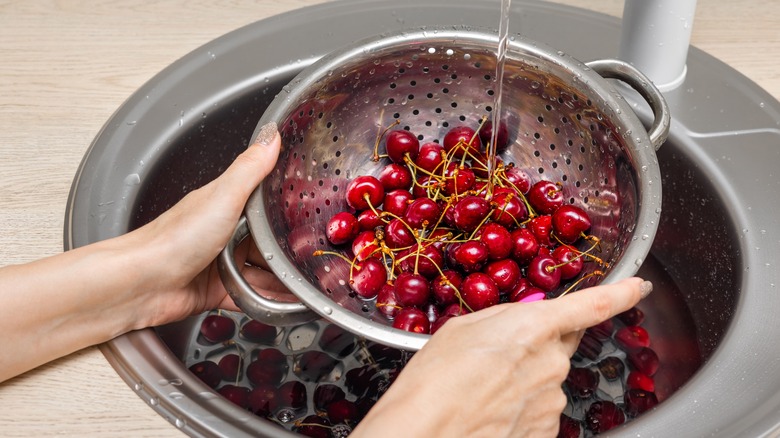
Summer fruit is one of our favorite parts of the season, so we've been eagerly anticipating digging into a bag of sweet, juicy cherries all year. But when it comes to washing these little pitted morsels, there's far less consensus. Some of us choose to deep clean all our produce with baking soda, others quickly run their fruit bowl under the faucet, and others may forgo the rinse altogether out of impatience. So what's the right way to prepare cherries for consumption? We asked expert Campbell Mitchell, the founder of food quality and safety management company Quest4Food.
The answer, Mitchell told us in an exclusive conversation, is that rinsing cherries under cool, running water right before eating is the best and simplest way to clean them. "There's no need for soap or commercial fruit washes — water alone is sufficient to remove most dirt, bacteria, and pesticide residues, according to the FDA," he advises. "Gently rub the fruit with your fingers during rinsing to dislodge contaminants." If you're concerned about surface microbes, you can also use a solution of white vinegar and water to soak cherries, much like you might do for raspberries, though Mitchell warns that this could negatively affect their taste without thorough rinsing. Whatever method you choose, he says, "Be sure to dry cherries with a clean paper towel or allow them to air-dry before storage."
Avoid these common cherry washing mistakes
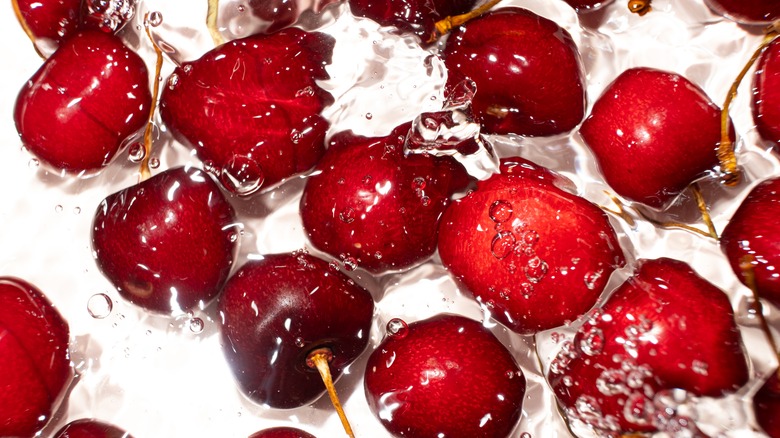
When it comes to washing fruits like cherries, there are a few ways people tend to go wrong. One big mistake would be skipping the wash entirely and eating cherries straight out of their packaging. As expert Campbell Mitchell explains, that's because "unwashed fruit may carry pathogens like Listeria monocytogenes, Salmonella, or E. coli, which can cause foodborne illness, especially in vulnerable populations." Though we may associate foodborne illness more with uncooked meat and animal products, unwashed produce also has a risk factor, according to the CDC.
Another common mistake is washing your cherries as soon as you buy them, rather than waiting until right before eating. "Washing them in advance adds moisture, which promotes mold growth and shortens shelf life," Mitchell says. This is also true of other produce, such as strawberries. For optimal freshness, store dry cherries in the fridge in a "breathable container," he suggests, and wait to wash until mealtime.
Now you know when to wash, but there are still a couple of pitfalls to avoid regarding how you wash. "One common mistake is using soap or detergents, which are not intended for food use and can leave residues," Mitchell advises. "Another is submerging fruit for long periods — while soaking can loosen dirt, it can also promote microbial transfer from one piece of fruit to another if not done carefully," he says. Remember to clean up debris around the stems, as well, and keep in mind that just because produce is labeled "organic," that doesn't mean you should skip the wash.