

Cover Salmon With One Condiment For Moist And Juicy Fish With A Crispy Crust
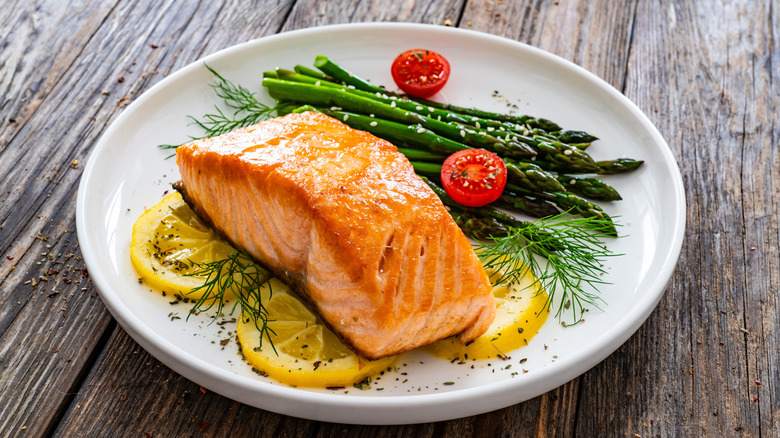
When you're cooking fish, even a relatively fatty one like salmon, it can be tough to keep it nice and moist because it's constructed of much more delicate proteins than chicken, pork, or beef. To cook a perfect salmon, you should probably start with some advice from a guide to buying salmon at the grocery store. Fresh, high-quality fish will always turn out better, however you cook it. But to avoid dry fish, you may want to try a common pantry or fridge ingredient that you may not have thought of, and one of many seasonings that will upgrade your salmon. Well, it's a condiment technically, and it will add more flavor and exterior crunch to your fish, while locking in its moisture. You should be adding mayo to your salmon to insulate the flesh and improve how it cooks with one simple step.
Using mayo on your salmon not only helps keep it wonderfully moist and tender, but it helps with the Maillard reaction to achieve nice exterior browning for a satisfying crust. Mayonnaise is typically made of oil, egg yolks, water, and an acid — usually vinegar or lemon juice. The acid content can help tenderize your salmon, but it's not too much that it will break down the proteins. And because mayo is mostly fat, it works great when cooking meat because it will up the flavor compounds in the fat, but cook down in the oven or on the grill, so your salmon fillet won't "taste like mayonnaise." So what do you need to know about cooking salmon with mayo?
How to prep your salmon with mayo
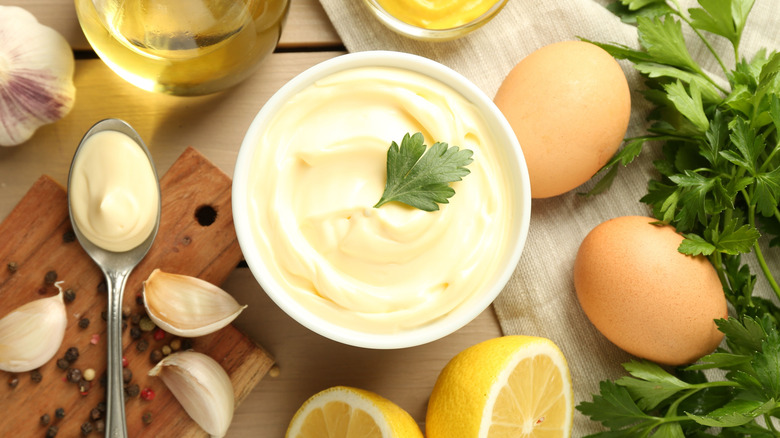
First of all, although it's a pretty simple and incredibly common condiment, not all mayos are created equal. You can check out Chowhound's ranking of popular mayonnaise brands to get an idea of what to use. If it's simply egg yolk, oil, water, and acid, you should be okay. You likely don't want anything with too much seasoning, so you can bring out the natural flavor of the salmon.
You can spoon or brush on your mayo, so the fish is coated, but not with a completely thick layer — more like a child's school art project made with Elmer's Glue than a sandwich fully covered in mayo. You want to see some white, but you don't want too much. From here, you can cook the salmon as you would normally.
A little bit of salt before the mayo goes on is all you need for the most natural flavor. Using a wet brine will help get perfectly flaky fish, or you can simply salt it right before it starts cooking. But you don't want to salt it more than a few hours or so beforehand, or the salt could draw out too much moisture. If it's frozen, let the fish thaw overnight in the fridge, and, whether fresh or frozen, let it sit out on the counter for about 15 minutes to let it reach room temperature, or just a bit cooler, right before cooking.
However you decide to cook your mayo-painted salmon, you'll be delighted with the results. It will have a nice brown, semi-chewy, semi-crispy exterior with all the delicious flavor locked in. And once you've had your salmon with mayo, you can try this trick with other proteins. It works great on pork, beef, and chicken, as well.