

The Science-Backed Way To Make Those Dirty Dishes A Breeze To Clean
We may receive a commission on purchases made from links.
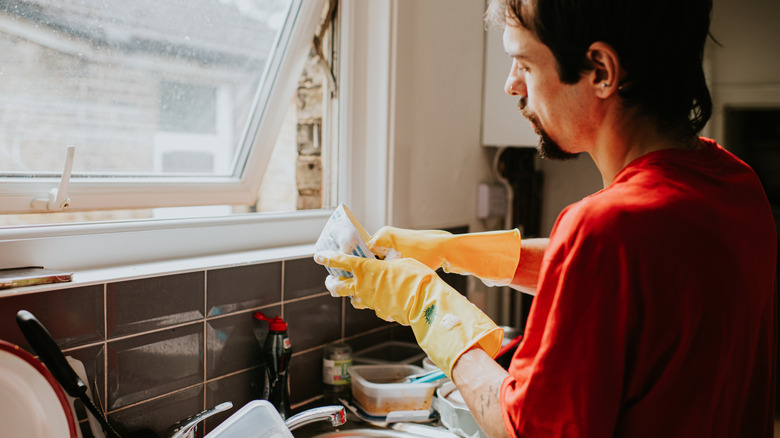
Nobody really enjoys washing the dishes. It's one chore most people religiously avoid, and almost always leave it to the dishwasher to deal with.
While there are some non-dish items you can toss in the dishwasher without fear, kitchenware splattered with dried sauces and baked-on messes often require some serious scrubbing in the sink. However, simply relying on a sponge and dish soap doesn't always do the trick. Using a steel sponge can make for the shiniest pots and pans, but it definitely requires some muscle. That's why most people resort to soaking the dishes in warm, soapy water. This helps break down stuck-on food and make cleaning a whole lot easier. But have you ever wondered why this little trick is so effective?
According to America's Test Kitchen, there's a scientific reason this practice works so well, and it involves a group of chemical compounds present in dish soaps known as surfactants. "Dish soaps use surfactants (little tadpole-shaped molecules with water-loving heads and oil-loving tails) to clean. The two parts encourage water and fat to mix, suspending oil droplets and other particles of food residue within tiny structures called micelles, which you scrub and rinse away," they said. The surfactants are acting as an emulsifier, helping the once immiscible water and oil combine so the grease can be scrubbed away instead of simply moved around.
How to properly soak your dirty dishes
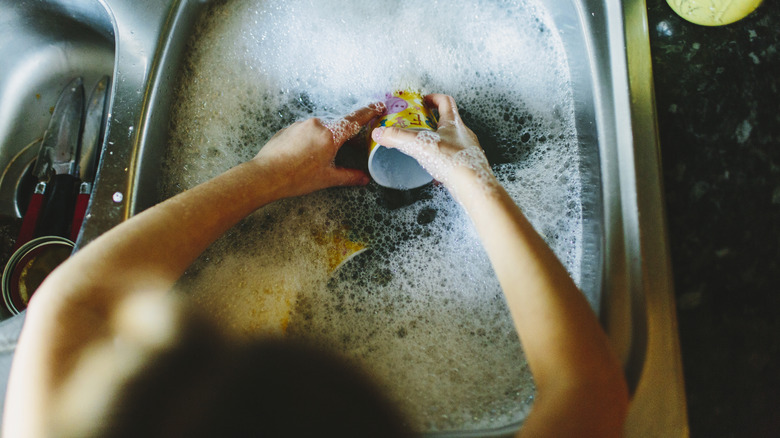
Thanks to the emulsification process, surfactants break the bonds between water and fat molecules, allowing them to mix. This is what enables dish soap to tackle and lift away even the toughest grime, leaving your dishes shiny and spotless.
While this might seem like a lot of science, it's a surprisingly simple process. To see it in action, start by filling your sink with hot water. You can also use a smaller container to soak your dishes, such as the Sterilite 12 Quart Dishpan. Next, pour a bit of liquid dish soap into the water. Keep in mind that you don't need to waste money on expensive dish soap brands. Budget-friendly options, like the kitchen products at Trader Joe's, will do the trick.
Scrape off any leftover food from your dishes into the trash, then leave the plates to soak in the water for roughly half an hour. (Actual soaking times will vary depending on how soiled your dishes are and the type of food that's stuck to them.) Once you see that the residue has loosened, drain the sink and rinse the dishes thoroughly under warm running water. Now let the dishes air dry on a drying rack, or use a clean kitchen towel to gently dry each one by hand. Avoid soaking wooden, cast iron, or nonstick kitchenware, because prolonged exposure to water can shorten their lifespan and cause them to swell or crack.