

The Nori Clue That Tells You Sushi Has Been Sitting Out Too Long
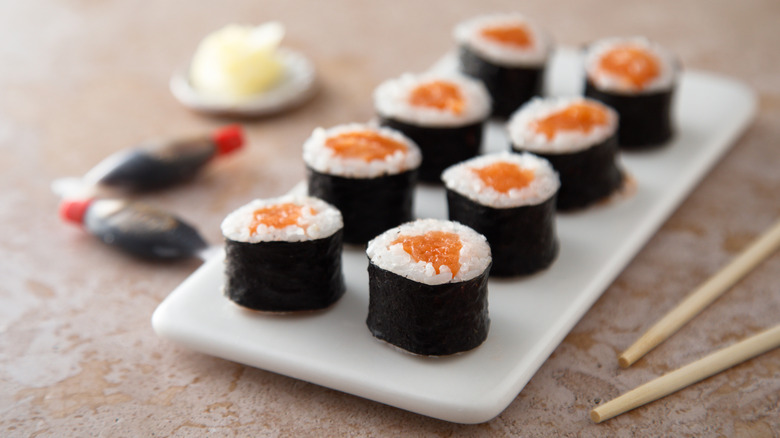
There are few things more satisfying on a balmy summer day than a fresh, tender maki roll. Intended to be enjoyed cold or at room temperature, sushi is delicious any time of year, but particularly when the weather is warm. There are even tips and tricks for maintaining the texture of homemade sushi rolls, if you're up for a culinary adventure. If not, sushi is now so popular all over the United States that you can find freshly made maki or temaki (cone-shaped hand rolls) at many popular grocery store chains.
Though these premade offerings are always refrigerated and timestamped to maintain freshness, it's important to do your own assessment to make sure you're purchasing fresh, high-quality sushi. In particular, if the nori paper (seaweed wrapping) on the rolls you're eyeing is mushy, you should give it a pass. Soft nori may indicate the sushi has been sitting out for too long, meaning the taste and freshness could be dangerously compromised.
When wrapped around fresh sushi, nori paper is stiff and sturdy, holding the roll together while still being tender enough to bite through easily. Over time, however, the nori gradually leaches the moisture from the rice and sushi filling, becoming wilted and pulling away from the roll. Sometimes it will also have little beads of condensation on the outside, showing that the roll has begun to dry out or, even worse, started to spoil. When eaten, mushy nori will be weirdly stretchy while also tough to bite through and will sit loose on the roll.
Assessing the freshness of your sushi with all 5 senses

If you're questioning the freshness of grocery store sushi, it's probably best to cross that particular location off your list and enjoy freshly made fare from a sit-down restaurant. With just a touch of practice, you'll be ordering Japanese sushi like a pro. However, one bad experience doesn't mean all pre-made sushi is a health crisis waiting to happen. Sometimes nori separating from the roll simply means it wasn't sealed tightly enough, or you may be faced with a batch of reverse rolls where the nori is tucked inside next to the fillings, with the rice on the outside.
In these cases, you'll have to use other cues to ensure you're getting the best possible product. Visually, the fillings should look fresh and bright, especially in raw sushi like salmon or tuna rolls. Dry or wilted and opaque fish indicate spoilage, as does an odd oily or slimy sheen. If all else fails, don't be afraid to pick up the package for a closer look — and a good whiff. Excess liquid in the bottom of the container is a big no-no, along with an overly fishy or sour smell.
Of course, even when you find fresh, tasty-looking sushi from your grocery store's cooler section, most refrigerated rolls still suffer from dry, crumbly rice. The best way to improve the taste and texture of store-bought sushi is to microwave it for just a few seconds, which will soften the rice nicely.