

Sunflower Seeds Are An Unexpected Weed Killer, But Here's What You Need To Know Before Using Them In Your Garden
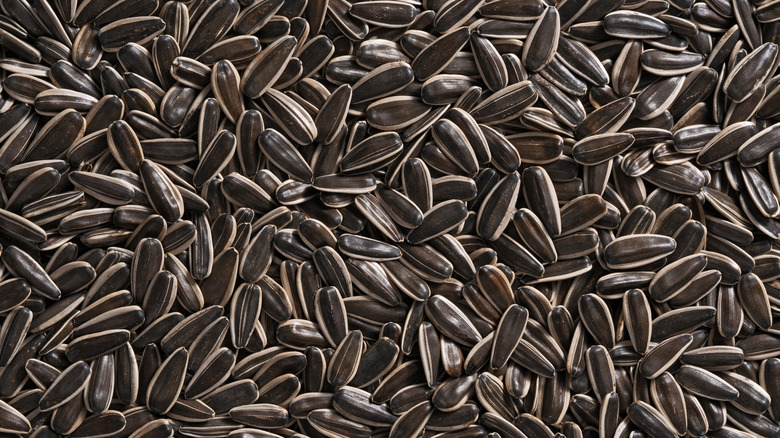
There are a number of hacks for mitigating the growth of or killing weeds, but we have one that may be new to you. It combines a classic baseball game snack and some fascinating biology for a simple solution to a common problem that plagues even veteran green thumbs. As it turns out, sunflower seeds can work as natural weed control to inhibit plant growth — but read on before you try this in your own garden, because expert Garden Designer and Gardenwell educator Kiera Faulkner Jekos shared with Chowhound some words of warning.
"Sunflowers release natural compounds [called] phenolic acids that inhibit seed germination," Jekos explained. "The challenge is that it's non‑selective. It can inhibit weeds, but it can also affect vegetables and flowers you want to grow." In other words, if you plant sunflowers in your garden boxes, the weeds nearby might die, but so might your nearby tomatoes, your basil, your snap peas, and so on. It may not be the perfect method for a functional garden, but if you're trying to form a gravel pathway free of any plants, weeds, or otherwise, planting sunflowers to line the path or generously sprinkling sunflower seed hulls along the path might help. Keep in mind that research about this technique is limited, so if you do decide to try it out, it'll likely be a bit of backyard science, trial and error. Regardless of the outcome, there is a bonus benefit: You'll get a protein-rich snack once the sunflower seeds are ready to harvest.
Other natural ways to ward off weeds
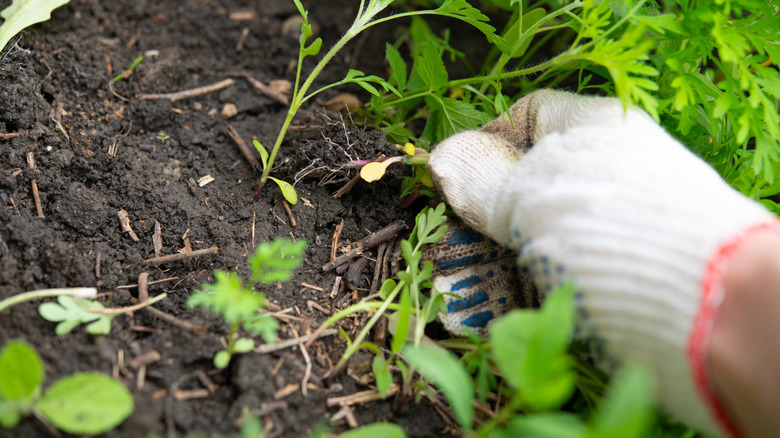
If this all-natural hack is a bit of a bust, don't worry. Kiera Faulkner Jekos has some other all-natural tricks up her sleeve. Beyond simply weeding by hand, which Jekos said is still, unfortunately, one of the best ways to deal with weeds while protecting your plants against damage and simultaneously helping get rid of garden pests, she also shared her personal recipe for a chemical-free weed spray.
For her special spray, Jekos mixes together a gallon of horticultural vinegar, which dries out plant cells via acetic acid, one cup of table salt, and one tablespoon of liquid dish soap. She sprays the mixture on the area to be cleared, especially gravel garden pathways that have been overrun with weeds. "This spray works more slowly than commercial herbicides," Jekos admitted, but said it's worth the extra time. "It can take a few hours, but I would never recommend risking your health or your ecosystem's health by using chemical weed sprays in or near food gardens."
Her final, all-natural tip? Making sure the plants you choose to grow in your garden are spaced close together enough that there isn't room for weeds to take up residence, a method known as intensive planting. "The goal is to space plants so their canopies meet once fully grown, which is not the same as crowding," Jekos explained. "In natural plant communities, this layering is what keeps the soil covered."