

Here's When It's Best To Grill Shrimp With The Heads On
We may receive a commission on purchases made from links.
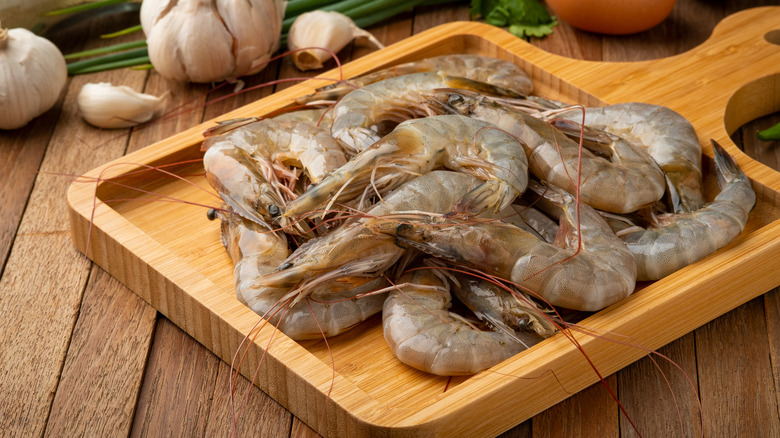
Making anything on the grill can be a bit tough when you're not firing it up regularly and comfortably in expert territory. You can get some solid tips from a beginner's guide to grilling like a master for all-around general advice. But certain items on the grill, like shrimp, can be even tougher to master. To grill shrimp perfectly every time, you need to get your heat right and, most importantly, leave the shells on so the flame doesn't dry out the flesh. But when is it appropriate to leave the heads on your shrimp? We reached out to Lindsey Baruch, founder of Lindsey Eats and author of "Something Delicious: 100 Recipes for Everyday Cooking," to give us the expert advice.
Baruch says, while you can go with the head on or not, "...there is a lot of flavor in the head of the shrimp, so if you're able to access head-on shrimp, I would recommend it." Even if you can't find head-on shrimp, Baruch says to always go with shrimp still in the shell on the grill, because "...it keeps the structure and flavors of the shrimp trapped under the shell, so when you peel off the shell to eat it, it's filled with flavor and doesn't dry out." In a nutshell, if they aren't too hard to come by, grilling shrimp with the heads on is probably the best bet.
Why it's best to grill shrimp with the heads on and how to season them
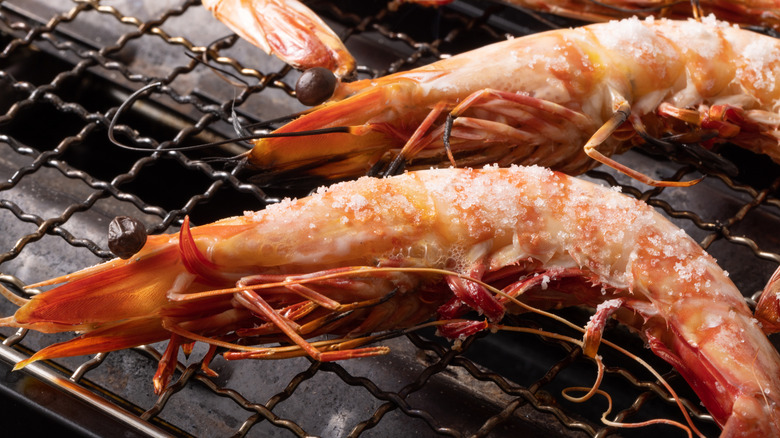
Not only will grilling your shrimp with the heads impart more flavor, but it also works as an added barrier against the flame to hold in more moisture, just like the shells. They'll come off the grill tender and juicy with a nice, crispy snap, rather than dry and rubbery. Additionally, shrimp heads can add a whole new aspect to the meal. Before you peel the whole shrimp, take off the head first and suck out all the delicious juices contained within. The heads are full of flavor, like a quick blast of seafood bisque.
As for the seasoning, there are some good and bad marinades for grilling shrimp. You don't want something too acidic because it could start to break down the proteins and "cook" them before they ever hit the grill. Lindsey Baruch recommends sticking with salt, pepper, and olive oil. "Then I finish my flavor profiles once the shrimp is done," she says, "such as brushing on butter or tossing in more spices."
Adding extra seasoning after they've cooked will avoid burning them on the grill — too much liquid marinade or dry coating will give the grill's flame extra fuel that could just leave them scorched. However, Baruch says, "This will also vary if you are using shell-on or not. Shell-on shrimp can hold a bit more seasoning without burning. If you choose to do a wet brine, make sure it's completely dried off before grilling." So, for perfectly grilled shrimp, you should probably keep the heads on and not go too heavy on the marinade, but if you keep a careful eye with the shells on, you can get away with a little experimentation.