

The Halal Dish That Became One Of NYC's Most Iconic Street Foods
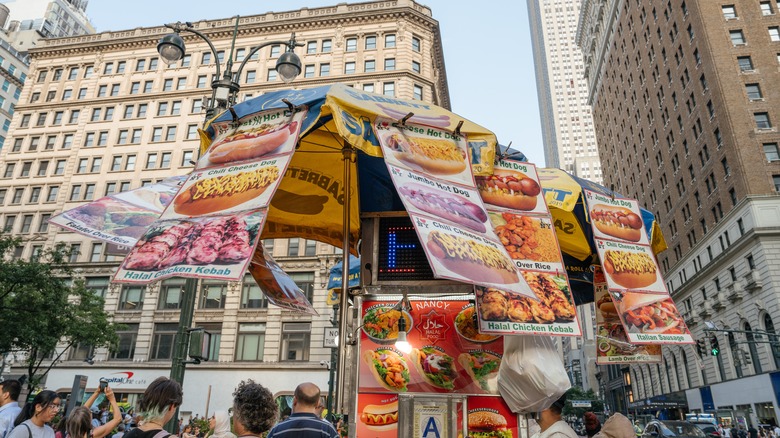
In many ways, a city is a reflection of its street food. Hanoi — the bustling, chaotic capital city of Vietnam — bowls you over with dishes like pho, known for their bold, complicated flavors. In London, you'll find an eclectic mixture of cultures and flavors. In New York, meanwhile, the street food scene has long been ruled by hot dogs and pizza — now American classics, but once beloved dishes in central and Eastern Europe. Now, though, there's a new street food staple that has come to define the New York of the 21st century: halal cart chicken and rice. Flavorful, savory, complex, and spiced to perfection, it's a dish that you can find on practically every block in the city, but how did this vibrant dish go from immigrant comfort food to a true NYC essential?
Born in the '80s out of a need to feed the ever-growing Muslim population in the city, particularly Egyptian taxi drivers, halal carts began cropping up around the city, serving affordable, delicious, halal-compliant meals. ("Halal" refers to food prepared according to Islamic dietary laws — similar to kosher laws in Judaism.) These carts weren't just about convenience; they represented cultural connection and comfort. In 1990, on the corner of Sixth Avenue and 53rd Street, The Halal Guys set up shop, and their take on the dish, with their generous portions, signature white sauce, and mammoth queues, turned it from a lunch into a legend. For foodies visiting the city, that cart remains a must-visit spot, and a poignant reminder of the dish's humble roots.
What exactly is in halal chicken and rice?
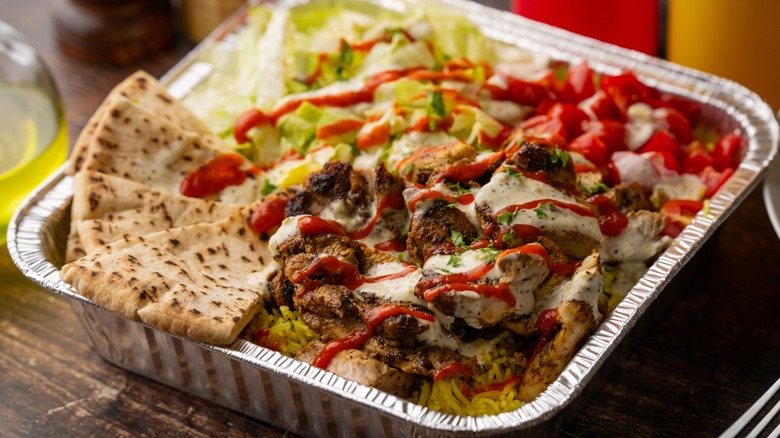
While each vendor will, of course, put their own spin on this legendary dish (like other street food icons in the city, such as New York-style pizza), there is a consistent structure to the dish — and a few absolute essentials. It starts with marinated chicken — spiced with garlic, coriander, paprika, and chili — grilled until golden and served over bright yellow rice, often colored with turmeric or saffron. Fresh salad (typically lettuce and tomato), soft pita bread, and two sauces finish the plate: the iconic white sauce (a tangy, creamy mix of yogurt, mayonnaise, and garlic) and a vivid red hot sauce that pulls no punches.
Its flavors recall shawarma, gyro, or even South Asian biryani (all dishes that are popular amongst immigrant communities in New York) — but like the diverse communities it feeds, these disparate influences have been fused into something distinct. That's the beauty of this dish: It's born of traditions from Egypt, Afghanistan, Turkey, and beyond, but its current form is unmistakably New York.
The halal cart is a cultural fixture of New York
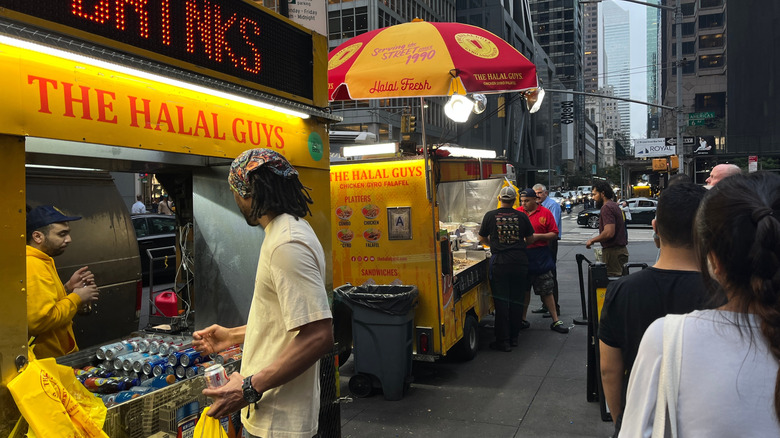
The halal cart chicken and rice is a staple of New York's cultural and culinary scene. Portable, affordable (often under 10 bucks for a plate), fast, and filling, it's a street food uniquely suited for the diverse, fast-paced, flavor-obsessed city that it calls home. You'll find halal carts on street corners across all of New York's five boroughs — they're as omnipresent as bagels or dollar slices. But, like other iconic street eats, this isn't just about the food. Halal carts are part of a much longer legacy: immigrant-driven street vending that shaped the city's culinary DNA.
From German pushcarts in the 19th century selling frankfurters (the precursor to the modern-day hot dog), to Italian and Jewish delis, and today's halal carts run by Egyptian, Bangladeshi, or Afghan vendors, NYC's street food has always been fueled by newcomers bringing taste and tradition with them. The halal platter's popularity lies in its accessibility — fast, cheap, customizable — but its staying power comes from something deeper. It reflects who New York is now: diverse, layered, always on the move, and unapologetically bold in flavor.