

Here's Exactly When You Should Salt Salmon For Maximum Flavor
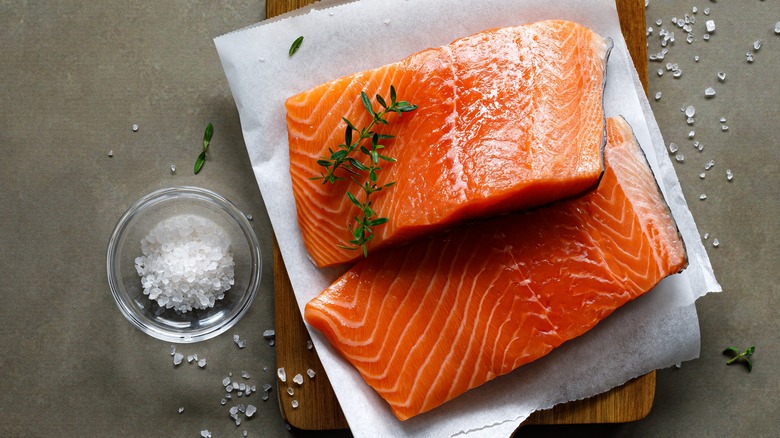
Sometimes cooking salmon can be a little intimidating. You need to know what's fresh, how to thaw it if frozen, and the best way to season it to bring out its natural flavor. There are mistakes to avoid when cooking salmon, like removing the skin or overcooking it entirely. To make sure it's super fresh, you can learn how to tell if salmon is bad; you want a nice bright color, and you should avoid it if it's starting to look gray. But when it comes time to salt your salmon for ultimate flavor, when should you do it?
For a little help on the subject, we reached out to Alekka Sweeney (@chefalekkapgh on Instagram), a professional chef and instructor in Pittsburgh, Pennsylvania. "Seasoning the fish is important; you want to do this after it's thawed, at room temperature and dried," she said. She noticed that salt works great, but you can add more seasonings if you'd like, which should be right before cooking. "This will help bring out the moisture to ensure the salmon isn't dry after it cooks," Sweeney said.
Although some recommend salting it for a few hours or longer before cooking, the longer salmon sits in salt, the dryer it will get. While a full salt cure can be appropriate for a smoked salmon, if you're planning to grill, bake, or pan fry a fresh salmon, you don't want the salt to draw out too much moisture. And since we have the expert available, we asked Sweeney for a few more tips on cooking salmon.
How to prep and cook your salmon for the best flavor, whether fresh or frozen
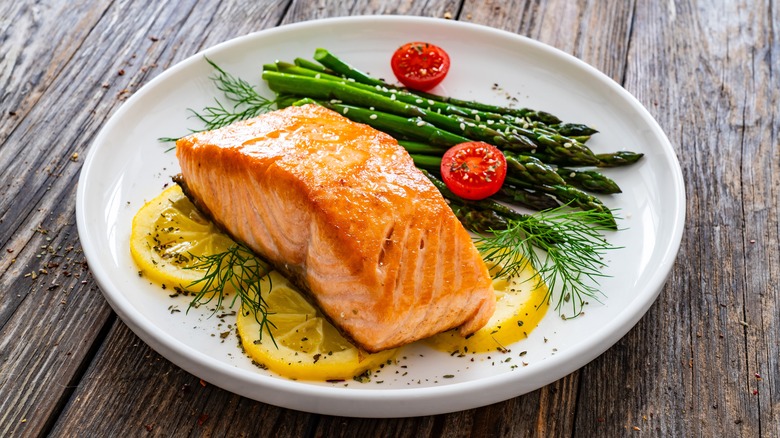
While a sprinkle of salt is perfectly acceptable to amp up its natural flavor, there are a number of seasonings that will upgrade your salmon. Lemon and dill are obvious choices, but Alekka Sweeney warns against overseasoning. "You want to taste the salmon, especially if it is high quality and fresh," she said.
If you buy frozen salmon, Sweeney recommends thawing it in the fridge overnight. And if fresh, you should take it out of the fridge 15 to 20 minutes before cooking to get it to room temperature. "If you're a fan of crispy skin like me, make sure to pat the fillets dry with a paper towel," she said. "Less moisture equals crispy skin."
A common mistake that Sweeney sees cooks make is not allowing the salmon to reach the correct temperature due to unfinished thawing. According to the chef, salmon should reach an internal temperature of 125 to 130 degrees Fahrenheit for medium rare, or 135 to 145 degrees Fahrenheit for well done. "You also want to check the fattiest part of the fillet [with a meat thermometer] to ensure proper temperature," she said. "Let the salmon rest uncovered for five to seven minutes after baking to ensure the juices redistribute, and you are not steaming the salmon."