

How To Fix The Bitter Taste In Arugula
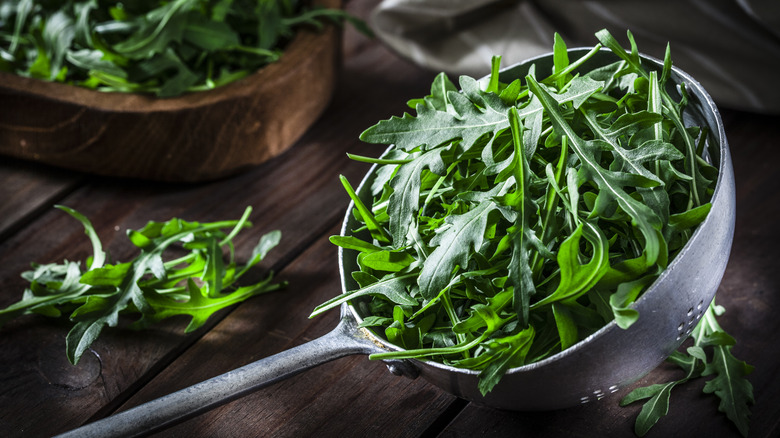
Arugula, a member of the mustard green family, is known for its distinct, peppery bite. Whether you do as the Italians do and add the leafy green as a pizza topping, toss it in a fresh salad, or blend it into a pesto sauce, cooking with arugula adds a healthy dose of vitamins and minerals to your meals.
However, for others, arugula's characteristic flavor might not be your cup of tea. After all, some of us are more sensitive to the green's pungent notes due to our genetics. Chemical compounds in arugula called isothiocyanates are responsible for the piquant flavor. They're the same molecules that make broccoli rabe taste so bitter. Compounds called glucosinolates and myrosinase also contribute to the bitterness, as they turn into isothiocyanates once chewed.
Thankfully, there is a way to tone down all this bitterness. The trick is to give the greens a brief blanch in boiling water. Some of the water-soluble glucosinolates are pulled out of the leaves, while the heat renders myrosinase inactive, according to a 2025 study published in the Foods journal. This reduces the amount of isothiocyanates, and hence, the bitterness. After blanching, give the greens a cold plunge in ice water to prevent further cooking from the residual heat, which would result in wilted leaves. The ice water bath also helps preserve some of the crisp texture of the greens, so the less-bitter arugula can be served in salads, grain bowls, or eaten plain.
Other ways to mute arugula's bitterness

Isothiocyanates, the chemical compounds responsible for the bitter taste in arugula, might seem like an enemy to those with sensitive taste buds. However, a 2023 study published in the International Journal of Molecular Sciences points towards its anti-cancer and anti-inflammatory properties. With that in mind, perhaps it's worth exploring other ways to subdue the pungency of arugula so you can enjoy a meal with some added benefits.
You can still savor arugula's peppery bite with a mellowed intensity by working with different ingredients to counterbalance the bitter flavors. One of the easiest tricks in the book is to pair arugula with an ingredient that has a kick of acidity. A splash of lemon juice or a drizzle of your favorite vinegar can bring a livening contrast to the bitter leaves. Another reliable tamer of bitterness is fat. A good-quality olive oil or creamy condiment you should always have on hand for salad dressings can help minimize the perception of bitterness while creating a silky mouthfeel.
Adding sweetness is a solution as well — think a maple mustard dressing, or a fruit-based vinaigrette. Next, reach for every household's flavor-enhancing friend: salt. A light sprinkle can help suppress bitter flavors and draw out arugula's savory, nutty qualities. Level it up with some truffle salt for a gourmet vibe, or some garlic salt. Once you've figured out the balance that works best for you, nothing is stopping you from whipping up nutritious, arugula-based dishes.