

This One Simple Move Will Make Your Grilled Cheese Melt Like A Dream
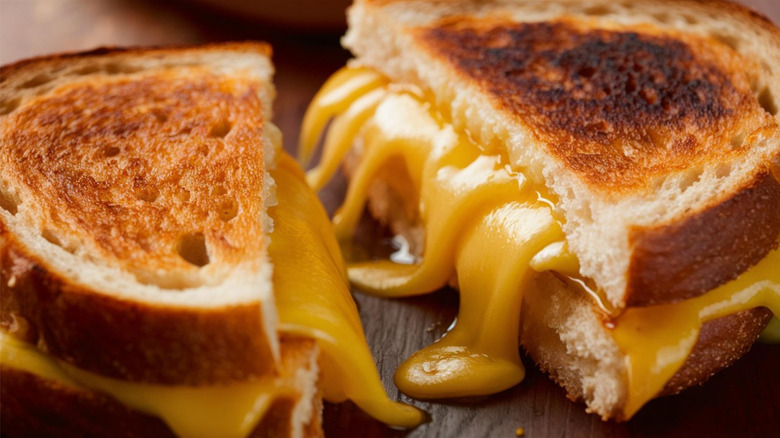
Crispy grilled cheese is one of those foods that feels like it should be impossible to mess up. Bread, butter, and cheese hit the pan, and done! But if you have ever sliced into your sandwich only to discover that the bread is golden but the cheese is still stubbornly unmelted, you are not alone. Turns out, there's one tiny move that makes a huge difference when melting that cheese, and once you try it, you will wonder how you ever lived without it: cover the pan with a lid while cooking. That's it. Seriously ... just a lid.
Here's why it works. When you throw your sandwich into a hot pan and leave it uncovered, most of the heat hits the bread directly from the bottom. That crisps it up nicely, sure — but it leaves the cheese in the center relying on slow, indirect warmth to get gooey. By the time it starts to melt, your bread might already be pushing into "too brown" territory.
Add a lid, however, and suddenly your pan becomes a mini oven. Heat gets trapped and circulated, warming the top and sides of the sandwich evenly. This creates a gentle, all-around heat bath that gives the cheese a head start while the bread toasts below. It's the same principle that restaurants use when they throw a metal cloche over a burger on the griddle to melt a slice of cheddar in seconds. But here, you don't need fancy equipment. Just whatever lid fits your skillet.
A tiny tweak that changes everything
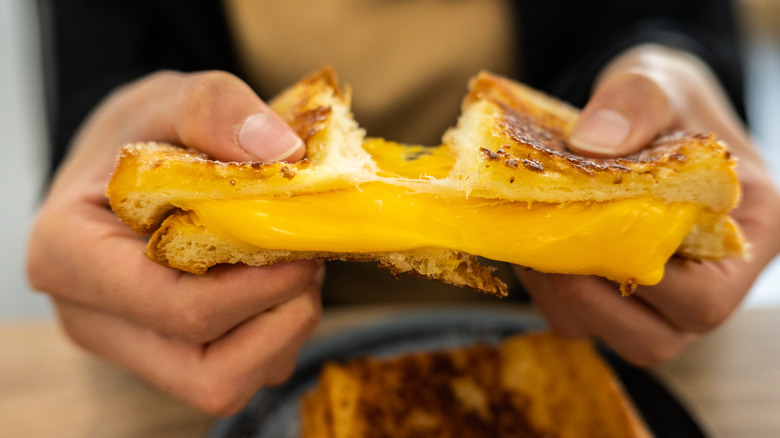
This lid trick isn't about rushing the sandwich, it's about control. With the heat circulating more evenly, you can dial the burner down slightly and give the cheese time to melt into that perfect, stretchy consistency without burning the bread. No more cheese that's barely soft while your crust verges on crouton.
Want even more melt-magic? A splash of steam can help. Some cooks like to add a few drops of water to the pan just before covering. Nothing wild, just enough to encourage a little steam buildup under the lid. It's a micro-hack borrowed from diner griddles and burger joints, and it works wonders on thicker sandwiches and wraps, or if you're using firm cheeses like aged cheddar or gouda.
Also, don't underestimate the value of balance. If your sandwich is packed with fillings like store-bought pickles, tomato slices, ham, or sweet ingredients like jam for a killer grilled cheese, this method becomes even more essential. The extra mass inside the sandwich needs a bit more heat to get everything warm, gooey, and cohesive. Covering the pan ensures you are not biting into a sandwich with crisp edges and a cold center.