

This Is Why Your Garden Keeps Growing Thin Carrots (And What To Do About It)
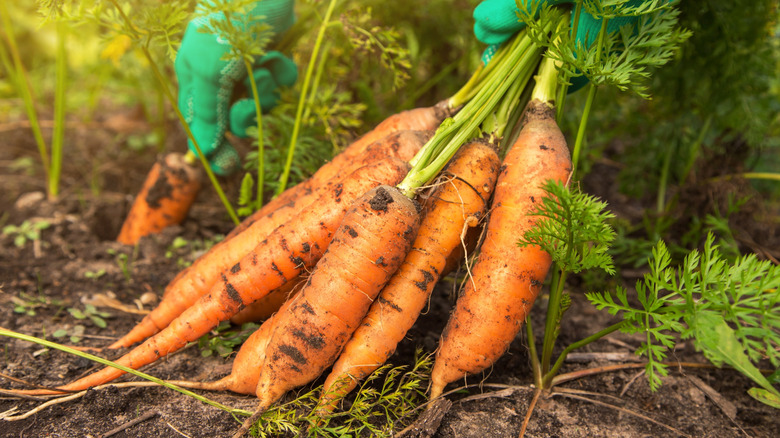
Growing your own vegetables is a rewarding experience. However, if you're a beginner gardener, it can be a struggle trying to avoid making rookie mistakes when starting your vegetable garden. These mistakes can affect the quality of your crop, causing vegetables like carrots to become thinner and less than ideal come harvest time.
One of the most common causes of thin carrots is overcrowding. Carrots are prone to this due to how small their seeds are, which makes it difficult to space them out properly when seeding. Regardless of whether you prefer to plant vegetables in a pot or in a garden bed, if carrots are kept too close together, they will lack proper room to grow, which eventually results in them being thin. You can combat this by thinning out your seedlings. Once they are about 2 inches tall, pull out your smaller carrot plants until the remaining ones are spaced apart by 2 to 3 inches, or roughly the width of two fingers. Thinning out carrots means the leaves don't need to compete for sunlight and the roots won't be overcrowded, potentially strangling each other.
Understanding how to properly care for carrots can ensure you have a sizable, satisfying harvest. There are a few other helpful tips to keep in mind if you're a beginner gardener working with carrots for the first time.
Other important tips for how to get bigger carrots
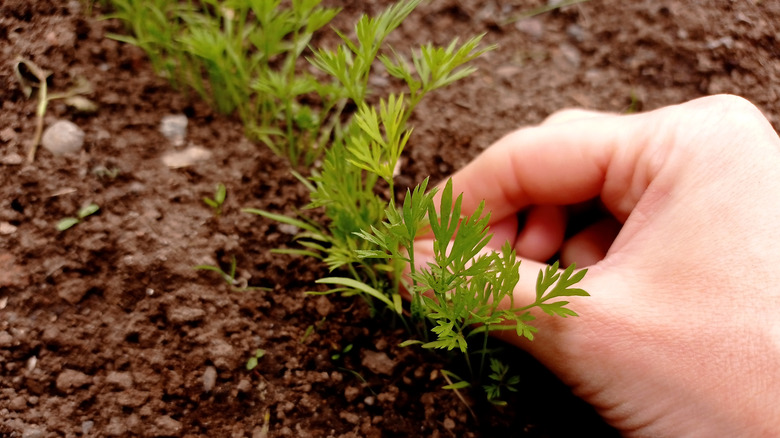
Like all plants, carrots have a specific set of needs that, when met, can produce a better-quality harvest. In addition to having enough space between each one to grow, this means providing the carrots with enough water and making sure they have nutrient-rich soil. To start, you should plant carrots in soil that is very loose and aerated. Soil that is too stiff will stunt their growth, while light and loose soil makes it easier for the roots to grow deeper with a consistent, uniform shape.
Be sure to provide enough water and nutrients to encourage growth. Soil should remain moist but not water-logged; to help keep the dirt moist, you can add mulch or a layer of compost around the carrot plants. When watering, be sure to water deeply enough so the roots are encouraged to grow longer. As for nutrients, use a balanced or low-nitrogen fertilizer every three to four weeks, starting roughly two to three weeks after the carrot tops are visible in the soil.
Last but not least, be mindful of how much the carrots are exposed to heat. Carrots thrive in a temperature range of about 55 to 75 degrees Fahrenheit; if the carrots get too hot, the plant becomes stressed, which results in the roots becoming smaller and yielding thin carrots.