

Thrifting Uranium Glass Is A Win, But Is It Safe To Eat And Drink From?
We may receive a commission on purchases made from links.
For those of the thrifting persuasion who love giving new life to vintage treasures (and thrift stores are teeming with useful kitchen gadgets at killer deals), what's old is new again. While you're combing through shelves of secondhand stores, it pays to have a little knowledge of the safety of retro kitchenware you plan to use.
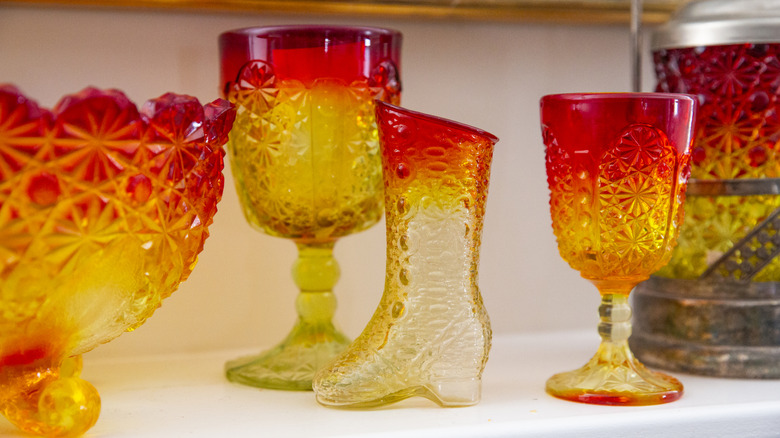
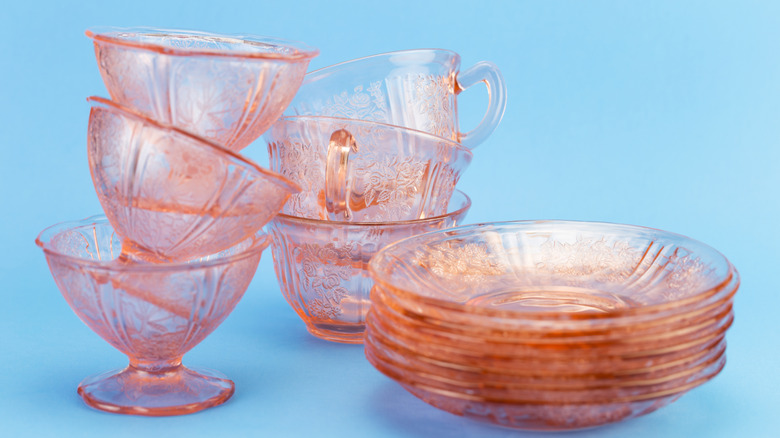
For example, uranium glass is a serious but questionable score, should you see it at your local thrift shop or an estate sale. The translucent, delicate glassware is striking, offered in a variety of distinct patterns in vibrant shades of green, yellow, blue, pink, or clear. What really sets the style of glassware apart is the fact that it's treated with uranium oxide, a chemical added to the melted glass during the production process as an affordable way to add vibrant, radioactive color.
And we don't use the term radioactive hyperbolically here — the glass technically is indeed radioactive, though only containing trace amounts of uranium. While this sounds alarming, the radioactive exposure from a uranium bowl or cup is generally considered to be negligible and safe, with safety experts stating the exposure one would get from dining off of uranium glass as far, far less than the radioactivity from one flight or x-ray. The EPA's official guidance, though, is to avoid eating and drinking out of it altogether, likely taking a "better safe than sorry" approach, warning that glassware could chip and distribute particles of uranium into food and drink.
Uranium glass has a place in modern kitchens, even if not to eat off of
At the end of the day, the choice to eat off of the vintage glass or not depends on your comfort levels, research, and risk aversion. Of course, people have been eating and drinking off of it for hundreds of years — and some enthusiasts still do — though you should certainly use extreme caution, like never chipping or microwaving, should you decide to add it to your dish rotation.
The style of glassware was produced and popular in homes from the 1880s to the 1940s, available in various iterations and styles. You may have heard of uranium glass referred to as one of its many other names, like depression glass, canary glass, or vaseline glass. Each refers to different eras, styles, or colorways of the glass. To check if the glassware qualifies as uranium glass, simply shine a black light on it in a dark room (you can purchase inexpensive black light flashlights online, like this Vansky UV Flashlight). If made with uranium, the glassware will emit an unmistakable glow-in-the-dark green. And no, if you're wondering, folks during the uranium glass heyday in the 19th and early 20th century wouldn't have had access to UV lights, so they had no idea of its glowing properties.
If eating off the glassware gives you pause, you can always still showcase the stunning beauty of these antique pieces in your home as decor. Showcase their uniqueness as practical and beautiful countertop decor, as a vase for flowers, or as eye-catching, colorful additions to china cabinets.