

Why It Takes Up To 3 Weeks To Make A Jelly Bean
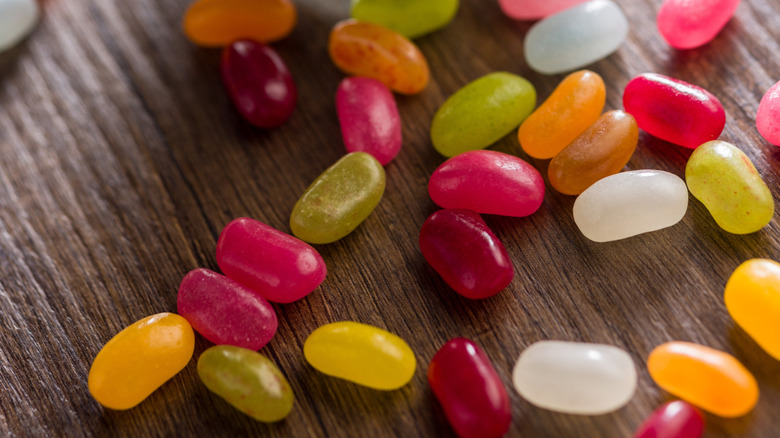
They're bright, bite-sized, and seemingly simple, but jelly beans are anything but quick to make. Though they disappear quickly during your movie night in or at birthday parties, producing them is a slow, methodical process that can take up to three weeks from start to finish. The process behind these chewy treats is surprisingly elaborate. According to the National Confectioners Association, just creating the jelly bean center takes several days. The base mixture — a hot blend of sugar, corn syrup, and starch — is poured into cornstarch molds that give the candy its iconic bean shape. Once molded, the centers are left for at least 24 hours to firm up before they move on to the next stage.
The shell is the element that requires the most time and care. In a multi-day process called panning, the jelly beans are repeatedly tumbled in rotating pans as they're coated with sugar syrup, flavoring, and food coloring. It's a delicate balance of adding just the right amount of coating while allowing each layer to dry before the next begins. This part alone can last for several days, depending on production volume. After the shell is complete, these notably gluten-free candies get their iconic shine through a final polishing with a food-safe wax.
The texture of jelly beans takes time to create
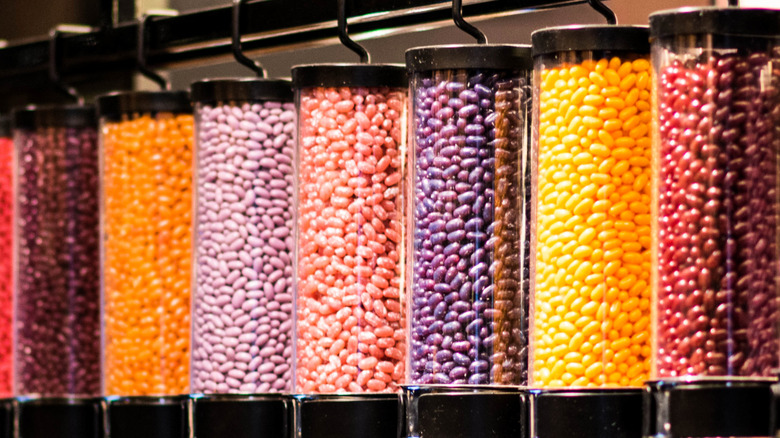
Why does it take so long to make jelly beans? Achieving the perfect ratio of crunchy shell to chewy center requires precise timing, temperature control, and patience. Rushing any step of the process, especially the coating and drying, can lead to an uneven texture or misshapen bean. The temperature, humidity, and timing have to be just right to prevent clumping or cracking. After flavoring, jelly beans go through multiple rounds of coating and polishing, a process done over several hours by alternating a flavored syrup with sugar. Each layer must dry completely before the next can be added, ensuring a smooth texture and glossy finish.
The journey doesn't stop there. Packaging and distribution bring their own challenges, especially during seasonal peaks, such as the spring when the Easter candy tradition is in full swing. Production facilities often create dozens of flavors and colors, which means machines may have to be thoroughly cleaned and reset between batches to prevent cross-contamination. And logistics teams must manage storage, freshness, and flavor variety, all while ensuring the beans reach shelves in perfect condition. In the end, that tiny jelly bean is the result of flavor science, manufacturing precision, and a lot of craftsmanship. So, the next time you reach for a jelly bean, remember: It might be small, but it takes a lot of time and attention to create.