

The Key Differences Between Rib Tips And Ribs
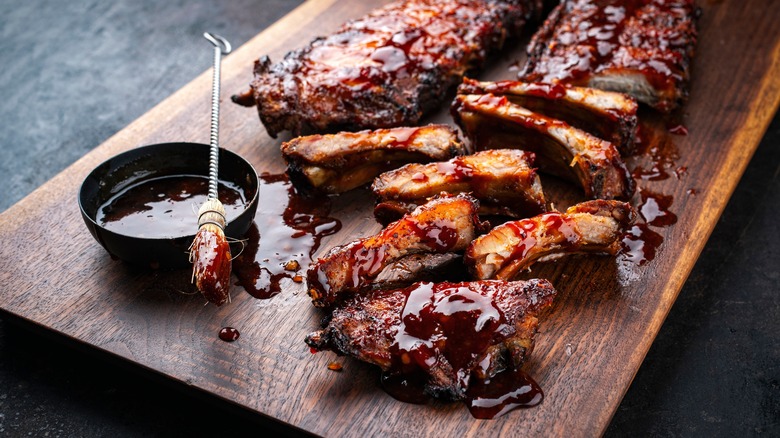
You may think that when it comes to pork, ribs are ribs are ribs. But the difference in taste, texture, and price can be profound depending on where on the hog those ribs came from. Starting at the top of the rib cage, stretching out from just beyond the spine are baby back ribs, a BBQ favorite best known in America as being lean and tender. They're also called "baby" because they are short, not because they come from a baby pig. Curving further down around the pig's belly are the spareribs, larger and richer than the baby back, but tougher if they aren't cooked right. And then there's country-style ribs, which aren't even ribs at all, but chops from between the loin and the shoulder. So where does that leave rib tips? Exactly where they sound like they're from: the very tip of the bottom of the spare rib.
In the mid-20th century, butchers from the meatpacking hub of St. Louis trimmed the large, ungainly spare ribs into a more attractive square cut product that removed the uneven-looking, cartilage-heavy end pieces. The ribs were flatter, easier to cook, and commanded a higher price. They were sold across the United States as St. Louis ribs, and they even have a treasured St. Louis-style BBQ sauce that's still paired with the ribs today. And while the cartilage-laden scraps known as "the collar" may have once been scrapped, it was not long before their delicious potential as rib tips was discovered.
How to cook cartilage
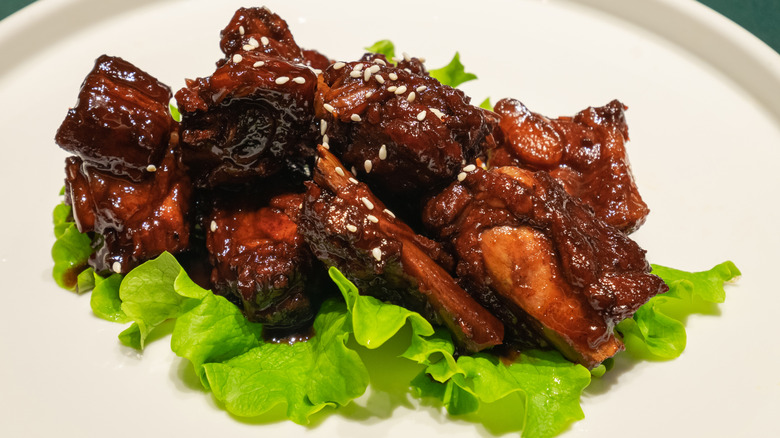
While rib tips have long been prized for their price and texture in Chinese cooking, they got the American BBQ treatment in 1940s Chicago. Like St. Louis, Chicago is known as a meatpacking city, and as wholesalers were treating the discarded ends of St. Louis ribs as garbage, others saw opportunity in the gristly rib tips. BBQ origin stories can be as much myth as fact, but it's undeniable that many Southside Chicago BBQ establishments became known for smoking rib tips until they transformed from mean and crunchy to chewy and delicious.
Just like pig's feet, rib tips are loaded with collagen that starts tough, but rewards slow cooking with rich flavor and texture. The tips also sit close to the pig belly, where we get bacon from, so they're loaded with fatty richness. If you get them from your local Chinese American takeout spot, expect to find the rib tips slow-roasted with sweet, sticky sauce. They can also be served dim sum-style with fermented black bean sauce. Chicago-style ribs are seasoned with a dry rub and then finished with BBQ sauce. Whatever flavor profile you aim for, be sure to follow these steps for a delectable, tender, fall-off-the-bone bite.