

5 Easy Hacks To Make Store-Bought Gravy Taste Homemade
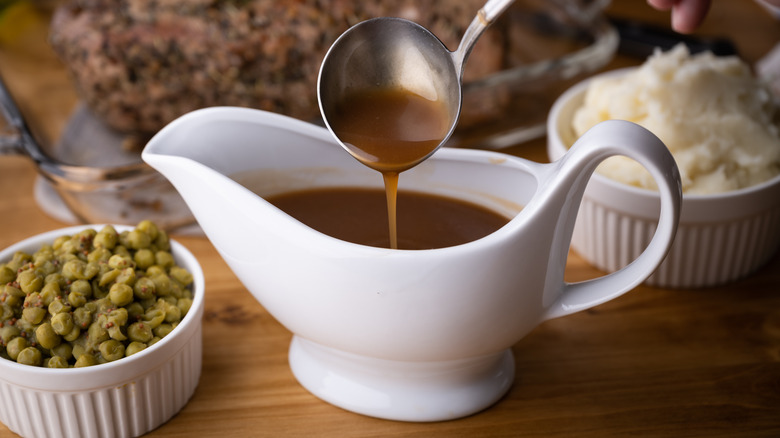
Making gravy from scratch isn't hard, but there are some mistakes to avoid. And when you've spent all day perfectly roasting a chicken or piece of meat, adding another recipe to the to-do list can feel daunting. Thankfully, store-bought gravy helps out here, making all the difference in its ability to be heated right out of the jar with no additional prep. But if you want to make that gravy taste homemade, it's worth it to take some easy extra steps that can elevate that out-of-the-jar flavor without building the entire sauce from scratch.
Meat drippings are the most common way gravy is made. They're combined with flour and a broth to offer a rich, sauce-like consistency. But if you bought a rotisserie chicken and don't have those drippings, there are a number of different ways of enhancing the store-bought gravy. Bob Bennett, the head chef of Zingerman's Roadhouse, a barbecue spot in Ann Arbor, Michigan, serving Southern-style cuisine, shared with Chowhound his tricks for turning store-bought gravy into something that tastes like you made it from scratch.
Add bacon fat or butter

If you have meat drippings from whatever you've just cooked, stick with using those, and whisk them into the gravy to give it a richer, deeper flavor that tastes like it was just made. However, if those drippings don't exist, there are alternatives. "Bacon fat, it makes everything better, right?" Bob Bennett says. Whisk it in just as you would the drippings, being careful not to add too much — taste it until it builds flavor, but it shouldn't texturally feel like it's full of grease.
If you don't have bacon fat, simply add some salted butter. It still offers a rich, salty flavor profile and arguably requires less work than whipping up a batch of bacon (though, if you do cook bacon, you should always save the grease for times like this). Taste-test the butter, too, starting with a tablespoon and increasing it based on your personal preference and how much gravy you're making. If you only have unsalted butter, grab the salt shaker and add a little extra flavor to the sauce.
Pour a splash of wine

Wine is for more than just drinking. Depending on the type, it often has a complex flavor profile that can enhance all kinds of dishes, from cream sauces to even gravy. If you're making a chicken-flavored gravy to drizzle over your poultry dish, then stick with a dry white wine, such as Chardonnay. Add just a tablespoon or two to start, and let it cook down as the gravy simmers, adding more to taste as needed.
If you're making a deeper, darker gravy with beef broth and pairing it with a seasoned steak, you can use red wine to enhance the sauce instead. Whereas white wine will add a little brightness to a dish, red wine will bring out that richer flavor, which is why the type you use depends on the other ingredients it's paired with. And if you're not a wine fan, you can add in a little beer for a similar effect.
Add in an acid

You don't have to add wine to build acidity in your store-bought gravy, but one thing remains true. Gravy is naturally rich, so giving it an acidic burst is the perfect complementary flavor. "I like to add acid on occasion," Bob Bennett says. "Things like a nice balsamic vinegar, apple cider vinegar, or even lemon juice can add a nice brightness to balance some of the richness of gravies."
The acid you choose to add depends on the flavors you're working with — the same case as with wine. Rich, darker gravy could benefit from a hit of balsamic or red wine vinegar, while a chicken or turkey gravy made could use a squeeze of lemon juice or apple cider vinegar. A little vinegar goes a long way, though, so you need even less vinegar than you would wine. Start with just a teaspoon, and whisk it in, tasting before adding more.
Enhance it with fresh herbs or spices
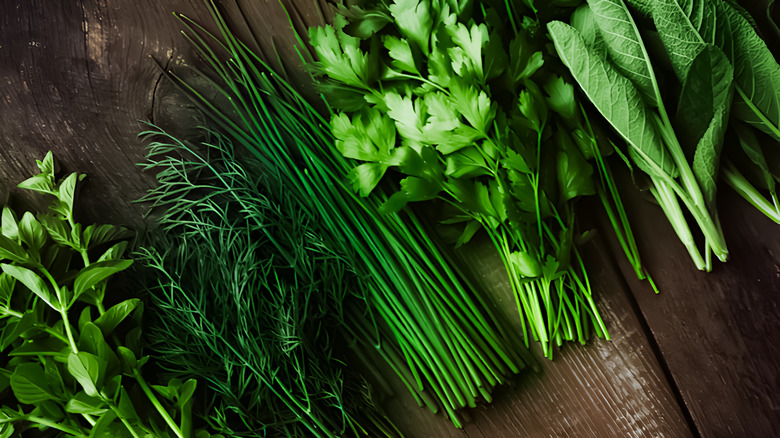
Fresh herbs and aromatics are great for building flavor in all kinds of recipes, and that simmering gravy is just begging for a sprig of rosemary — or something similar. "I feel like in the land of gravies, herbs are a little underrated," says Bob Bennett, "but adding thyme and sage to a chicken gravy can really bring it up." You can add the herbs in sprigs, and their flavor will infuse into the gravy as it heats up. Then, just before serving, remove the fresh herbs, leaving their flavors behind without changing the texture of the sauce at all.
Depending on what you're serving the gravy with, you can add other flavors through other herbs and spices. If you're just pouring it over breaded chicken, spices like garlic powder, onion powder, and black pepper all add a little extra bite. Build a hint of heat with chipotle or chili powder, too, and if needed, add some extra salt. For a darker gravy over steak or pork, the same spices will generally work, though you could even add a little nutmeg for a warmer flavor, but use it sparingly.
Incorporate fresh garlic
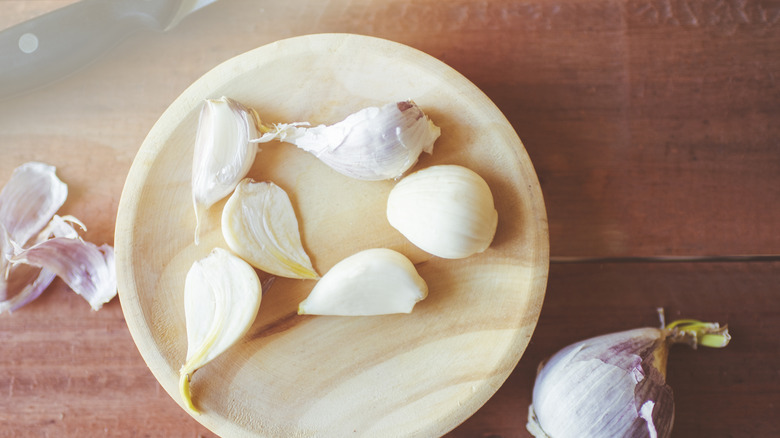
In addition to aromatics like fresh herbs, roasted garlic also has a place in enhancing a jar of gravy. You can add some oil, then fold a garlic head in foil (slice the top off to expose the cloves first) and roast it in the oven. Alternatively, you can sauté chopped garlic in a pan to bring out that taste before adding it to the gravy. To avoid changing the gravy's texture, just add a garlic clove to the gravy as it heats, and the flavor will infuse. Remove it when you're ready to serve the sauce.
Beyond just garlic, other flavorful vegetables can add to the gravy's profile. Sweet onion makes a fragrant addition, though you should cook it down a bit first to soften the flavor. For a milder bite, sauté some shallots, which have a similar effect. If you have the extra time, there's no harm in caramelizing sweet onions.