

This Type Of Whisk Guarantees A Clump-Free Batter
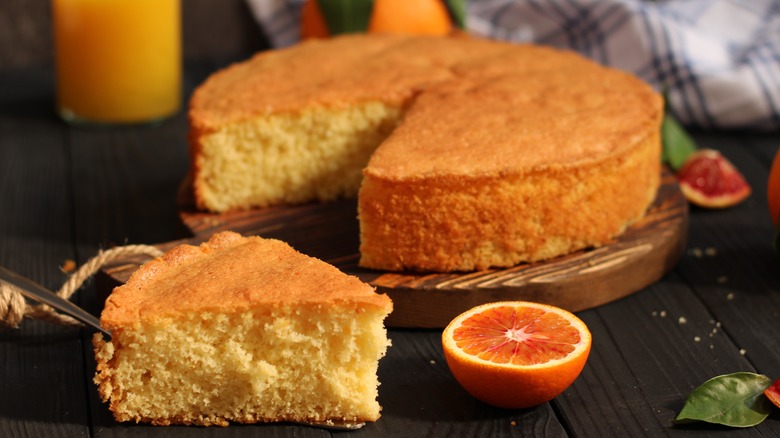
As even the newest home cooks know, baking is a precise science that relies on a variety of factors to create ideal results, namely nuanced flavor and a fluffy, tender texture. Achieving this generally starts as soon as you begin mixing your ingredients, which need to be thoroughly combined without being overworked. If you find it difficult to walk this fine line with a standard balloon whisk, it's likely not a skill issue but the fact that you're using the wrong tool.
Contrary to popular belief, choosing the right whisk for a recipe is crucial to achieving your desired results. Whisks shaped like springs or loops aren't just fancy, aesthetic items — they have a real, practical purpose in the kitchen. For example, a spring whisk is the best way to get beautifully fluffy scrambled eggs, while a ball whisk is what you need to guarantee clump-free batter when baking light, batter-based recipes like pancakes and waffles.
Unlike the more familiar balloon whisk, ball whisks feature wires that stick straight out from the handle, like a big, wiry paint brush. Instead of being connected, each wire is tipped with a small metal ball. When in use, the balls act as weights to swing the wires evenly through both wet and dry ingredients, leaving no surface inside the bowl untouched. It may look a bit wild in action, but this whisk helps ensure everything is evenly mixed and lightly aerated for a beautifully silky batter.
Learning your ball whisk: what it is (and isn't) good for
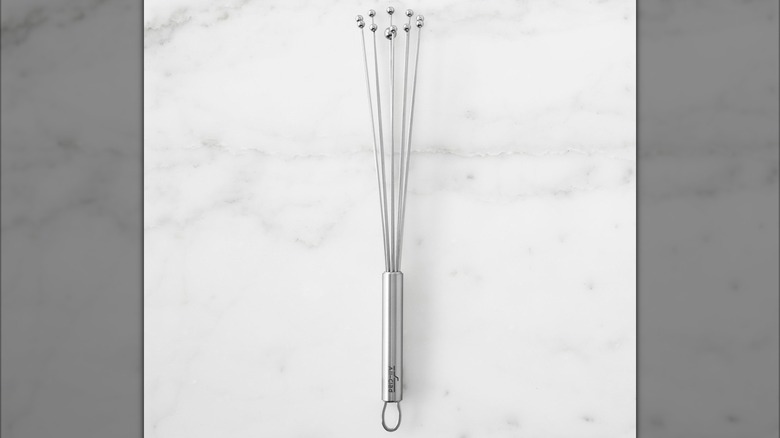
In addition to quickly and easily mixing batters for things like delicious and protein-rich cottage cheese waffles, they're also great for mixing things in tall, narrow containers or small measuring cups because the straight wires easily bundle together to fit neatly into a tight space. Once in there, just a little agitation gets the balls literally rolling, quickly mixing things together.
Another advantage to this tool is how easy it is to clean. While we've all struggled to get that huge dough ball from the center of a balloon whisk, the ball whisk's flexible, unconnected wires don't collect mess easily. It's also fairly simple to wash and rinse the wires for this very same reason, allowing you to separate and scrub each one individually (and fairly quickly).
However, this doesn't mean the ball whisk is a one-size-fits-all solution to your mixing needs. Just like any other kitchen tool, there are things it simply can't do, such as offer precision control for babysitting temperamental recipes like custards, curds, and delicate sauces. Ball whisks also aren't stiff or rigid enough to cut through thick, dense mixtures like fruitcake batter or heavy soups and stews — their wires are likely to bend, or even break off at the handle. If you frequently bake big, dense pound cakes and panettone, it's better to stick to sturdier mixing tools.