

Why Is The Largest BBQ Chain In The United States Struggling?
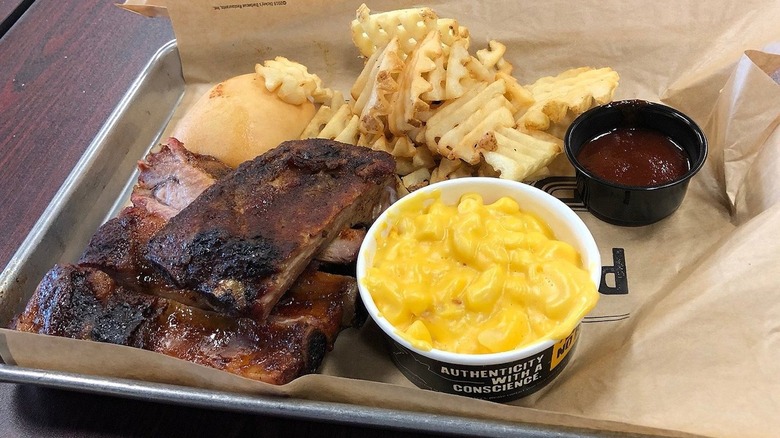
Though barbecue — whether it's pork or beef — is one of America's favorite food items, differing region to region, not even this beloved cuisine is immune from restaurant closures. While smaller local chains like Martin's Bar-B-Que Joint in Nashville and Terry Black's Barbecue in Austin continue to thrive and grow beyond their original footprint, it's the larger chains that seem to have noticed the most pronounced decline in sales.
At the top of that list is Dickey's Barbecue Pit. Dickey's initial growth spurt started around 2008, and the Texas-based barbecue chain reached 570 locations in 2017. But that enormous growth was quickly followed by some pretty serious cutbacks beginning in 2018, with another round in 2024. As of this publishing, Dickey's has trimmed down to just more than 375 locations nationwide.
In 2024, Dickey's SVP of Franchise Relations Jeff Gruber told Restaurant Business that the closures were part of a process to clean up weak spots and strengthen the brand. "We listened to our operators and we made the strategic decision to strengthen our core before growing again," he said.
Declining sales, lawsuits, and resiliency
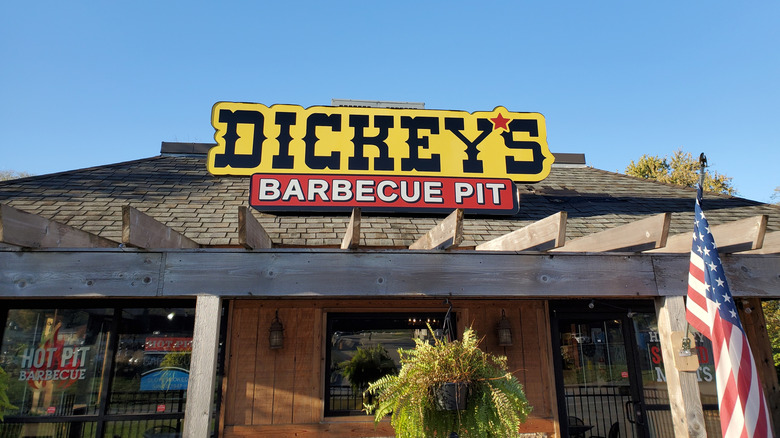
The decline in sales at Dickey's Barbecue Pit didn't happen overnight. It's been a slow bleed over the last decade. To make matters worse, Dickey's average unit volume (AVU) — a metric that shows the financial health of a business over an annual basis — was the worst in the fast casual industry in 2023 at $675,000, according to the Technomic Top 500 Chain Restaurant Report (via Restaurant Business). By comparison, the average AVU in this sector is nearly $2 million. And compared to Chick-fil-A's average AVU of $9.4 million in 2024, it's downright dismal.
That said, Dickey's is resilient. In business since 1941, the barbecue chain has fought its share of battles — including a media war with the New York Times in 2025 over an ongoing lawsuit with former franchisees who, among other accusations, accused the barbecue chain of giving misleading information upfront about startup costs. Some franchisees spoke off the record to Restaurant Business saying the chain was overbuilt and didn't have the structure to support the growth and one franchisee claimed that many of the franchisees weren't qualified.
In reality, Dickey's financial struggles over the last decade aren't unique just to them. Red Lobster, no longer the largest seafood chain in the world, Boston Market, and Denny's, which announced location closures for 2025, are just a few examples of chains recently in similar dire straits. All that to say that, despite the financial setbacks, Dickey's BBQ still ranks as 168 on Technomic's 500 largest restaurant chains in the U.S. by annual system sales (via Restaurant Business). And it still receives fairly decent reviews — between 3 to 4.5 stars — depending on location. We can only wait and see what the next decade brings for this beloved barbecue chain approaching its 90th anniversary.