

It's Surprisingly Simple To Master Marble Icing For Cookies
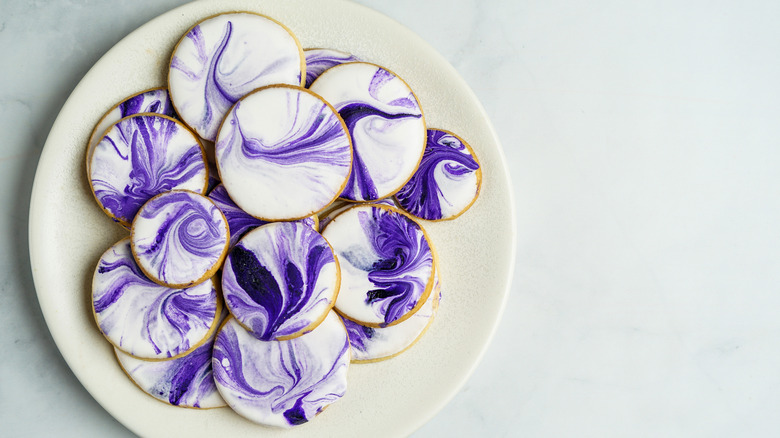
Have you have ever scrolled past a batch of freshly baked cookies that looked like edible art, almost too pretty to eat? Well, chances are you have seen marble icing in action. The good news is that you don't need to be that professional chef with sophisticated bakeware items or have a degree in fine arts to pull it off. Marble icing looks intricate, but the method behind it is shockingly low-effort for the visual payoff it delivers.
The secret is all in the swirl. Marble icing starts with royal icing that's thinned to a smooth, pourable consistency (but not runny). From there, it is a simple process of layering and dragging. You pipe or spoon one base color over the cookie, then quickly add drops, lines, or dots of contrasting colors on top. Take a toothpick or skewer, and gently drag it through the icing in a swirl or zigzag pattern. That's it!
The trick to getting that dreamy, rippling effect? Work fast. Royal icing begins to set pretty quickly, so you want to add your swirls while the surface is still glossy and wet. That's what allows the colors to blend naturally instead of sitting on top of each other like an afterthought.
Swirls, strokes, and style
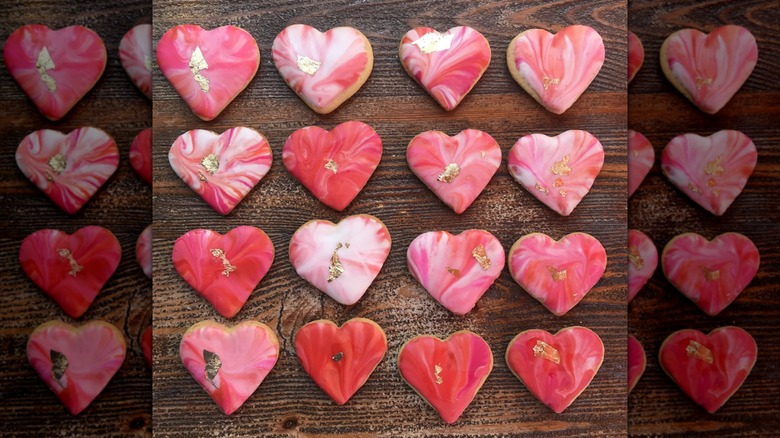
You can go with bold with vibrant, contrasting hues (think deep blues and whites for a tie-dye vibe) or keep it classy with tonal pastels. Metallics like edible gold or silver gel add a luxe edge for special occasions. And while marble icing shines on sugar cookies or shortbread, you can also use it on brownies, lemon bars, or even dipped biscotti for a stylish twist.
Pro tip: Use a scribe tool or a clean toothpick to control your design. Want tighter swirls? Use shorter strokes. A looser, dreamy pattern? Go long and wavy. You can also gently tap the cookie on the counter to help the icing smooth out before it sets.
Beyond the beauty, marble icing has practical perks too. It dries with a firm surface, which means the cookies can be stacked, gifted, or packaged without turning into a sticky mess. And unlike vanilla buttercream frosting, it won't melt or smudge if your kitchen runs a little warm. It is also a great decorating technique to do with kids or beginner bakers as there is no pressure for precision. In fact, the less "perfect" your lines are, the more interesting your final pattern becomes. It is one of those rare kitchen tricks that thrives on imperfection and spontaneity.