

Why You Really Don't Want Marble Countertops In Your Kitchen
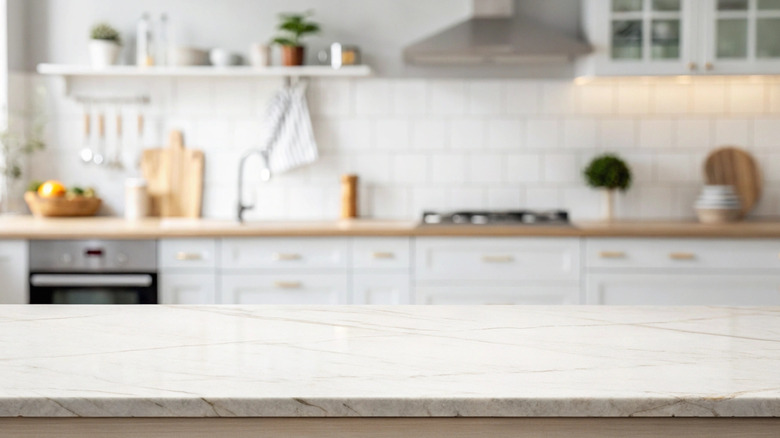
The luxury look and feel of marble countertops makes them iconic, and they are often seen as a desirable facet of your kitchen. However, there are downsides to owning marble countertops that homeowners should be aware of before deciding to install them. We discussed the pitfalls of marble countertops and some alternatives with The Brownstone Boys: Barry Bordelon and Jordan Slocum, interior design duo and HomeGoods Featured Finders. They spoke exclusively with Chowhound to provide answers to our marble countertop questions.
Despite their high-end appearance, one of the issues with marble countertops involves their upkeep. "Marble is iconic but anyone who's lived with it knows it's high-maintenance," Bordelon and Slocum say. Because it's a porous stone that's less dense, marble can crack with a small amount of impact. If you scrape a pan on the surface, or use a knife on it, it will leave a scratch mark. Marble also stains because of its porosity, as it absorbs pigments found in liquids and other foods. This is one reason to think twice before choosing white marble countertops.
Since there are numerous unexpected issues you may run into with marble countertops, it's worthwhile to consider other types of stone when installing kitchen countertops.
Desirable alternatives to marble kitchen countertops
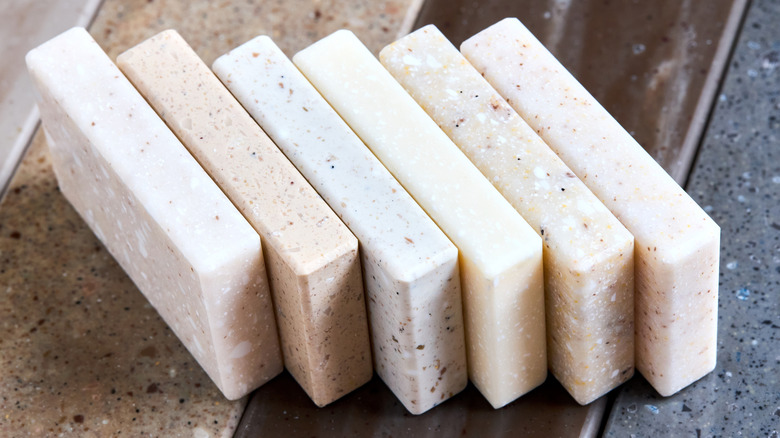
If you'd enjoy the luxury feel of marble in your kitchen without the extra maintenance, there are other materials to consider when you purchase countertops. "If you love the look but want something more durable, quartz is your best friend. It mimics the veining and elegance of marble without the worry of etching or staining," Barry Bordelon and Jordan Slocum say. Quartz countertops are made using ground quartz particles blended with resins, so are considered an engineered material as compared to natural stone. They don't scratch as easily and are easier to clean. Any scratches you do get can be buffed out. One drawback is that they aren't heat resistant, so setting a hot pan on a quartz countertop will damage it.
There is another material to consider for your kitchen countertop that is like quartz. It's durable and comes with added benefits. "We've also used high-quality porcelain slabs in renovations for a similar effect — they're heat-resistant, scratch-resistant, and incredibly low maintenance," Bordelon and Slocum say. Porcelain is an engineered material made of heated quartz, clay, and feldspar. It's a great choice when considering its resistance to stains, heat, chemicals, and more.
Since there are so many choices of materials, consider your budget, daily use, and desires when choosing which type of stone to use for kitchen countertops. If you invest in a suitable kitchen countertop now, you'll experience greater satisfaction down the road.