

The Hack That Keeps Parsley From Bolting
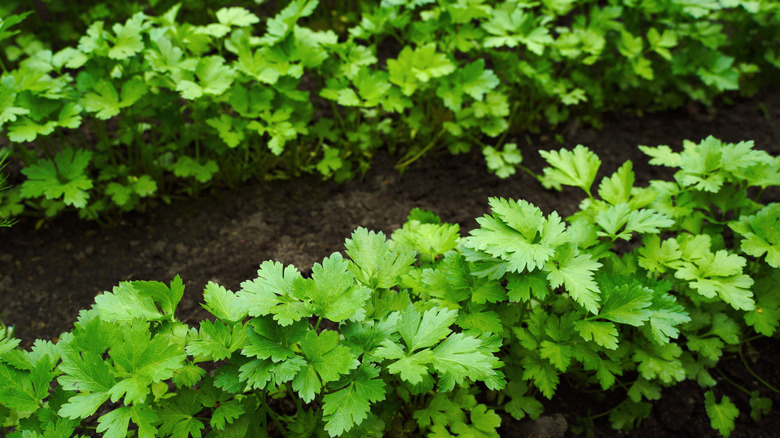
Now that it's summertime, it may seem like everyone you know is tending to a garden. While the thought of growing your own herbs can be intimidating to first-timers, fear not — they're fairly simple to maintain, and if you pay attention to their needs, you'll be harvesting your own herbs in no time. One of the secrets to growing perfect parsley and other herbs is to avoid bolting, which is when an herb suddenly grows faster than you want, producing seeds and no longer tasting the way it should. Understanding how to avoid this common problem is the difference between bountiful growth and having to completely uproot your garden. In order to yield positive results, you just have to ensure you're pruning your herbs effectively.
When it comes to herb garden management, it's good to know a bit about your plants. Parsley is a biennial herb, meaning that its lifespan is generally two years, though it only produces the leaves you'll want in its first year; year two is all about producing seeds for more parsley plants. Parsley takes between two to three months before it can be enjoyed, and the most common types are flat leaf and curly parsley. Depending on which version you incorporate into your garden, their kitchen use and bolting tendencies may vary, though the basics remain the same.
When it comes to bolting, dramatic changes in environment are a primary reason for this phenomenon. This can happen as a result of a heat-flash — when the plant experiences a sudden increase in temperature. This is when the herbs begin to bolt, as they take this as a sign to stop flowering. This means that the parsley plant has shifted from a vegetative state and has begun readjusting resources toward becoming a robust stalk instead, signaling the end of this part of its cycle.
Preemptive pruning takes special care
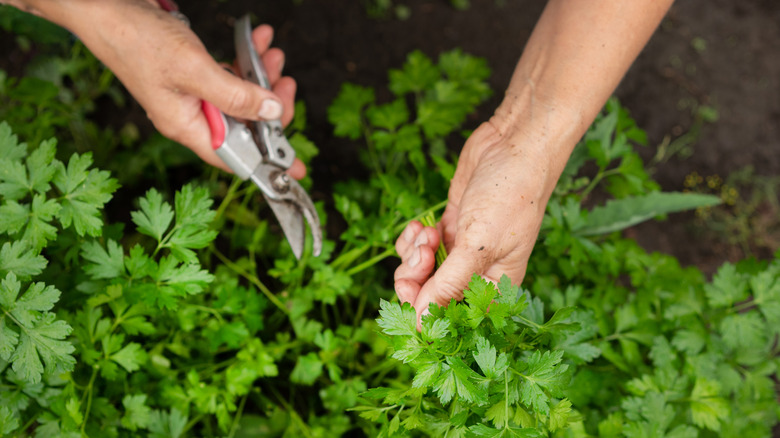
No matter what type of parsley you plant, to discourage it from bolting, you'll want to properly prune it, which is the process of cutting a plant back to extend its bloom duration. This entails trimming the flower stalk whilst focusing on the external parts of the plant. You want to ensure the younger stems and leaves are left to mature, so aim your shears toward the older sections of the herbs. Make sure to go about this carefully, as pruning too much will stifle your parsley's growth.
Make sure your garden shears are sharpened and clean, and be sure you cut toward the base of the plant – this will help balance the risk more effectively than cutting off individual leaves. Additionally, it's recommended not to get more scissor-happy than needed, so ensure that you leave more than you take. If done properly, you'll be less worried about bolting and will instead be scrambling to figure out what to do with all your fresh herbs before they spoil — a nice "problem" to have.
Sporadic watering is also risky, as it can send your parsley into a state of survival and cause your plant to stop flowering. For parsley, weekly watering is recommended, but make sure to keep a timely and organized routine. This way you'll avoid shocking or drowning your herbs. It's also necessary to make sure your plants have enough shade, as this helps with fluctuating summer temperatures and reduces further risk of bolting. Once you become a master of parsley maintenance, you'll soon be needing these tips and tricks for drying and storing your herbs to fully enjoy your abundant harvest.