

This Pantry Staple Is The Key To Safely Disinfecting Most Food Prep Surfaces
If there's one pantry staple that should absolutely be in abundance in every home kitchen, it's white vinegar. Not only is this vinegar a great way to punch up the flavor of bottled BBQ sauce, it's also the key to keeping your kitchen squeaky clean and germ-free while avoiding chemicals that may not be food safe. Bleach may be the cleanser of choice for disinfecting floors and trash cans, but it's not exactly safe for cleaning surfaces that food will touch directly, such as cutting boards and countertops.
That's where white vinegar shines, both literally and figuratively. A simple vinegar water solution is strong enough to remove bacteria from lettuce, yet gentle enough to add to marinades and salad dressings. This is because it contains a small percentage of acetic acid, a compound that's caustic enough to effortlessly clean the woodwork in your kitchen and dissolve layers of oily grime while also killing some germs, but not present in high enough amounts to be toxic if ingested. Some people even add it to homemade skincare products like toner and acne treatments.
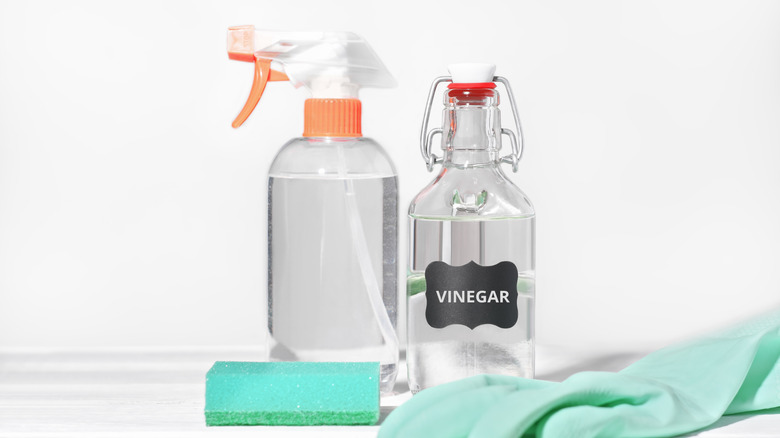
To use it for cleansing food preparation surfaces in your home, mix about a 1:1 ratio of distilled water and distilled white vinegar in a clean spray bottle, and use as you would any other cleaner. If a surface is particularly grimy, let the vinegar solution sit for a few minutes to give it time to break down the dirt and oil before wiping it away with a soft cloth. Any lingering vinegar smell should dissipate quickly.
Safety precautions and tips for effective cleaning
While white vinegar is effective at removing residue and killing certain strains of bacteria — including E. coli, salmonella, and listeria — it's not 100% antimicrobial. Depending on the strength of the solution you use, it may also only reduce presence of these pathogens instead of eliminating them completely. Additionally, it's not very effective at killing viruses, including SARS and COVID-19. If you're concerned a food prep surface in your kitchen is heavily contaminated, it's best to wipe it down with an antimicrobial all-purpose cleanser, then rinse the area with water to remove any potentially toxic cleanser residue.
Something else to think about when using white vinegar to clean your kitchen is that it's not suitable for all surfaces. The acetic acid present in the vinegar can corrode or pit metal surfaces as well as erode porous stone countertops and floors over time. However, laminate countertops and linoleum or vinyl flooring should easily be able to withstand regular washing with white vinegar. The same goes for the woodwork in your kitchen, provided the vinegar is properly diluted and wooden surfaces, like cabinet doors, are properly sealed.
The final thing to consider when cleaning with white vinegar is the notorious smell. While the scent doesn't linger for long once you're finished cleaning, some simply can't stand vinegar's acrid odor. To resolve this, try mixing vinegar with citrus peels for a fragrant cleaning spray. The citrus oils soften the vinegar's odor while adding an extra boost of cleansing power that only upgrades the homemade cleaning solution.