

Here's What You Are Missing Out On If You Buy Pre-Ground Coffee
We may receive a commission on purchases made from links.
Unlike a finely aged wine, coffee is a beverage best served fresh. And this is true whether you're talking about the time between roasting and brewing the beans, the time between grinding and brewing, or the time between brewing and savoring that invigorating cup. Why, you may ask? Coffee is a chemically complex crop that, based on where it's grown, how it's processed and roasted, etc., can have a host of different flavor notes. In fact, the Specialty Coffee Association even developed The Coffee Taster's Flavor Wheel, which points to dozens of flavor profiles in coffee beans.
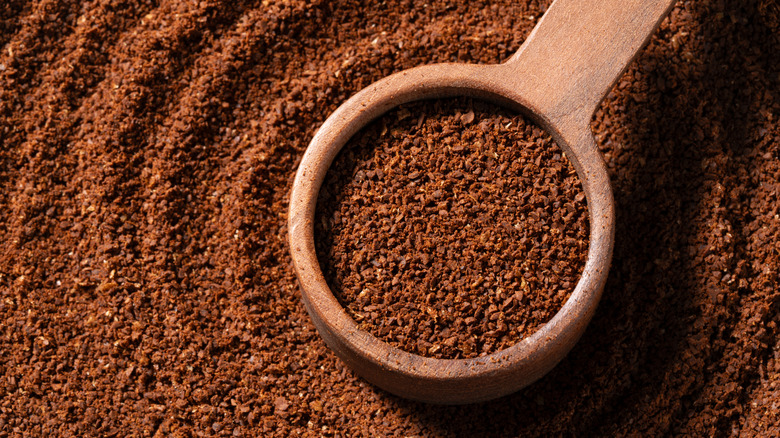
However, these flavors can deteriorate rapidly as the beans are exposed to oxygen, light, moisture, and temperature fluctuations, leaving consumers with a stale, generic-tasting product. Breaking down the whole roasted coffee bean into smaller particles through grinding exposes the coffee to even more oxygen than before, meaning ground coffee loses its flavor faster.
Furthermore, if your go-to coffee-brewing method is a drip coffee maker, you may not realize that different brewing methods require different grind sizes for optimum flavor extraction. Espresso, for example, requires finely ground beans, while French press uses a coarser grind. If you use typical pre-ground coffee in a French press, the coffee will be over-extracted and bitter. So you lose brewing flexibility when buying pre-ground beans as well as the complex flavor profile of whole beans.
Making the switch from pre-ground to whole bean
One reason people prefer to buy pre-ground coffee is that it can be cheaper than whole bean. However, it's possible to find budget-friendly whole beans, such as Café Bustelo Supreme, which made its mark on Chowhound's list of the best coffee beans worth buying, and can be had for about 79 cents per ounce on Amazon.
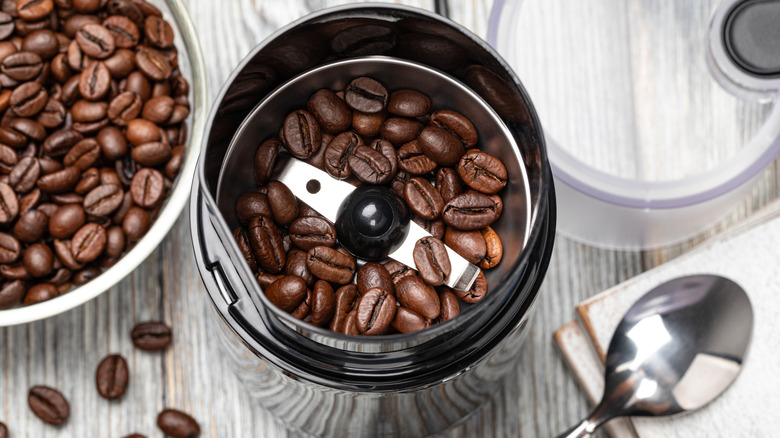
When you make the switch to whole bean, you may need a new coffee grinder. Burr grinders are the best option for full flavor and body, as they break the beans up into consistently sized particles, allowing for a more even extraction. However, they may not be your cheapest option. There are both manual and electric burr grinders. Manual grinders will take a bit more effort on your part, but may be a good choice if you have limited counter space — or if you go camping frequently and need a way to make fresh coffee off-the-grid. Electric grinders, in addition to being less hands-on, are probably easier to adjust, as many of them have clearly marked lines noting variations in grind size. This will be important especially if you like to try different brewing methods.
If cost is a factor and you determine that a blade grinder will be just fine for you, make sure to pulse and jostle the beans up a bit during the grinding process. This will help make sure all the beans are getting equal attention from the blades, resulting in a more even grind. The good news is, whichever grinder you go with will result in a fresher, tastier brew than you get with packaged pre-ground coffee.