

Why Your Salmon Has That White Ooze (And How To Stop It For Good)
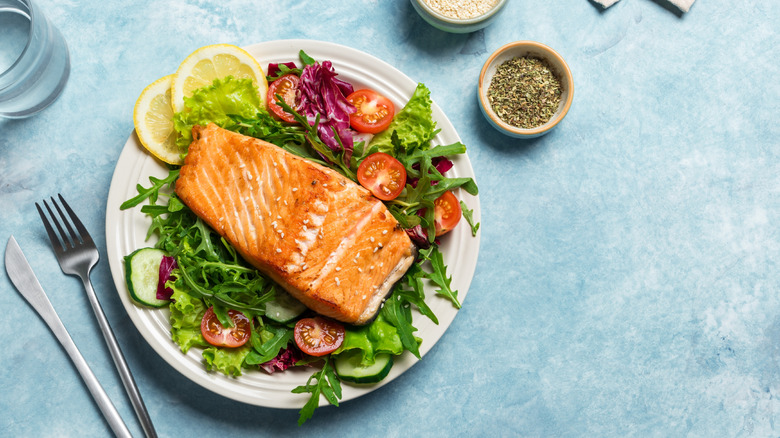
There are plenty of benefits to cooking salmon. It's loaded with protein — as many as 25 grams per serving — and omega-3 fatty acids. Plus, it cooks quickly, making it an easy weeknight dinner. But if you've ever made it yourself, you've likely seen some funky white ooze all over the salmon when you take it out of the oven or air fryer. "The white substance is called albumin, a protein in salmon that coagulates and comes to the surface when heated," Irene Verceles, executive chef at The Surfing Fox in Santa Monica, California, tells Chowhound exclusively. "It looks like a white, sometimes foamy or curdled liquid."
As salmon cooks, its muscle fibers contract, and as a result, that solidifying albumin then gets pushed out of the fish, creating a pretty unsightly white layer that you feel compelled to peel off. The good news is that while it can be an eyesore, it's harmless and fine to eat. "It has a negligible effect on flavor," Verceles says. "While it can slightly dry the surface where it appears, the interior texture remains unaffected." Still, there are ways to avoid making this salmon mistake.
How to stop albumin from oozing out of your salmon
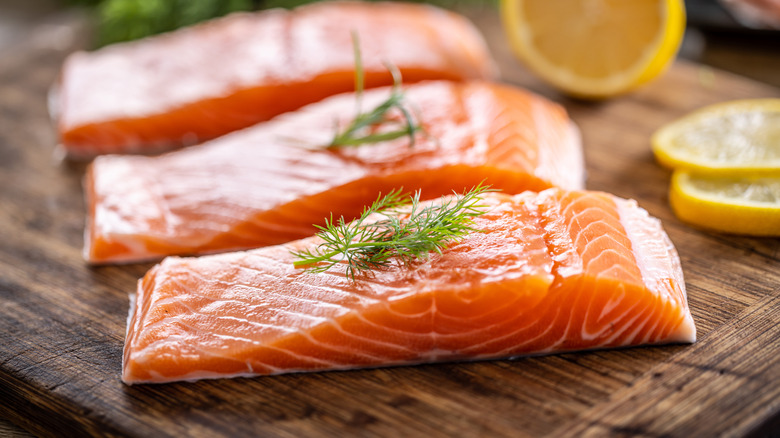
Although it's safe to eat, albumin can ruin the visual appeal of a salmon fillet. To get that restaurant-quality salmon without the white ooze, don't cook it too quickly — and don't overcook it, either. You want the protein to remain in the fish, and cooking it slowly helps to prevent the muscle fibers in the fish from contracting too quickly. The result is more albumin inside the salmon instead of on its surface.
Don't heat the fish past 145 degrees Fahrenheit, or you'll likely see more white ooze. For an accurate measurement, use a meat thermometer. The fillet's thickness will impact how long it takes to cook, so the actual time varies. If you prefer quickly searing the fillet to get a crust on the outside, just cook it skin side down for as long as possible. The skin acts as a barrier between the flesh and the direct heat, so flip the salmon once it's just about cooked and get a quick sear on the flesh side. To upgrade the salmon's flavor, generously season it with your favorite ingredients like lemon, dill, or mustard.