

Wow, People In The '80s Really Overreacted To New Coke
It's not every day that food or drink companies face backlash — but when they do, it can be a newsworthy event. One of the most recent was McDonald's Szechuan Sauce debacle that you might not know about, wherein a "Rick and Morty" episode inspired a demand for the sauce's return that was so high, it couldn't be met until it was too late. Whole Foods has also faced its share of controversy over its 46-year history, particularly when it comes to overcharging its patrons. While some of these protests come from an understandable cause, some rise from a simple change, like that of Coca-Cola upon introducing "New Coke." The response was nothing short of outrage, giving the company an infamous blemish.
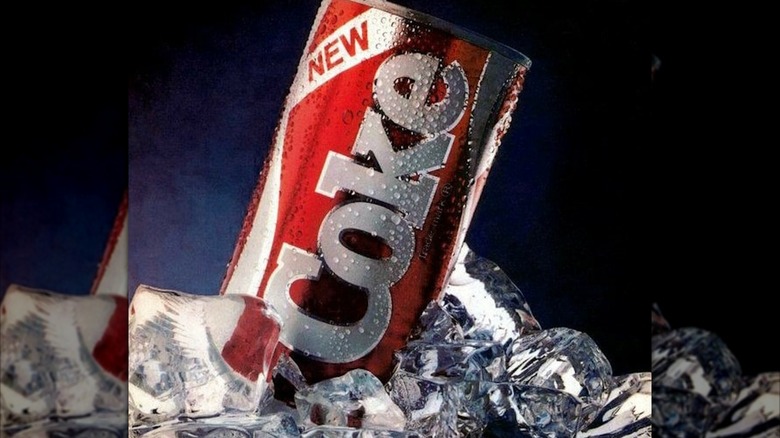
In April 1985, Coca-Cola reformulated the world's most valuable soft drink. After the recipe had remained the same for 99 years, the cola giant's executives felt that shaking up the formula would revitalize its recent sales slump. Despite promising market tests, New Coke was met with public protests. Fans of the old recipe flooded company phone lines with 1,500 calls per day; Pickets were held at Coke plants, some even hoarded whatever they could of the original formula, with one man buying a grand's worth of it. While some did purchase New Coke, many ended up pouring it into street drains.
Eventually, grassroots groups like the Society for the Preservation of the Real Thing and Old Cola Drinkers of America arose. The latter's founder, Gay Mullins, spearheaded much of the public action, even going so far as to file a lawsuit demanding that New Coke's packaging no longer resemble the old formula's can.
Coca-Cola learned a lesson from the extreme response
New Coke's spectacular failure hasn't stopped Coca-Cola from making dicey moves. The brand has created various new, inventive flavors — some of which were misses, but a few (such as Coca-Cola Starlight) were met with positive fanfare. This has led Coca-Cola to team up with other brands, such as the "Besties" collaboration with Oreo to create crossover products like Oreo-flavored Coke and Coke-flavored Oreos. While it may have had an equally solid response, Coca-Cola took another ill-received risk in changing its Coke Zero recipe in 2021, which only reminded the public of the New Coke debacle.
After more than two months of social outrage led by Mullins, Coca-Cola met the public's demand in July of that same year, reintroducing the old formula to the market as "Coca-Cola Classic." Hitting the shelves alongside New Coke, Coca-Cola Classic was well-received, and an afternoon broadcast of an ABC soap was interrupted to announce the important breaking news.
Although both flavors remained in stores, New Coke was rebranded as Coke II in 1990 and then quietly disappeared over the next decade or so. Despite this silent shift in stores, fans celebrated nationwide by opening a bottle at home, while Mullins was literally showered with it in a Seattle conference. Certainly, it was, start to finish, a dramatic reaction to what Coke even admitted was a misstep in marketing, but it's also undeniable that the event serves as emboldening proof of Coke's overall success and the love the public had for the original, long-standing Coke flavor.