

Is Restaurant Lemon Water Really That Dirty?
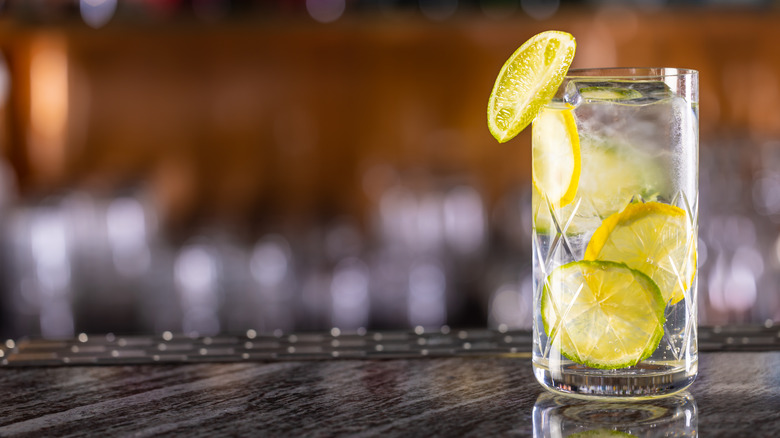
There's something fancy about getting a lemon wedge placed nicely on the side of your drink. You can easily make refreshing lemon water at home, but at restaurants, you might see a wedge squeezed, then dropped into your complimentary water, or possibly on the side of a cocktail or soda. But before you let that wedge touch your drink, you should know that those lemons are dirtier than you think.
Restaurant employees' hands touch all kinds of things: dirty plates, dirty glasses, and even cutting boards that might have once housed raw meat. Then, those same hands could squeeze a lemon wedge and pop it into your drink. The truth is even restaurants can make plenty of food safety mistakes. Back in 2008, Today reported that Anne LaGrange Loving, a science professor at Passaic County Community College in New Jersey, led a study taking samples of lemon wedges that revealed something nasty: they weren't so clean. Some of those wedges even contained fecal matter — yes, that's right: poop. While that specific study was conducted a while ago, it's not the only time the concern has been evaluated. "People are touching the lemon in your glass, handling it, cutting it," Philip Tierno, PhD, an author and clinical professor of microbiology and pathology at New York University School of Medicine, told Elle in 2016. "You can easily see how those lemon slices and lemon wedges can be contaminated."
Lemon wedges could contain harmful bacteria
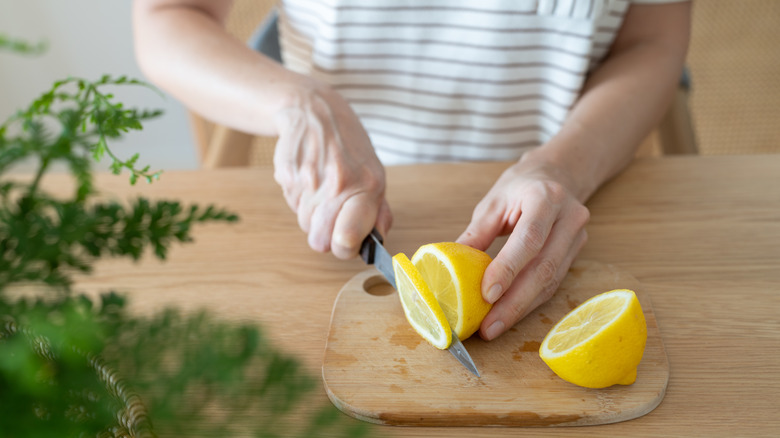
Based on the 2008 study published in the Journal of Environmental Health of 76 lemon wedges pulled from New Jersey restaurants, 53 of them contained some level of bacteria. Of those samples, multiple bacteria types were those that originate in fecal matter. Then, in 2020, as part of a news segment for Arizona's Family, biology students from Phoenix College visited five Arizona restaurants and collected citrus samples. The results? Two of the samples came back positive for both E. coli and salmonella.
Based on the Phoenix College experiment, it could come down to how the restaurant's sanitary practices impact bacteria counts. The three samples that came back without any harmful bacteria were from wedges that were placed in containers inaccessible to the public, while the two with harmful bacteria on them came from wedges that were at the bar, accessible to patrons as well as employees, with no covering. So, next time you order a lemon in your water, double check that it's coming from a closed container; bonus points if it's being grabbed with a set of tongs rather than an employee's bare hands. If you're unsure of how clean a restaurant might be, take a look at its bathroom; it can say a lot about an establishment.