

The Telltale Sign That You're Buying High-Quality Dark Chocolate
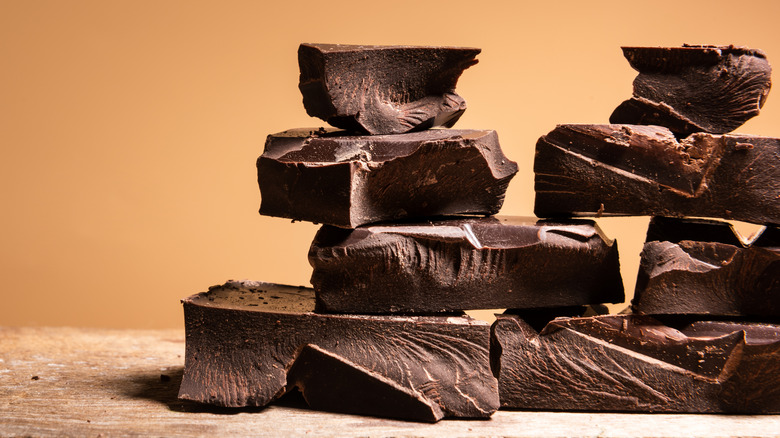
There's never been a better time to be a chocolate lover. From single-source bars to high-end hot cocoa and even chocolate-dipped fruit and nuts, it's easy to find high-quality chocolate in almost any grocery store these days. But if you've ever stood in front of a big display of popular chocolate bars wondering if you're really getting the best quality, you're not alone. Fancy packaging is nice but can be misleading, so Chowhound spoke exclusively to Nicole Patel, founder of Delysia Chocolatier, about a few tried-and-true ways to tell if you're spending your hard-earned chocolate dollars on the good stuff.
To crack the code on the quality of chocolate, says Patel, the first thing to look for is a short ingredients list on the back of the bar or packaging. "Check the label for a high cocoa content (typically 60% or more) and minimal ingredients, ideally just cocoa mass, cocoa butter, and a little sugar," she advises. It's also best to avoid any chocolatey items that contain added oils, artificial flavors, or extra sweeteners. "If there are unpronounceable words in the ingredients list, it is poorer quality chocolate that won't melt smoothly and coat your strawberries. But more importantly, it won't taste good!" Patel warns.
Look for these signs of high-quality chocolate
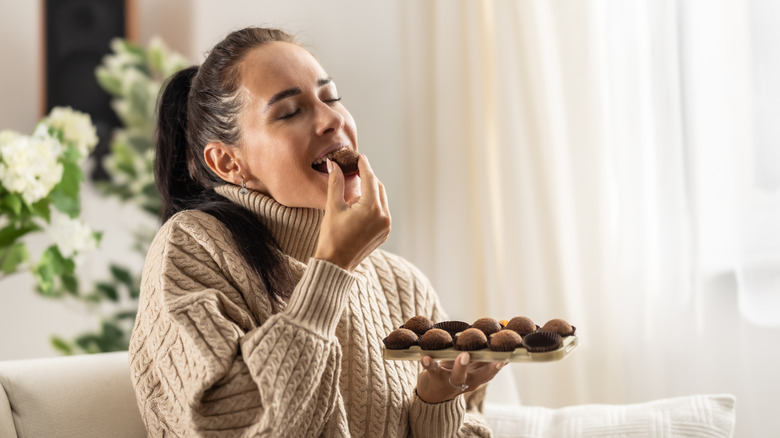
Of course, there are plenty of times when we all come face to face with a piece of chocolate without any packaging. This is why it's important to know what high-quality chocolate looks and tastes like, so you can always pick the good stuff out of a lineup. Nicole Patel, who was named 2025's Best Chocolatier in the Americas with the Six Star Award: Grand Master Chocolatier — the highest honor awarded by the International Chocolate Salon — says that good chocolate stands out just by the way it looks.
"You can tell if dark chocolate is high quality by examining its appearance, aroma, texture, and ingredients," she says. High-quality chocolate will have a smooth, glossy surface and a firm snap when it breaks. Both of these are signs that the chocolate was properly handled. "Chocolate is temperamental," she explains, adding, "It needs a lot of tender love and care. You can't simply melt the chocolate and dip. It must be tempered to receive the shiny outer chocolate layer and wonderful snap as you take a bite — regardless of if it is dark, milk, or white chocolate."
It's also a good idea to give the chocolate a good sniff. "The aroma should be rich and complex, with notes of cocoa rather than sweetness or artificial additives," says Patel.
Give the chocolate a taste test
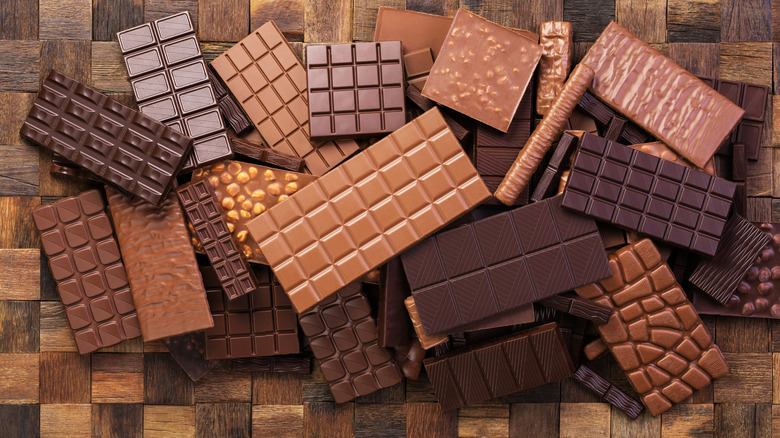
The true test of a chocolate's quality, however, comes down to the flavor. Nicole Patel says that you can definitely tell if you're eating the good stuff because it will have a smooth, complex flavor with balanced notes of fruit, nuts, or floral undertones. In contrast, we've probably all taken a bite of inexpensive chocolate that's overly sweet and one-dimensional.
Texture also plays a big role in determining quality. Premium chocolate should melt smoothly on your tongue, according to Patel. Lower-quality chocolate will feel waxy, gritty, or greasy because the chocolate is blended with cheaper fats rather than cocoa butter. "You may also notice an artificial or chalky aftertaste in mass-produced chocolate, compared to the clean, lingering finish of well-crafted dark chocolate," she says.
Always look for reputable chocolate brands if you're unsure, and avoid any chocolate-like products such as candy melts, which are made for thinning and dipping, that you can get at craft stores (Patel says that they're really not even chocolate at all). Also, skip chocolate chips if you're looking for quality, because they are mixed with flour and stabilizers so that they don't melt during baking, and they won't have the same texture as pure chocolate. "Ultimately, quality dark chocolate should offer a balanced, lingering flavor that celebrates the natural richness of the cocoa itself," says Patel.