

You Haven't Used A Naked Corn Cob To Its Full Potential Until You Milk It
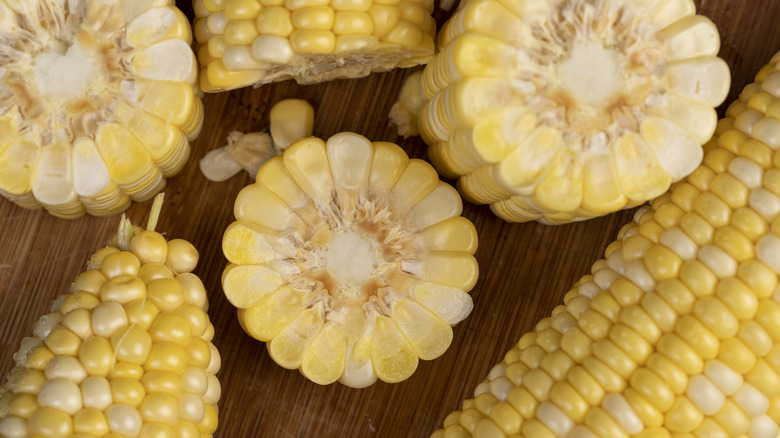
Corn is such an interesting food, and you can use it to make all sorts of delicious meals, from a simple air-fried corn on the cob to a Trinidadian corn boil. But oftentimes, after you've sliced off those golden corn kernels for a recipe or snack, it's tempting to toss the bare cob into the compost or trash. However, that naked corn cob is still capable of making something special: corn milk. Milking your corn cob is a simple technique that helps you pull out every last drop of flavor from your fresh summer corn. Corn milk is the starchy, creamy liquid left behind in the cob after you've removed all the kernels. The milk comes from the juicy bits that cling to the cob, deep in those little kernel pockets. And when you scrape the cob down, you squeeze out all that goodness.
After you've taken out the kernels (preferably using Ina Garten's no-mess corn-cutting method), hold the stripped cob over your bowl. Then, take the dull side of the knife and firmly scrape it down the length of the cob. You'll see a pale, creamy liquid come out. That's corn milk. It doesn't take long, but the payoff is major, especially in recipes where corn is the star. You're not just getting more flavor, but also drawing the texture of the corn at its sweetest, most tender point. If you're taking the time to cut your own kernels, milking the cob should be your next step.
Getting the most out of your corn
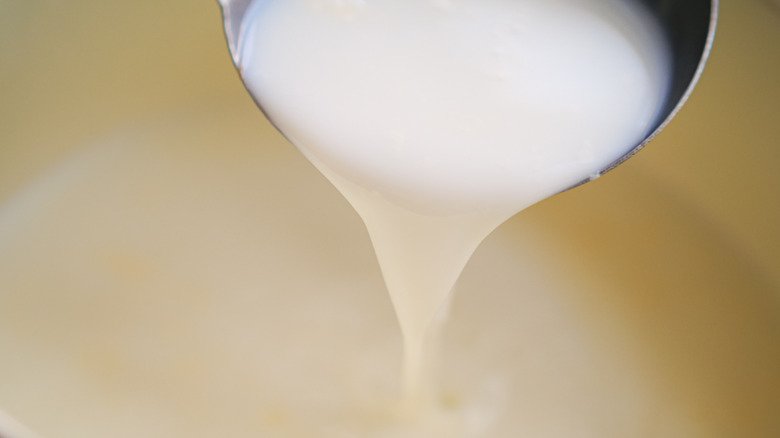
Corn milk is rich in starch and flavor, so it does double duty: It sweetens your food and thickens it without any help. In fact, you can stir it back into the corn kernels you just chopped. You'll notice they taste creamier and slightly richer. But that's just the start. Corn milk also shines in chowders, risottos, cornbread batter, and creamy corn pasta. Fold it into polenta for extra depth or stir it into grits to make them feel more indulgent. And if you're making a corn puree or soup, add the milk for body and that extra "corn-on-the-cob" taste. It also works wonders in fritters, pancakes, or savory puddings. Since it's natural and mild, it blends into recipes without throwing off texture or balance, positively impacting the flavor.
Think about it this way: You already bought the corn, and you've already cut it. Why not extract every last morsel of flavor before you discard the cob? You don't need any special equipment or any other ingredients; a knife, a bowl, and a few minutes of your time are all you'll need. And once you're into the habit, you'll never look at a bare corn cob the same way again.