

How To Tell If Salmon Is Bad And What To Look For
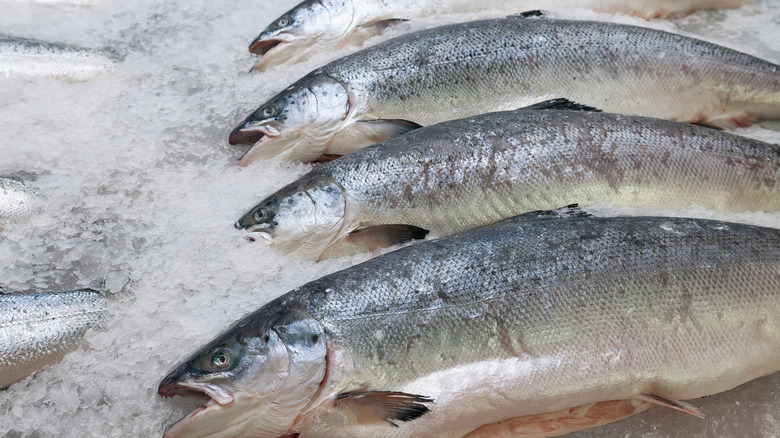
Salmon is a workhorse of the home kitchen. From smoking or baking to pan-frying, it's one of the most versatile and delicious fish out there. Out of all the myriad ways to make the most of this rich, meaty beauty of a fish, perhaps the finest is by cooking it whole. Best prepared either by roasting or poaching, cooking a whole salmon is a particularly impressive feat for a home cook and one that's sure to impress at dinner parties. But making a delicious whole salmon starts with buying the best fish possible, and that means making sure your fish is fresh.
To find out more about what signs to look out for and avoid, we spoke to Irene Verceles, executive chef at The Surfing Fox in Santa Monica, California. She identified five key areas to focus on when you're trying to determine if a salmon has gone bad. The first, a common one when judging freshness, is the eyes: "The eyes should be clear and bright, not cloudy or sunken," she told us. The gills, meanwhile, should also look bright red (or pink) rather than brown. If they look slimy, you know you've got a bad fish. "Fresh skin looks shiny and metallic, not dry or discolored," Verceles said, adding that "the flesh should spring back when touched, not feel mushy." Finally, give your fish a good sniff: "The fish should smell like the ocean or seaweed — not sour, ammonia-like, or overly 'fishy.'"
How to assess the freshness of individual cuts
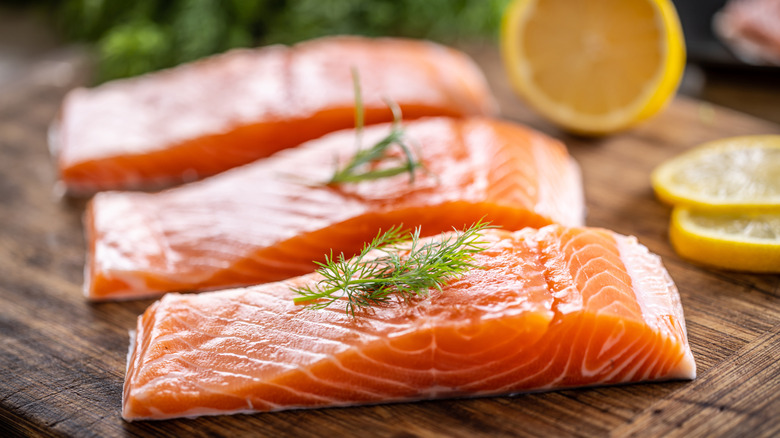
Using these helpful tips, you're well equipped to find out if a whole salmon is going bad or if it's perfectly poised to be a dinner party centerpiece. But, let's be real; most of the time, you're not going to buy a whole fish. Instead, you're more likely to find yourself with a smaller cut, be that a fillet for the perfect crispy grilled skin or a whole side ready for the smoker.
First things first: A visual inspection is in order. Take a look at the color of your fish, suggested Irene Verceles. "The color should be vibrant — orange, coral, or pink — not dull, grayish, or edged with brown." If your fish is starting to look a bit gray, it's probably starting to go off. Have a look at the packaging, too: "Watch for any excess milky fluid or pooling moisture in the packaging, which can be a sign of spoilage."
Much like with whole salmon (or for testing the freshness of other proteins, including chicken), using your nose is also a good idea. Look for a fish that smells of, well, not that much. "It should have a clean ocean scent, not a sour or overly fishy odor," according to Verceles. If your fish has a particularly strong scent, it might be worth giving it a miss. If you don't fancy getting your nose up close and personal with a piece of salmon (who would), you could also test its texture, which should be firm to the touch and, once again, never slimy.
What to look for in fresh salmon
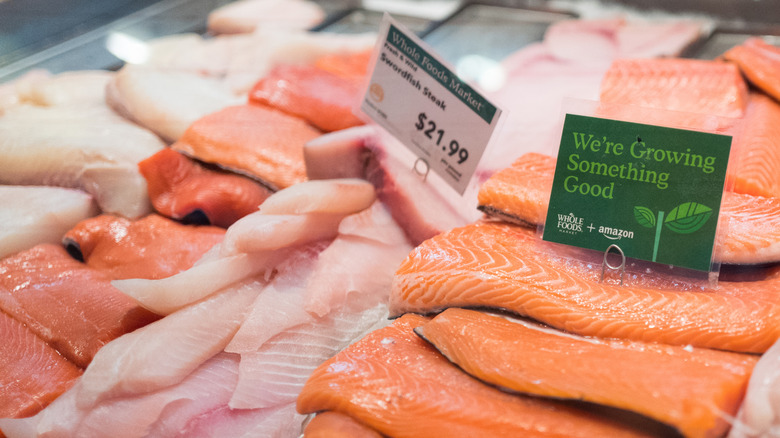
Now you know exactly what you should be avoiding when buying both whole salmon and smaller fillets, loins, or sides. But, knowing what to look for to spot top quality salmon is just as important as being able to identify signs of spoilage — especially if you're after the absolute best flavor possible. Irene Verceles suggests looking for wild-caught salmon over farmed varieties when you can since "it usually means better flavor and sustainability." Farmed salmon can be equally delicious if treated properly, though; ultimately, the best fish is the one that works for you.
Another sign to look out for is the flesh's color. Look for consistency and vibrancy, both indicators of freshness and quality. Those bright white lines that crisscross the fish (a characteristic quality of salmon) are also something to look out for, according to Verceles: "Those clean, white fat lines running through the flesh are actually a great sign of richness and moisture." They're similar to marbling on a steak. As the old adage goes, fat means flavor, so look out for thick, bright lines of fat. Finally, look out for the appearance of the skin: "If the skin's still on, it should have that shiny, metallic quality," Verceles said. Keep a keen eye open, and get yourself some great quality salmon!