

The Funky-Looking Vintage Meatballs No One Seems To Make Anymore
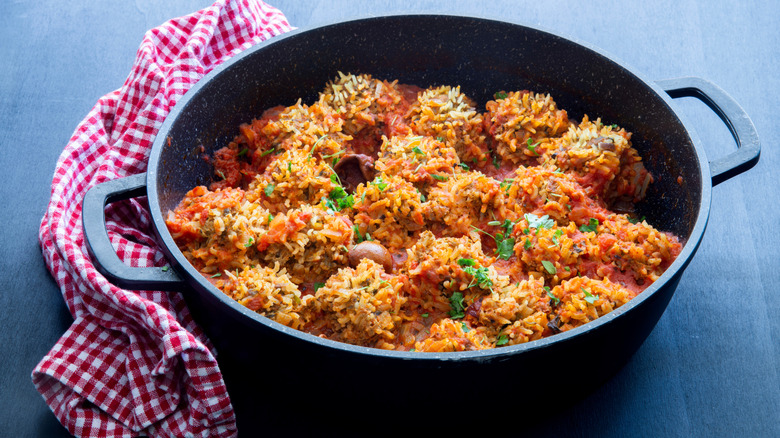
The name of this dish may lead you to make some pretty far-out assumptions about its contents. But we assure you: Porcupine meatballs are all beef, with an unconventional addition of uncooked rice. This dish gets its nickname from its appearance, which happens to replicate porcupine spikes. The rice granules inevitably create a quill-adjacent result once ready to plate.
You'll find that the meat and rice work in tandem to keep the meatballs together. The rice is initially added uncooked in order to create a slightly chewy finish. To avoid the mistake that's killing your meatballs, be sure to make use of meat with a higher fat content. This recipe is versatile, as it allows for a good deal of substitutions. You can opt to swap either the ground beef or rice (or both) to accommodate various diets and budgets. For instance, ground turkey or chicken could very seamlessly be swapped for beef, while the vegans and vegetarians in your life could utilize meatless alternatives. What's more, if rice isn't your go-to, you could try this simple pantry swap for breadcrumbs instead, not to mention cauliflower rice or barley.
Just because this meatball variation is a vintage recipe doesn't mean you can't bring it up to speed with some modern twists. Some methods suggest tomato sauce, while other quick-fix options call for cooking your meatballs down in tomato soup. To add a bit more texture, you could also add some cheese overtop or serve crispy garlic bread on the side.
Porcupine meatballs have a complex history
Historically, meatballs as a general concept can actually be tracked down to ancient origins. The Romans inadvertently extended the influence of global cultures and their takes on the dish as a result of various trade exchanges alongside the expansion of the empire. Different variations were popular in China, where rice wrapped the outside of the pork-based pearl meatballs. Seasoned with ingredients like soy sauce and ginger, this was a popular dish developed in the Hunan and Hubei regions.
Across the board, places around the globe combine ground meat and rice with other common regional components. Many Middle Eastern cultures, for example, have their own dishes that feature meatballs and complement rice as well. Meals like kofta, which is ground meat and spices formed into skewers or balls, are designed to be served alongside rice, sauces, and flatbreads. The popularity of meatballs in the United States can also be attributed to Italian-Americans. Though meatballs actually have a long history across cultures, what we envision as "international" foods are often actually invented in America. This includes spaghetti and meatballs. An important difference here is that porcupine meatballs call for rice, whereas Italian recipes usually call for breadcrumbs.
Like many internationally influenced dishes of today, meatballs tow a complicated history, with various cultural touches from different continents. Over the course of history, many traditional meat-based dishes have been supplemented with grains and vegetables to stretch limited resources, especially in difficult periods of time (such as the Great Depression), which led us to porcupine meatballs as we know them today.