

Here's The Problem With Most Store-Bought Kimchi
We may receive a commission on purchases made from links.
In a literal sense, kimchi refers to a popular Korean veggie side dish. Culturally, it means so much more. The tangy, fermented treat can be prepared in a wide variety of ways (though Americans are most familiar with the classic napa cabbage recipe), but is almost always present in some form in Korean cuisine, often as part of a banchan spread. Because the dish is a cultural staple, and one of Korea's most famous culinary exports, people tend to have strong opinions about what makes it authentically delicious. There's one common refrain we hear time and again: Store-bought kimchi simply can't compare to homemade.
"Store-bought kimchi often lacks sohn-mat; the taste of intuition and often, a mother's love," says Sarah Ahn, Korean cooking expert and cookbook author of "Umma: A Korean Mom's Kitchen Wisdom and 100 Family Recipes." Ahn explains: "It's that deeply personal flavor you only get from hands that have made it with care, memory, and instinct." Unfortunately, Ahn says, there's no real way to make store-bought kimchi taste more homemade, since "the flavor and texture of store-bought kimchi are already set based on how the cabbage was prepared and fermented." No amount of tweaking can impart that intangible "sohn-mat" quality. That means, for your own banchan spread, focus on making the ultimate homemade kimchi, which is easier than you might think. If store-bought is all you have time for, though, Ahn has a few tips to help you shop smarter.
How to buy better store-bought kimchi
Sarah Ahn says the first thing to look for when shopping for kimchi is obvious: "Make sure it's from an actual Korean brand — not some random company that doesn't specialize in Korean food," she implores. "It can be made in Korea or locally. From there, it really comes down to trying a few and seeing what you like best," she says. Luckily for us, Ahn discusses store-bought kimchi in her cookbook, "Umma," and she shared a few more of these key insights with Chowhound.
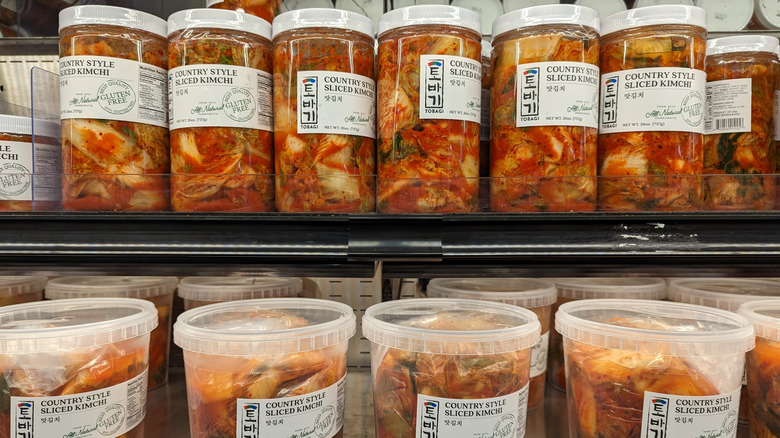
One important question is whether you want to purchase "fresh" or "well-fermented" kimchi. In her book, Ahn explains that "labels will not always specify 'fresh' or 'well-fermented,' so here are some clues to help figure it out: Fresh kimchi, which hasn't fermented much, will appear crisp and plump, with bright, vibrant colors from the seasoning." Fresh kimchi, she says, is great for eating "as is" in a banchan spread, and you could always let it ferment longer if it needs improving. On the other hand, "kimchi that appears lighter in color, less vibrant, and more pruned is very fermented. It's often on sale, and it's great if you want to use it now," she says.
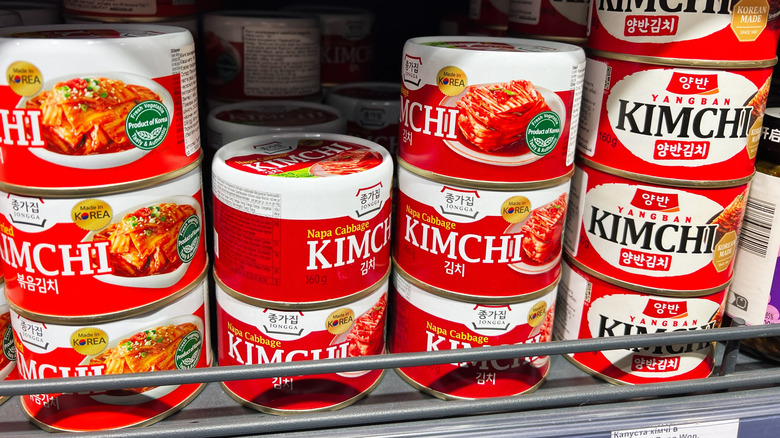
As for where to shop, "if you can, buy from a mom-and-pop shop that specializes in selling kimchi and banchan," Ahn advises. If your town doesn't have such a store, Korean grocery stores such as H Mart are a great option. "Many Koreans purchase kimchi from Costco as well," Ahn writes. "The brand they carry, Jongga, is pretty good."