

This Vintage French Dessert Is Simpler Than Expected To Make
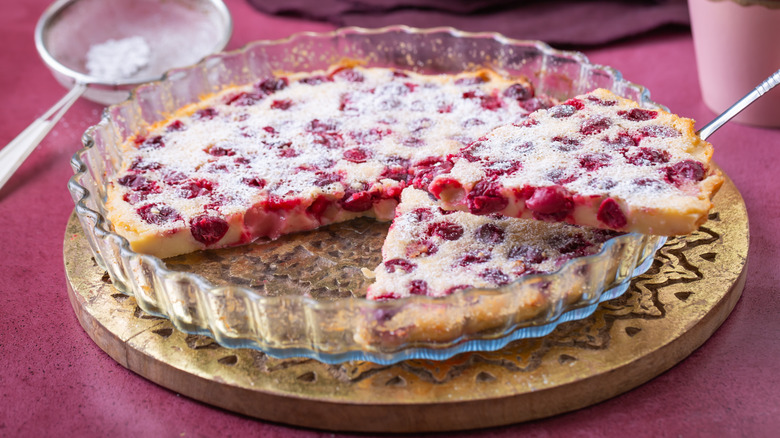
French sweets can be a time and effort commitment for home cooks: Just think of the finicky paper-thin pastry in mille-feuille, or the precision required to ensure your macarons don't collapse or explode in the oven. Yet there's one French dessert out there that won't test your attention span and cooking abilities: The classic clafoutis (pronounced "clah-foo-tea").
Roughly speaking, clafoutis is a sort of baked custard (think of the same ingredients as crème brûlée) or flan studded with fruit. However, some definitions vary — recipes often call for flour, so it may be more accurate to call it somewhere between a cake and a custard. In any case, it's much firmer than the average custard, so it can be served in slices and eaten like a moist, eggy cake.
A basic clafoutis batter uses flour, cream or milk, eggs (sometimes with extra yolks), and often ground almonds or almond extract. It comes from southern France, so it's often finished with stone fruit that grow in the same geographical region like cherries, peaches, and apricots. The batter is mixed together all at once, and poured into a baking tin with the fruit on the bottom (so when it's turned out, the fruit sits on top of the finished dessert). It can be baked in various types of baking dish (usually around 375 degrees Fahrenheit): Cast iron can be a good idea to ensure that heat is distributed evenly (although it can crisp up the edges), but plenty of recipes call for standard glass or metal baking pans.
Some background on clafoutis
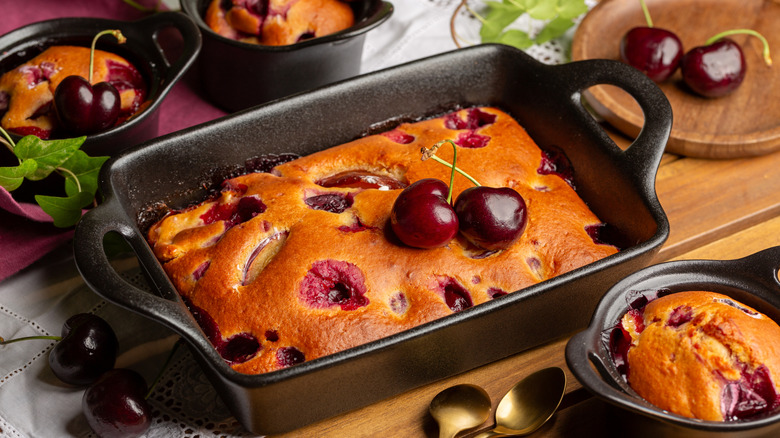
Clafoutis is a regional French dish, hailing from the Limousin region, in the country's rural southwest. The name comes from the word "to fill" in the Occitan language which is used in the area, referring to the way the dish is filled with fruit. It was traditionally a farmer's food, and was historically made with cherries as the primary fruit, as they are common in the area. (Their sour taste also provides a nice balance to the fatty cream and eggs.) The use of cherries means that it's historically seen as more of a summer dish, although if you're a fan of seasonal fruit, you can simply adjust it for fall flavors like pear, for example.
Speaking of adjustments, clafoutis is a dish that allows cooks to take a few liberties in its preparation — for example, some recipes call for vanilla extract for some extra depth, but it's not strictly necessary. The fruit is the most flexible part — while stone fruit are more traditional, you can experiment with anything from pineapple to pears or figs. Berries can be tricky as they're more prone to falling apart, although firmer varieties like blueberries can work fine. When it's ready to serve, you can also play around: A dusting of powdered sugar works fine, but you can get more elaborate with coulis or fruit sauces, or a little ice cream on top.