

Here's What Actually Happens When You Put Flour Down Your Kitchen Sink
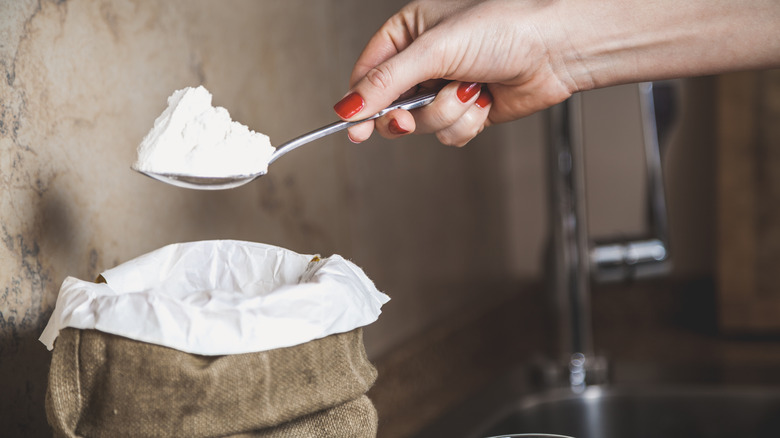
For those of us who like to avoid kitchen mess as much as possible, the garbage disposal feels like a godsend. When you finish a big meal or a baking project, you can just dump the leftover food scraps in the sink and let the drain do the work, right? Well, it's actually a little more complicated than that, and there are some foods that should never go down your kitchen sink, including flour. Maybe you've heard rumors that this baking staple can wreak havoc on your plumbing, but you're not totally sure why. For the inside scoop, Chowhound spoke exclusively to Igor Bystrika, owner and master plumber of RX-Plumbing & Drain.
"It can seem harmless to pour some flour down the drain, but once it gets combined with water, it turns into a sticky paste, like glue," Bystrika explains. "That paste then grabs onto any other grime that's in your pipes and easily creates a clog. Over time, it'll harden and really start messing with the flow of water going down your drains." Surprisingly, flour makes a great tool for polishing your sink, but it should never make its way into the actual drain. "In my opinion, it's worse than putting rice or coffee grounds down your drain," Bystrika says. Don't assume that an aggressive stream of hot water will wash away the issue, either. "That only spreads the paste further down the line, which can then cost more to repair since a plumber will have to use more serious methods to unclog it," Bystrika advises.
How to break up a flour clog yourself
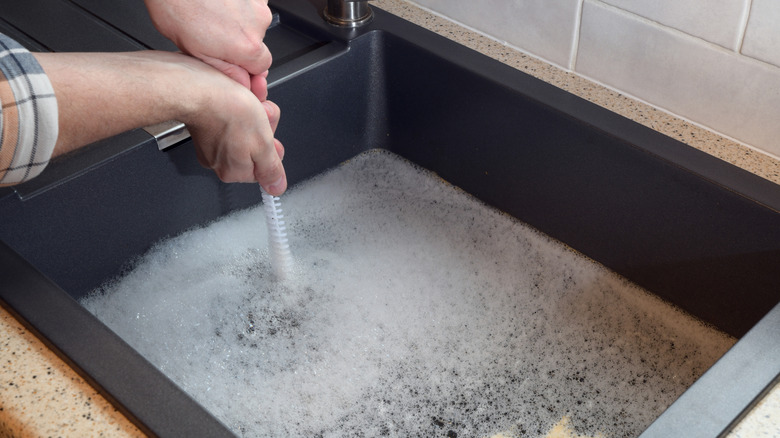
Unfortunately, clogs happen. Maybe you weren't aware of the consequences and poured too much flour down your sink drain, leaving you with a nasty blockage. If that's the case, don't panic. Igor Bystrika gave us his best tips for breaking up the clog on your own. "If the water's still moving slowly but hasn't completely backed up, you still might be able to break it up. One method I've recommended over the years is flushing the drain with very hot water," he says.
Warm up water on the stove to 140 to 160 degrees, mix it with dish soap, and slowly pour it down the drain. "The hot water can soften the paste, and the dish soap can break down the grease attached to it," Bystrika explains. However, there's a major exception to this method's effectiveness: "PVC pipes, which are in most homes built after the 1970s, may not handle that heat too well, so you could soften the plastic and cause even bigger issues," he says.
Only use water from the stove if your home is older, with copper or galvanized steel pipes. To be safe, if your home is newly built, Bystrika says to instead use hot tap water. Until the water gets hot, leave a large pot underneath the tap, moving it out of the way and letting the water directly hit the drain when it has fully heated up. As it flows, mix it with dish soap. "Be patient and let it work its way through," he advises. "Do a few rounds of this until you notice a difference, waiting 5 minutes between each round to let it work its way through if it's going down slowly."
Avoid making these mistakes with a flour clog
Say you've tried these methods and the clog is stubbornly persisting. Is it time to break out the harsh chemicals? Not according to Igor Bystrika. "Avoid using chemical drain cleaners, since they can do more harm than good," he says. Rely only on natural methods to clear up your drain, as chemical solutions like Drano don't fix the root of the problem, which causes more damage in the long run.
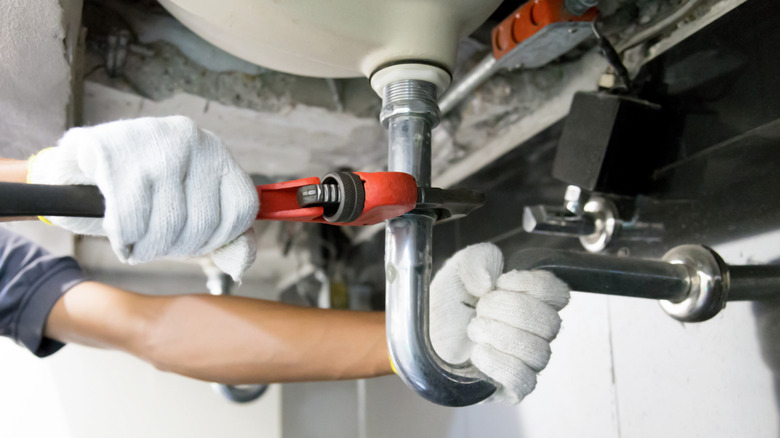
If all else fails, don't be afraid to call in a professional. "If the sink is totally clogged and your attempts aren't working, that's your cue to call a plumber," Bystrika says. "I've had customers try to DIY for days, only to make it worse and turn a small job into a bigger one." Don't be that guy — know when to cede control to an experienced plumber. However, don't let yourself get fleeced by ineffective workmanship, either. "Make sure the plumber will only charge you if they fix the clog," Bystrika stresses. "I've had customers call after another plumber couldn't fix the issue but still charged them for trying." Above all, now that you know the risks, avoid mixing flour and your kitchen sink drain entirely. "If you've got flour to toss, the trash can is always the safer bet!" Bystrika says.