

A Foil Pack Meal Is The Quick And Easy Cooking Method You Need To Try
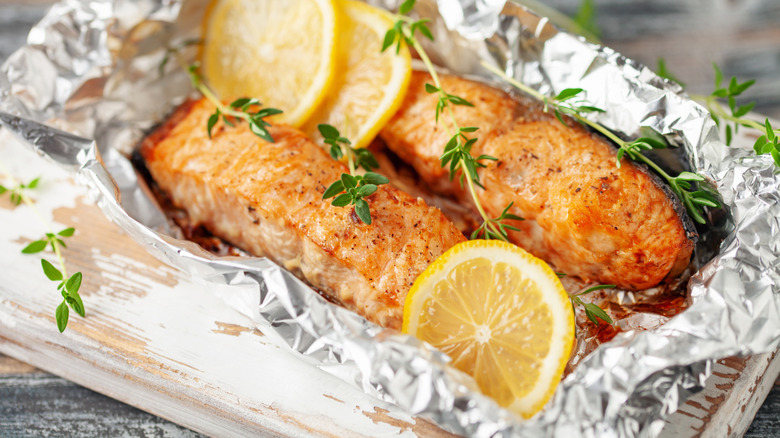
We already know aluminum foil is one of the most useful things you can keep in your kitchen, not just because it's great for helping contain mess or shaping into funnels, but also because it's a durable and versatile cooking vessel all on its own. You may have heard of cooking en papillote — a French technique that enfolds delicate proteins like fish together with veggies, citrus slices, and whole herbs in a parchment paper pocket to gently steam everything to perfection.
Aluminum foil packets are similar but more durable, which also makes them a more versatile choice. Since the food is fully enclosed inside the packet, moisture is trapped inside with heat, creating the ideal microclimate to cook fish to flaky perfection, roast potatoes, and steam veggies. That's why recipes like foil packet grilled cod and foil packet asparagus are among the most popular, because these are foods you'd steam anyway — this is just an easier way to infuse that steam with lots of flavor.
This cooking method is also excellent when it comes to food prep. Imagine having maple glazed salmon and steamed broccoli ready to go on a weekday night, or miniature peach cobblers ready to be heated at a moment's notice? They also make it easy to tailor to multiple palates or avoid allergen cross-contamination. Additionally, you can bake them, grill them, or toss them in a cooler and take them camping, as they're perfect for nestling into campfire coals to keep you fueled in the wilderness.
Tips and tricks for the best foil packet meals
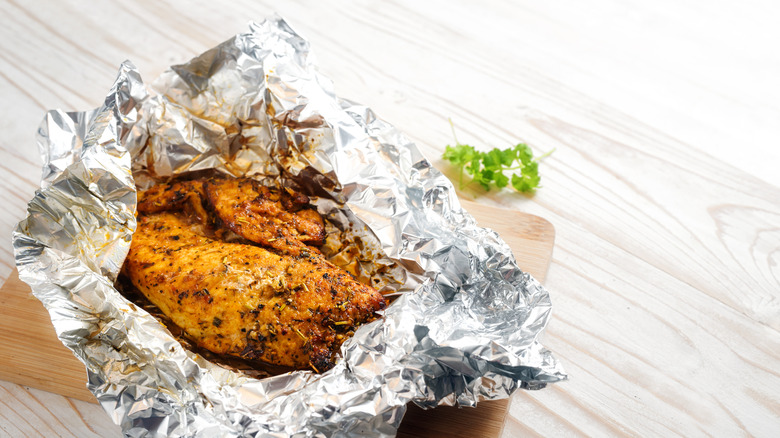
When building your foil packet meals, it's important to note that some foods respond better to this technique than others. Since the food steams instead of roasting, there's very little chance of anything getting crispy, so it's best to avoid foods that don't steam well, such as steak or mushrooms. Instead, opt for fish filets, cubed chicken, fully-cooked sausage or meatballs, and veggies that aren't too watery like asparagus, green beans, or cauliflower.
The second most important part of successfully making foil packets is using the right techniques to prep the food. The longer you cook a foil packet, the greater the chance the food will become soggy, so it's best to use thin filets of fish and cut things like chicken breasts and sausage into smaller pieces to ensure even cooking. Cube larger veggies, like potatoes and cut corn on the cob into quarters or even eighths, and avoid overstuffing packets by filling each with one serving of food.
Using these tips helps ensure your food cooks completely and is the right texture after about 20 minutes on a nice, hot grill or about 35 minutes in the oven at 375 degrees Fahrenheit. This is also a fantastic way to infuse your food with flavor, as the steam will circulate to help flavors marry. This goes for adding unusual seasonings to upgrade your salmon or packing halved peaches full of vanilla and brown sugar for a sticky, caramelized dessert.