

The Type Of Peanut Butter You Should Avoid Buying At All Costs
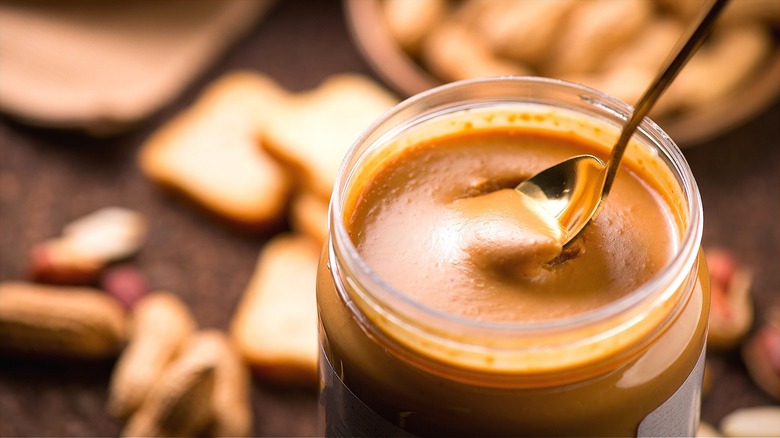
Peanut butter is a widely popular, versatile pantry staple with a multitude of uses in everyday cooking and eating. Specifically, if you've been planning to transform your next PB&J into the best French toast of your life, you may be thinking of ways you can make this meal more nutritious. However, whichever recipe alterations you decide to follow, avoid swapping out your jar of regular peanut butter for a jar that's labeled "reduced-fat."
While reduced-fat peanut butters may seem like a better choice on the surface, these spreads usually contain a multitude of added ingredients. Based on FDA regulations, in order for a product to be labeled peanut butter in the U.S., its contents must contain at least 90% peanuts. Unfortunately, most reduced-fat peanut butter varieties are labeled as peanut butter "spreads" since many options contain significantly less than 90% nuts.
That being said, to compensate for the lack of peanuts, most reduced-fat peanut butter spreads contain other ingredients, including but not limited to various sugars, corn syrup solids, and extra salt. By eating reduced-fat peanut butter spreads, you may be consuming less fat, but you're also compromising other facets of your health in return. Believe it or not, the primary fat in peanut butter, monounsaturated fat, is actually good for you when eaten in moderation. Conversely, excess sugar, sodium, and hydrogenated oils should be avoided. The taste and texture of reduced-fat peanut butter also leaves something to be desired.
More reasons to skip reduced-fat peanut butter
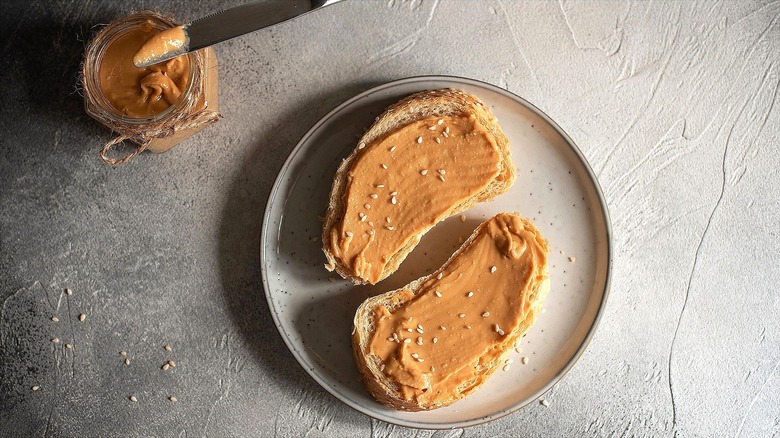
Given the fact that most reduced-fat peanut butter spreads contain added ingredients like vegetable oil and pea protein, their flavor is leveled out with excess sugar and salt. In turn, their taste is sweeter and more artificial. Instead of opting for reduced-fat peanut butter and consuming unwanted ingredients, natural peanut butter is made with only nuts and, occasionally, a small amount of salt. Better yet, natural peanut butter and reduced-fat peanut butter spreads both contain approximately 200 calories per serving. Luckily, if you'd rather buy a jar of the natural stuff, you have a plethora of options to consider.
At the grocery store, take your time choosing between the best and worst brands of natural peanut butter. Be aware of the peanut butter brands you should buy and the ones you should avoid. For example, brands like Adams and Wild Harvest are not only made with minimal ingredients, but they also win points for flavor and affordability.
To minimize any possible worries regarding fat consumption, try not to exceed two tablespoons of peanut butter per serving. A two-tablespoon serving of peanut butter contains roughly 8 grams of protein and 16 grams of fat, which is a well-rounded portion that can be added to any meal surrounding breakfast, lunch, or dinner.