

Bring Big Flavor To Your Seafood Stock With This Quick Tip
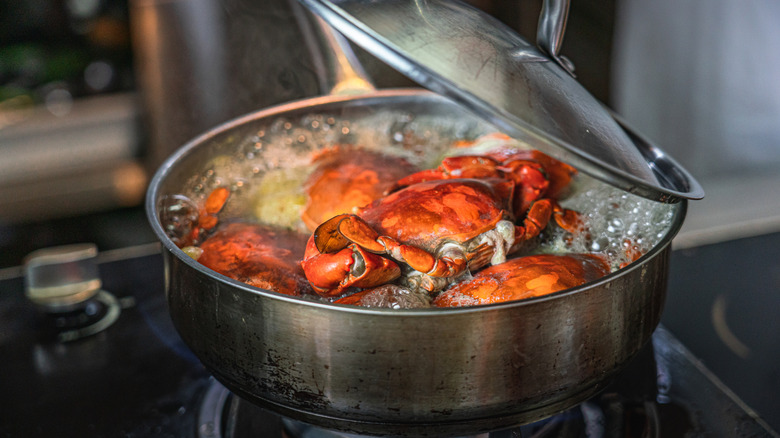
We all want that deep, briny flavor in our seafood stock — the kind that makes a shrimp bisque sing or takes a paella from decent to destination-worthy. If you wish to truly enhance the flavor of your homemade seafood stock, there's a simple upgrade that can change everything: Cook your shells before you add the water.
Yes, just like you would sauté onions, carrots, or celery in a soup base to build flavor, you can cook the shells to bring out even more flavor. This approach is surprisingly overlooked — most recipes tell you to toss your shrimp shells or crab remnants straight into a pot of water with aromatics, but that skips one of the easiest ways to bring serious depth to your stock.
Here's the move: Once you've peeled your shrimp or cracked your lobster, transfer the shells to a dry pot or Dutch oven over medium-high heat. Let them sit there for a few minutes, stirring occasionally, until they turn a deeper pink or rusty orange and start to smell intensely toasty and oceanic (in a good way). You're not trying to brown them like meat, but you do want a bit of color and that roasted aroma. That's what's going to deepen the flavor of your stock in the end.
Take your seafood stock from flat to flavor bomb

Why does toasting your seafood shells matter? Because just like toasting spices or searing meat, this step activates flavor compounds that otherwise stay dormant. You are driving off moisture, caramelizing bits of protein, and letting natural umami build up in the pot. When you add water afterward and scrape up any bits from the bottom, you are pulling all that toasty seafood essence into the liquid. It is like going from a watercolor wash to full oil-paint richness.
The best part? It only adds five extra minutes to your process but delivers big on payoff. You can do this with shrimp shells, lobster bodies, crab shells, and even fish heads and bones. (Just make sure your seafood is fresh — this technique amplifies flavor, and you definitely don't want to amplify bad seafood.) From there, you can build your stock as usual: Add your aromatics (think onion, garlic, celery, and a bay leaf), pour in your water, and let everything simmer gently. No need to boil — gentle heat will keep your stock clear and round. After about 45 minutes, strain your stock, and you have a base that is golden, rich, and layered.
Use it right away for that perfect risotto, seafood chowder, ramen, or even a quick pan sauce. Alternatively, freeze it in ice-cube trays for future flavor bombs. It's a game-changer for anyone who cooks seafood even occasionally, and once you've tasted the difference, you won't go back.