

Never Soak Your Wooden Cutting Boards In The Sink. Here's Why

Wooden cutting boards aren't just super-functional — they also look stylish and classic, and can add a bit of old-world charm to your kitchen decor. That being said, wooden cutting boards are a bit more temperamental than their less-safe plastic counterparts. Without proper care, wooden cutting boards are prone to warping, or even splitting.
It's important that you always wash your wooden cutting boards board right away — allowing it to soak can make it more prone to warping. No matter how tempting it may be when you're cleaning up the kitchen at the end of the night, don't ever put wooden cooking items, including cutting boards, in the dishwasher. The high heat can cause them to crack.
Failing to fully sanitize your cutting board is one of the most common cutting board mistakes — getting it right is key to preventing bacterial growth and cross-contamination. When hand-washing your cutting board, start by using a dough scraper or metal spatula to remove any stuck-on food from its surface. Then, immerse the board in soapy water, and give it a good scrub with a dish cloth or a sponge. Be sure to wash both sides of your cutting board, regardless of whether you've only used one. Washing only one side can result in uneven drying, which may warp the board.
When you're finished washing your cutting board, dry it thoroughly with a dish cloth (don't forget to dry both sides). Stand it up against the backsplash to promote air circulation, and don't put it away until it's fully dry.
More ways to help your wooden cutting board stand the test of time
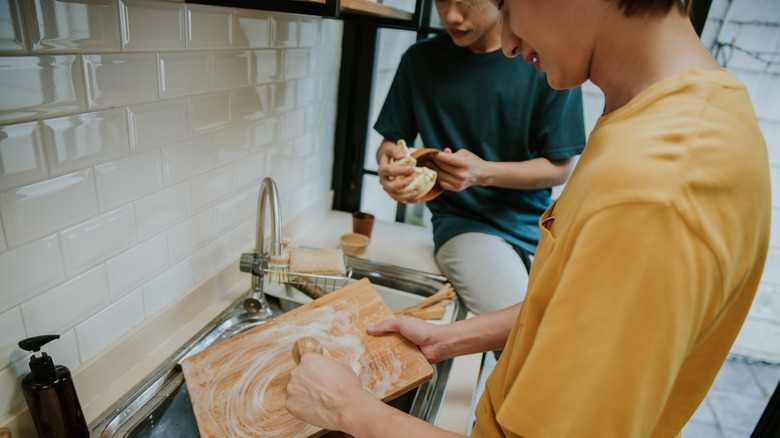
Over time, it's normal for wooden cutting boards to become dull and dry. Oiling and waxing your board regularly can help to extend its life. Oiling your cutting boards can protect against cracking (or, worse yet, growing mold in cracks that aren't quite big enough to see). To get started, you'll need to get your hands on some food-grade mineral oil (stay away from vegetable and other perishable oils, as they can go rancid and render your cutting board useless).
After washing and allowing your cutting boards to fully dry, apply a tablespoon or so of mineral oil, then rub it into the wood with a clean dish cloth. If you see excess oil remaining, remove it with the cloth. Allow your board to dry leaning against your backsplash, and repeat the process about once a month.
If you've recently cut up garlic, onions, or another pungent food, you may find that washing your boards in soapy water isn't quite doing the trick when it comes to removing the smell. Try sprinkling coarse salt over the board and scrubbing it with half of a cut lemon before washing and drying as usual to remove tough odors.