

How The Shape Of Your Pasta Should Dictate How You Cook It
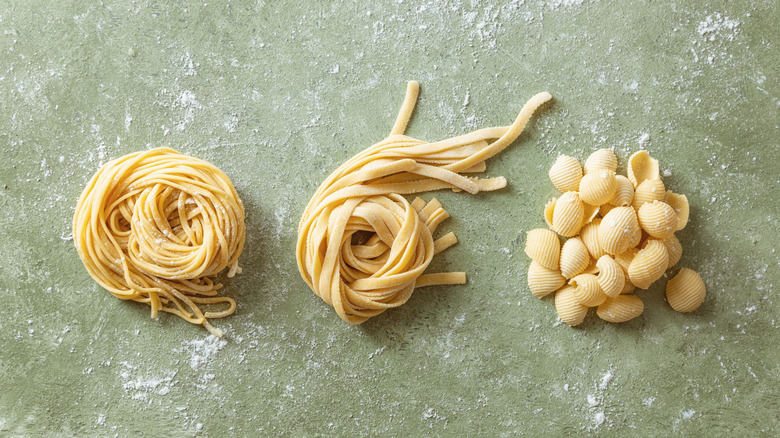
Do you ever just let your pot boil, toss in your pasta, and pray to the culinary gods that it works? That's essentially the idea, but it requires more thought than that — especially if you don't want to end up with a mushy mess that sticks together like glue. After all, not all pasta should be treated the same when cooking; you have to consider the shape. When Chowhound spoke with experts about common pasta mistakes you should never make, Nadia Minniti, an instructor at the Institute of Culinary Education and skilled Italian chef, mentioned you have to factor in the thickness.
For instance, something thin, such as angel hair, should be cooked for less time compared to something more firm-bodied, such as rigatoni. Whether the pasta is fresh or dried also has to be taken into account, since fresh pasta tends to be done in minutes. Of course, carryover cooking is also put into play since heat lingers in the pasta when you remove it from the pot and transfer it to a plate. How long the carryover cooking period lasts depends on the shape. Round-shaped pastas, such as elbow macaroni, retain heat longer because there's less space for heat to get out whereas flatter shapes, such as Pappardelle, have more surface area, so heat escapes faster. The best way to adjust to the carryover cooking time is to take the pasta out of the pot before it reaches al dente.
The best way to combine different pasta shapes
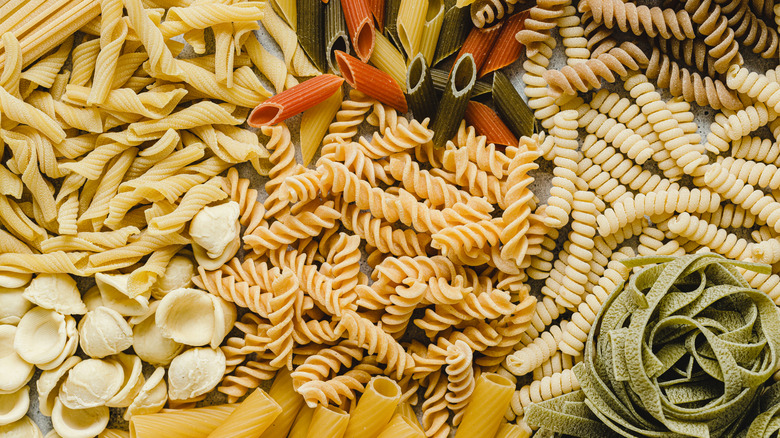
What does this mean for folks who like mixing things up and combining different types of pasta? You're free to continue enjoying your pasta mashups; that's actually the spirit of pasta mista, a dish that mixes a variety of pasta shapes (usually five) to avoid waste. However, you have to be strategic about it by putting together those with the same cooking times. For instance, mixing spaghetti, elbow macaroni, rotini, and egg noodles in one pot can work because they all have an eight- to 10-minute cooking time. Keep in mind, though, that cooking with a small pot is one of the worst ways to make pasta; it's best to invest in a bigger one if you're planning on making a hearty serving.
If you have a couple of pasta types on hand with different cooking times, you can toss in the ones with shorter cooking times later. For instance, penne has a nine- to 13-minute cooking time, while rigatoni takes 12 to 15 minutes; you can throw in the penne after the rigatoni has been cooking for three minutes. Both pasta types are great with cream sauce, too, so whip one up to enjoy them in their full glory.