

When To Use (And Not Use) Warm Cake When Making Cake Pops
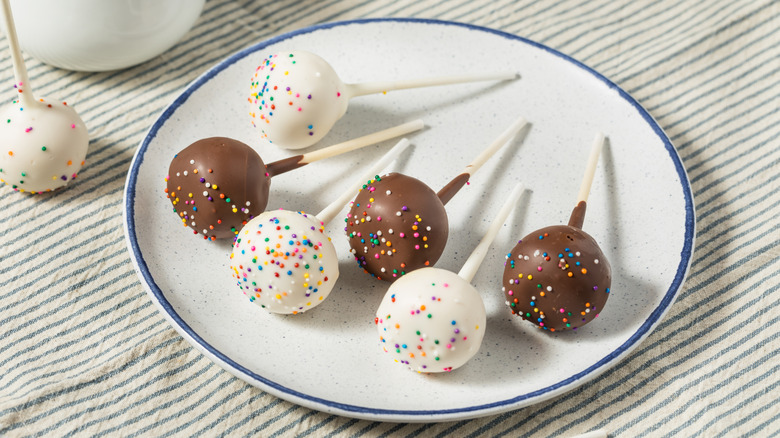
If you reveled in the artisanal cupcake trend that dominated from the late 2000s to the early 2010s, you likely also enjoyed the ubiquitous popularity of a cute, convenient, and very tasty dessert that appeared around the same time — cake pops. Invented in 2008 by innovative baker Angie Dudely (aka Bakerella), these adorable little treats on a stick quickly took social media by storm, "popping" up in cafes and bakeries, and even making their way into home bakers' go-to stash of simple and delicious recipes.
One good reason for this is that cake pops are deceptively easy to make with tasty and impressive-looking results — and they're endlessly customizable. From classic vanilla to fudgy brownie cake pops, there's really no wrong answer when it comes to choosing what kind of cake, brownie, or blondie forms the filling. After that, it's a relatively simple matter of rolling the filling into uniform balls, spearing them on cake pop sticks, and decorating.
Of course, as with any trendy dessert, there's some debate about the best technique to use. If you're talking cake pops, this debate comes down to forming them from warm versus cool cake, and which produces the best results. While warm, cake is almost dough-like from the steam trapped inside, making it easy to roll into spheres that are purely cake, and nothing else. When using cooled cake, it's necessary to add frosting as a binder to moisten the cake enough to mold it, while adding frosting to warm cake would just create a gloppy mess.
The pros and cons of each technique
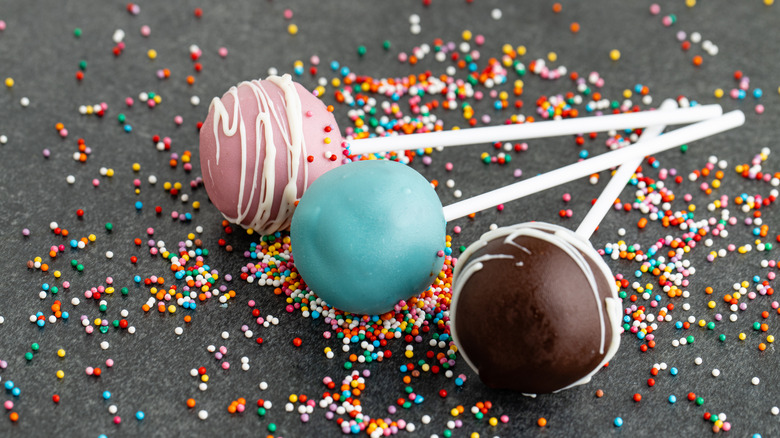
While both the warm and cool cake methods produce tasty, tender cake pops, it's important to choose the right technique for your preferences and situation. Some people prefer the warm cake method because it creates cake pops with a gorgeously fudgy interior that isn't too sweet, meaning additional sugary decorations like a mirror glaze and sprinkles won't overpower the nuances of flavor in the dessert.
However, throwing together cooled cake scraps and leftover frosting is one of those store-bought frosting hacks that prevents food waste and helps mask the tinny flavor of canned frosting by disguising it inside delicious cake crumbs. The cool cake method is also great for making a semi-homemade dessert on the fly — just pick up a tasty chocolate sheet cake or high-quality grocery store carrot cake, your favorite frosting, and some sticks to create a fun treat for an impromptu celebration.
If you're a cake purist who prefers the homemade dessert over the selection offered by your grocery store bakery, the warm cake method is the way to go, especially if you're short on time. Cooling a cake completely can take several hours, and even a little heat will melt your frosting binder and cause the cake pops to fall apart. Meanwhile, the warm cake method allows you to mash, mix, and mold your cake straight from the oven. The balls may still need to cool completely before you can decorate them, but you can prep your finishing touches while they chill.