

Wait, Are Candy Cigarettes Banned In The US?
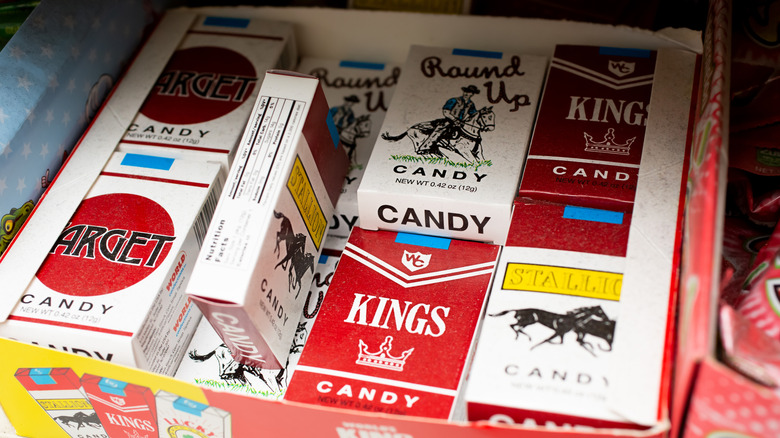
Candy cigarettes have a scandalous history. They were once a popular confectionary item sold in many stores across the country before the dangers of smoking came to light around the middle of the 20th century. Youngsters would mimic adults by "puffing" on the chalky sugar sticks and parents would chuckle; they didn't yet realize that smoking was problematic. Things changed when society became aware of the potential health risks, and parents no longer wanted their impressionable children picking up a pack of candy cigarettes that looked strikingly similar to the real thing. However, despite being banned in many places today, they're still available to buy in the United States.
While their resemblance to actual smokes got them outlawed in North Dakota in 1953, the ban was eventually repealed a little more than a decade later in 1967. Some countries, including Canada, England, Ireland, Norway, and Brazil, have stopped selling the controversial candy, but you can still find them in the states — they just aren't marketed as cigarettes. They've been marketed simply as "candy sticks" since the 1970s, following the consideration of a national ban. There is no mention of the word "cigarette" on the boxes sold in convenience stores today, but the boxes themselves still mirror the look of a pack of cigarettes. If you buy them online, the description even still dubs them candy cigarettes. Instead, consider buying the candy originally invented to help smokers quit.
Do candy cigarettes encourage kids to smoke?

According to some studies, candy cigarettes have led to more young people smoking. One 2000 study published in the British Medical Journal reported that children who have used candy cigarettes were more likely to become smokers down the line. An earlier study conducted in 1990 (and reviewed in the BMJ study) found that candy cigarette use made kids twice as likely to grow up to be smokers. In fact, cigarette manufactures in the 1930s and '40s saw candy cigarettes as advertising for future smokers. They were happy to let confectionary companies use their packaging designs.
During the '60s, the National Automatic Merchandising Association Special Committee on Cigarette Vending urged tobacco manufactures to stop letting candy manufacturers sell their products in packaging mimicking cigarette packs. While some companies listened, others ignored the committees' concerns and even declared that they had never authorized candy manufacturers to use their designs. Even when "cigarette" was removed from the packaging, though, children shown them during a 1991 study (also reviewed in the BMJ study) still associated them with cigarettes. They're definitely not one of the classic candies from the '70s we wish we had back.