

The Best Way To Pick Oregano So It Keeps On Growing
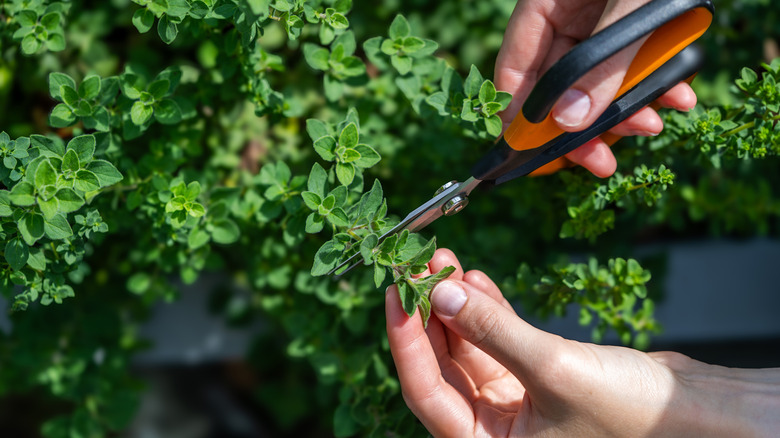
Oregano is one of those garden herbs that flourishes when cut properly, and bounces back more abundant after each cut. With the right tips, you can even grow herbs right in your kitchen, but you should learn how to cut oregano properly. Think of your plant like a friend you want to keep around: only take what you need, and leave enough behind to allow it to grow back strong.
This is the simplest technique for cutting oregano: rather than randomly snipping off leaves on your plant, take a small bunch of stems in one hand, approximately the size of a pencil. With sharp, clean scissors (you must avoid blunt blades as they cause plant bruising), cut each stem two-thirds of the way down. The goal here is to leave behind at least six sets of leaves under your cut. These clusters of leaves become the de facto top layer, which the plant needs to capture sunlight and heal. By leaving the bottom leaves on the stem, your oregano plant will be actively photosynthesizing and therefore not slowing down its momentum.
Cutting too low down to the base shocks the plant, making it build from scratch again; cutting higher will help grow bushy side shoots from that single stem. Instead of thinking of it as a "cut," think of it as giving the oregano a "haircut," because it will grow back.
Techniques and timing for maximum freshness
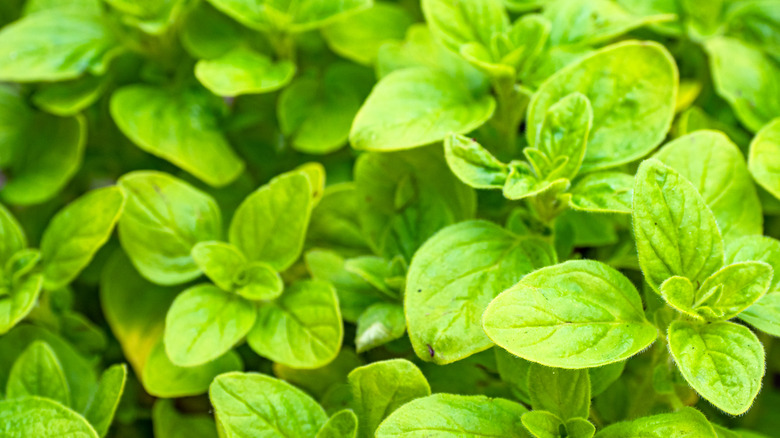
No matter the type of oregano you're working with, when you harvest is just as important as how you harvest. The best time is mid-morning, after the dew has dried but before the sun heats up. This time of day is when the oils in the oregano are highest, leaving you the best flavor in each leaf. After cutting, give the stems a fast rinse under cool water to remove any dust or bugs, then pat them completely dry with a towel. And speaking of water, remember not to overwater or underwater your herb, as that's a common mistake that ruins oregano. Excess moisture can lead to mold, which shortens the shelf life of your harvest.
When the time comes to store your oregano, take the stems and wrap them loosely in a barely damp paper towel. Place them in a zip-top bag and put them in the refrigerator. The paper towel will keep the leaves crisp for around a week at a time, so you'll have them on hand for elevating pizzas, pasta, or salads. Remember, do not harvest more than a third of the whole plant at once — doing so stresses your oregano plants and slows their regrowth. Your oregano should be a low-maintenance workhorse in your kitchen: always available within easy reach with maximum vigor and productivity.