

Induction Vs Gas: Which Cooktop Makes Water Boil Faster?
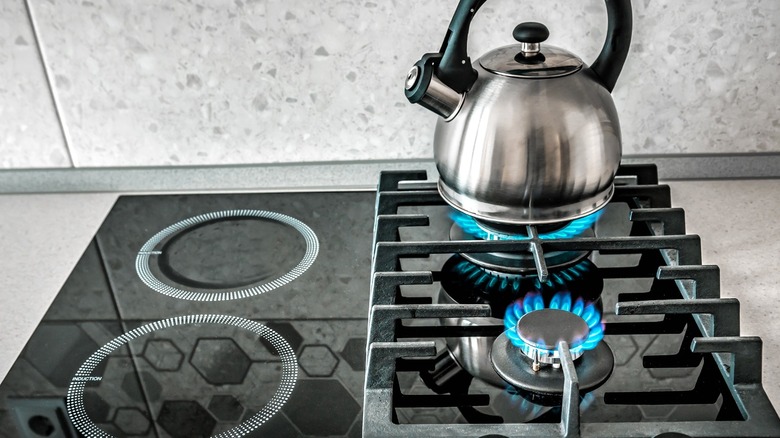
Vintage kitchen trends are coming back, but that doesn't mean every appliance should be living in the past. The refrigerator replacing the icebox helped prevent its share of food poisoning cases due to improved cooling technology, and the gas stove proved to be much less hazardous than keeping a coal burner in the house. But in 2025, it might just be the end of an era for our old gas-fired friends.
New induction stovetops tend to outperform gas when it comes to heating food. They can boil water quicker because they're electricity-based appliances that use a magnetic field to transfer energy from the stove to the pot. Fire will heat anything in its path, but only certain objects can receive these magnetic signals. For example, bread over an open flame burns, while bread on a bare induction stovetop won't toast at all. Induction relies on ferromagnetic cookware, making it faster and safer to handle.
This magnetic feature is induction's biggest pro and con when it comes to cooking. Aluminum, ceramic, and glass cookware won't heat up, but neither will hair or fingers, which is a major safety feature. Thankfully, you can still use most stainless steel and cast iron cookware. These pans absorb and retain heat, so they still need to be handled with care. Nonetheless, induction stovetops save time and prevent fire hazards.
Why some cooks prefer induction to gas (and vice versa)
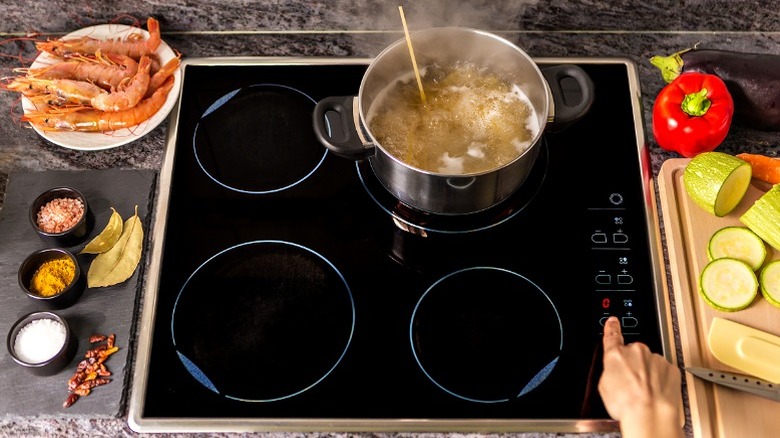
For the average forgetful home chef, induction cooktops are a boon thanks to their safety features. However, some professional cooks remain divided. Anyone who has spent a lot of time in the kitchen has built up an intuitive sense of how to use their home base. With gas stovetops, it's possible to hear, feel, and see the heat. This is optimal for high-heat stir-frying and sautéing techniques that require precise knowledge of when to leave the pan on and off the burner. Additionally, there's a learning curve to getting comfortable with a new button-based setup rather than a knob-based one.
According to the U.S. Department of Energy, induction ovens are more energy-efficient than electric and gas stoves, meaning you may save more on power bills. Induction is also cleaner than gas, which releases pollutants linked to childhood asthma. A report by We Act for Environmental Justice found that gas ranges emitted more nitrogen dioxide and carbon monoxide than induction, noting that this was a point of concern for groups disproportionately affected by respiratory diseases. Induction stoves often have a higher initial cost, but the home health benefits may be worth the investment to those who spend hours at a time in personal or professional kitchens.