

Gordon Ramsay's Easy Tip For A Better Prepared Steak

We may receive a commission on purchases made from links.
Given how expensive some cuts of steak can be (chateaubriand and filet mignon premier among them), you can't really blame anyone for trying to orchestrate the best possible outcome. Sure, you could toss 'em on the grill or stovetop and hope that cattle chance is in your favor that day. Or you can do as the pros (and plenty of home cooks) do, and arrange the optimal conditions for your personal best beef. One of celebrity chef and "idiot sandwich" christener Gordon Ramsay's steak-maxxing techniques takes advantage of the earth's atmosphere for a little nudge toward success.
Peruse a few of Ramsay's steak-making tips and you'll see that getting those bone-in ribeyes and sirloins out of the refrigerator and closer to room temperature before firing is key. "The foremost important part is to make sure we take them out of the fridge 20 minutes before you actually start cooking them," Ramsay says in a clip posted to YouTube. "Cooking a steak that's stone cold in the center, you're gonna have to overcook it on the outside." Some of your steak's expertly paired wine varieties can be decanted to breathe for around the same time for peak efficiency.
Here's how to cook those room temperature steaks
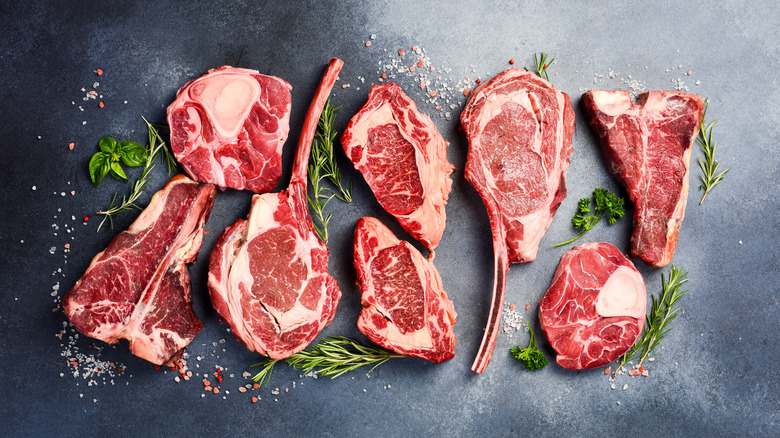
Once your steaks are primed for even cooking, there are abundant cooking paths to follow. Much like his tried and true temp trick, you'll often see Gordon Ramsay liberally seasoning his steaks with salt and pepper before they hit a very hot, oiled pan. He leaves them to sear without much interference so that they can develop a nice crust and color. Quick-cooking alliums like garlic and aromatics like thyme go in a little later before a butter baste brings it all together.
Your cooking time will vary based on your steak cuts and their thickness. A food thermometer like ThermoWorks ThermoPop 2 is the best tool for reaching your ideal steak doneness. We typically take the meat off the heat once it hits about 125 degrees Fahrenheit and allow for carryover cooking to bring it up to a rosy medium rare. The fine folks at the U.S. Department of Agriculture, however, prefer to bring beef up to 145 degrees to align with formal safety recommendations.