

Here's How Often You Should Really Be Watering Your Veggie Garden
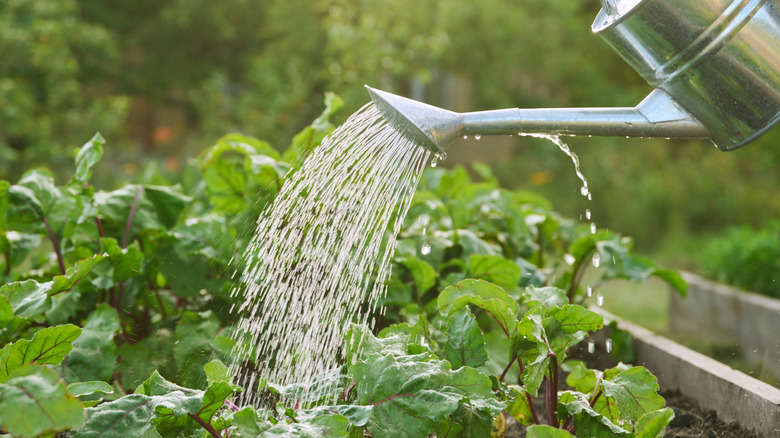
Vegetables are wonders of transformation, converting nothing but sunshine, air, water, and dirt into nutritious, flavorful little gems in a matter of weeks. And while the sunshine, air, and dirt are always going to be there, sometimes it's up to us to make sure the water is in regular supply. But if your thumb isn't quite the shade of green you'd like it to be yet, knowing how often to water can be an intimidating conundrum. Your neighbor might have a thriving garden they only water once a week, while you follow along only to produce shriveled things with undersized fruits. That's because even right next to each other, different gardens can have different levels of water retention.
If you want a quick answer for how often to water your plants, take a look at your soil. And not just on the surface level. You need to check what's happening closer to the roots. If you prod a few inches under the surface, is there dry soil down there? It's time to water. Still moist? Leave it be. But when it comes to predicting when that time might come, you need to keep a closer eye on the weather, and know what type of soil you're planting in. And you can get testing right away with just a Mason jar!
Making your way around different soils
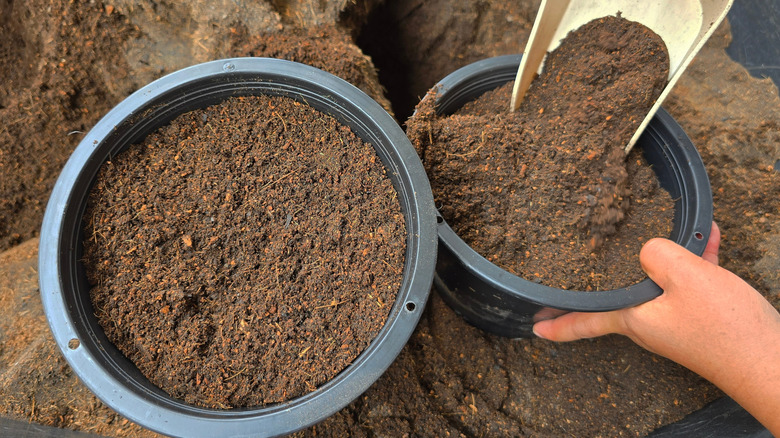
To the untrained eye, all dirt is the same; brown and uh ... dirty. But there are a few different types of soil, and their composition will effect how long any water passing through can be retained so that it's available for your plants to drink. The best type of soil to work with is loam, which is a blend of sand, silt, and clay. The dirt in your backyard is probably not naturally loamy, but sandy or clay.
Sandy soil has a gritty texture, and drains rather quickly. It needs to be checked more often, and may need twice as much water as other soils. You might think, "I'll just water every day, then!" But you can kill your plants with too much water too, especially in clay soil. Dense, sticky clay holds moisture well, but can drain so slowly, the roots will be deprived of oxygen. The plants will drown and rot, from the bottom up. Commercial garden soil can help the balance of your beds, whichever way they skew.
If poking your finger in the soil to check moisture is a slog, and you get a decent amount of rainfall, set up a rain gauge, or just put out an empty can to track rainfall. A healthy garden needs about an inch of rain per week. If you live someplace prone to excessive rainfall, a raised bed can help keep your soil properly drained. And for more beginner gardening tips, check out this list.