

The Biggest Mistake Everyone Makes With Coleslaw Is The Easiest To Fix
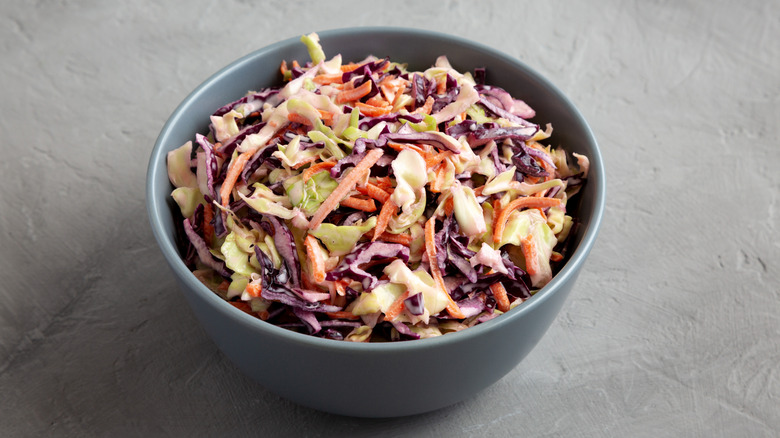
For something that is so often found in teensy-weensy paper cups alongside tuna melts at diners, paired with hot dogs at roadside stands, and jammed into baskets at barbecue spots, coleslaw can be quite the artful little side. Celebrity chefs like Bobby Flay have their own proprietary coleslaw recipes, there is a whole litany of ways to dress up the classic cabbage dish, and you might even be surprised by how many relatives have stealth preparations worth passing down through generations. That's why it might not come as a surprise that the biggest mistake you can make with coleslaw is to not actually make it at all.
Yes, we're talking about taking a coleslaw shortcut with the bagged stuff. Although store bought is, in a lot of cases, famously fine, it just doesn't cut it in this case. The leafy greens and carrots in those plastic packs are often already losing their color while they're still on the grocery store shelf, and, as such, they never quite have the crisp snap that they would if you'd just shredded them yourself. And DIYing it couldn't be easier.
Making fresh coleslaw at home
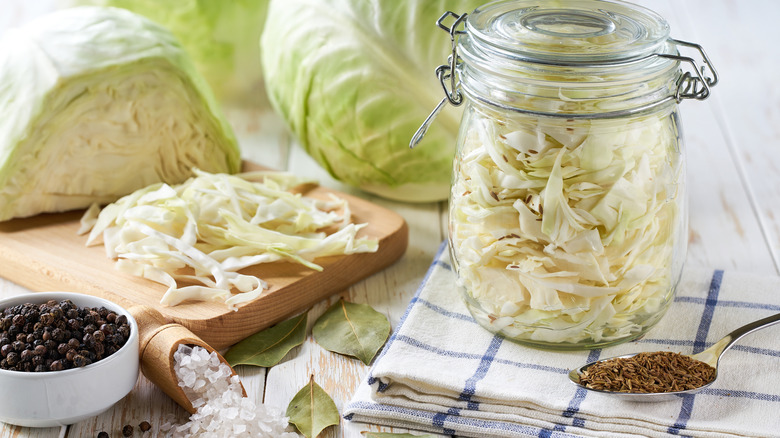
Cabbage, usually green, is compulsory for a classic coleslaw, carrots typically follow closely behind, and plenty of preparations also include onions, all thinly sliced. We like to toss some red cabbage in, too, for just a little extra crunch and aesthetic appeal. You can also go nuts with add-ins like scallions, caraway seeds, or pepitas. Regardless of how you want to jazz it up, however, the cabbage should be the most prominent ingredient. A handful of those extras will do.
This is also an easy dish to eyeball in terms of proportions. About a half-head of cabbage and add-ins to scale is plenty for picnic table-sized groups. Some kind of dressing is also required, and a lot of recipes call for a mayo-based mix. You can also swap that emulsion and dress your coleslaw in honey mustard. The veggies are already plenty sweet, so you might want to use a light touch in that latter case. It's best to let everything mingle together in the refrigerator for a couple of hours before serving, and you can store it there for a few days, too.