

The Absolute Best Place To Plant Sage In Your Garden
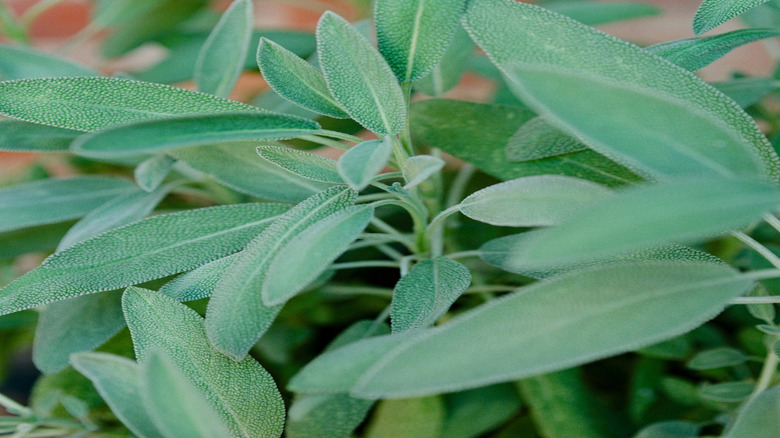
Whether it's for breakfast sausage, turkey gravy, or brown butter gnocchi, fresh sage is the star. But you usually only need a sprig or two, and it's tough to make your way through a whole grocery store bundle before the leaves start to brown. Wouldn't it be nice to grow your own so you can harvest it at its freshest, however much you need, whenever you need it? To make sure your sage grows as healthy as it can be, plant it in a sunny spot with well-drained, neutral pH soil.
If you live in the United States, you can find which plant hardiness zone you live in at the USDA website. Sage grows from spring to fall in zones 5 through 8, lying dormant in the winter to return every spring. The plant prefers full sun, but too much humidity can cause it to struggle. Sage is particularly prone to mildew, which can flourish in the damp air. Even if you live in sage's climate sweet spot, be sure to plant the herbs with enough space in between them for plenty of air circulation to discourage mildew, and prune them as they get thick. And if you don't know what to do with your clippings, here's our guide to cooking with sage.
Everything about sage's favorite soil
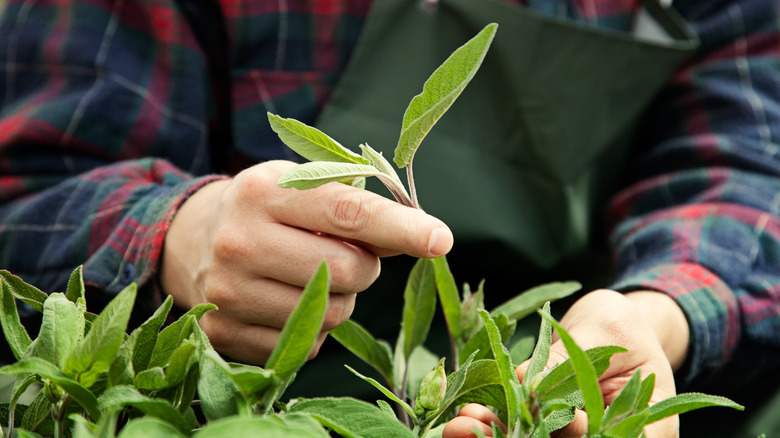
Sage loves soil that drains well, so don't just stick it in a pot of dirt from your backyard, which is probably too dense and claylike. A raised plant bed filled with a mix of potting soil and compost or yard clippings can provide the drainage needed to keep the sage from getting waterlogged. You'll also want to check your soil's pH level, but fear not. There's no need to break out a fancy kit when it comes to sage. It is one of the easiest herbs to grow in your garden, after all.
Sage does best in soil with a pH level around 7, which is neutral. Not too acidic, not too basic. These conditions allow for maximum nutrient absorption in the herb's roots. And you can test it with items you already have in the kitchen. Scoop 2 tablespoons of your soil into ½ cup of vinegar. If it fizzes, your soil is basic (alkaline) and above a sage-friendly pH level of 7. If it doesn't fizz, take another 2 tablespoons of soil mixed with distilled water, then mix in ½ cup of baking soda. If there's no fizzy reaction again, congratulations! Your soil isn't too acidic, either. It's neutral, and your sage will be right at home in there. If there's any fizzing on either end, you may wish to invest in a professional soil test to find the specific level.