

Mason Jars Can Be Airtight If You Do This
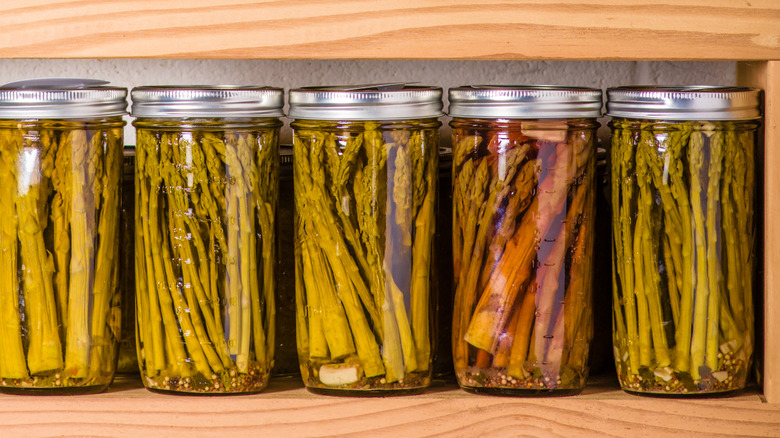
Over the years, Mason and canning jars have become understood as interchangeable, though this is not the case. Fit-for-canning Mason jars are usually composed of soda-lime glass and designed specifically for this process, thus making them heat-resistant. This type of jar has a unique screw-on lid system; therefore, these can be used for at-home canning, as they are secure and durable. Improperly sealed jars can amount to spoiled food at best and serious health risks at worst. Thankfully, there are some telltale signs to look out for when determining if your canned goods have spoiled.
Water bath canning utilizes boiling water to develop an environment where high heat kills off bacteria and establishes a seal. On the other hand, pressure canning works via steam and heavy force to make jars airtight. Vacuum-sealing also offers another way to preserve your food, but it's worth noting the differences between canning and vacuum-sealing in order to determine which method is best for your projects.
It's important to consider the type of jar you're using and double-check that you've got access to all required materials. Just because a container has a likeness to a Mason jar doesn't mean its additional elements are suited for canning. In addition to the jar itself, you'll need a single-use lid that includes a thin rubber ring. The second component is an additional metal band that notches onto the rim of the jar itself, this piece is designed to be reused. Mason jars are not inherently airtight, but common elements, which include a gasket or soft material, alongside the process of canning or pressurizing, can create an airtight product.
Not every Mason jar is fit for this purpose
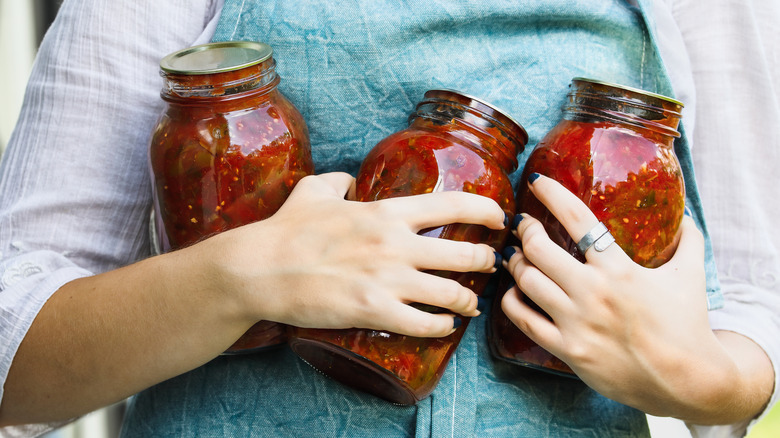
A canning jar could be a Mason jar, but not every Mason jar is safe for canning. A jar's suitability comes down to a number of factors, one being the shape and size of your jar, its age, the type of glass it's made from, and how it's been treated. Definitely be sure you note the type of jar and acidity of the contents, as well as how much water you need for safe at home canning.
Ensuring your materials are in pristine condition is also very important, as chips on the rim or improperly fitted lids will create the risk of your final product not being properly sealed or able to withstand the duress of a water bath. You'll need to take precautions when deep cleaning and sterilizing all materials (improperly cleaned tools can lead to unwanted bacterial growth and spoilage). Next, you'll add in the ingredients you plan to can and heat the jar in a water bath or utilize a pressure canner to create the seal.
You'll be able to achieve shelf-stable products so long as you properly ensure the seal is intact and airtight. Attention to detail is necessary in ensuring the prevention of unwanted bacterial growth and other unsavory outcomes that could ruin all of your hard work or make you sick.