

Will Mint Grow Back In Your Garden Every Year?
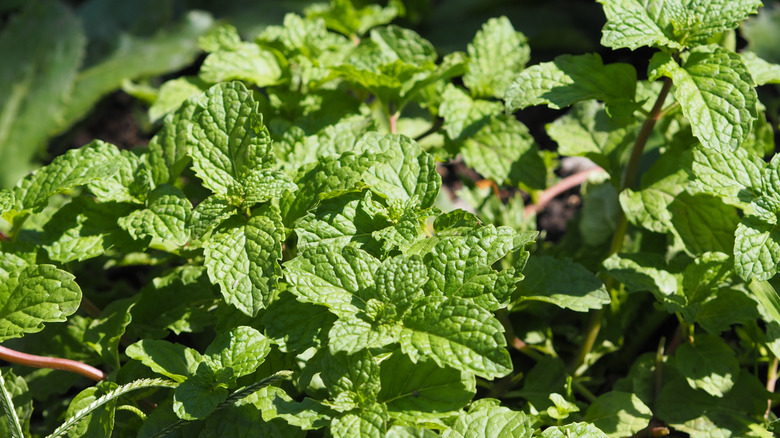
Mint is an herb in the Mentha genus, meaning in most cases, it is a perennial. For those who are working on their gardening expertise, this means it's a plant whose roots are particularly adept at enduring difficult seasons and weather changes. Simply said, mint will indeed return repeatedly. You may be amazed to know that it can get through heavy winters, only for you to find it slowly poking out as spring returns and the snow melts.
Mint is a type of herb with many varieties, some of which include spearmint, peppermint, as well as more unexpected ones like chocolate and apple mint. Ultimately, what you need to know is that most varietals, though different in appearance and taste, will still maintain that similar sturdiness against the elements, all ready to reappear once the birdsong of spring returns — if, that is, you know how to manage your mint plants.
How to manage mint growth in the garden
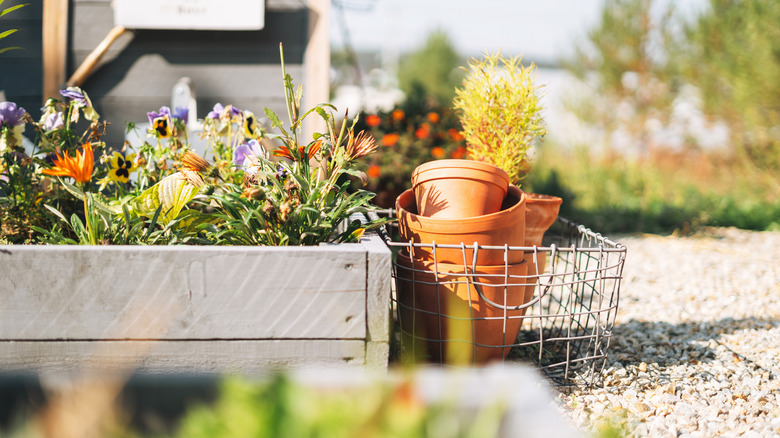
Mint is known for its tendency to invade other plant growth and overwhelm less hearty parts of the garden. This is important to keep in mind when planning out your planter boxes. The main reason why mint is able to spread so quickly, be it for better or worse, is because of its rhizomatic structure. Its roots grow in a horizontal pattern, creating vast underground networks that its foliage blooms out from as seasons change. Therefore, if you're looking for a balanced garden, mint could become difficult to manage if you're underprepared.
One way of mitigating this issue is by planting mint in a pot; you can also then plant this in your garden instead of letting the unhindered roots run amok. If you already planted mint directly in the bed and have overgrowth, try separating the new growth and planting it into separate planters if you wish to keep it. You can also try inhibiting mint's spread by planting it in a garden area with suboptimal growing conditions, such as in dry soil or around physical barriers like stepping stones (to address spread above ground, in the latter case).
It is also worth noting that above-ground plants have a harder time sustaining themselves as opposed to in-ground due to the extra cold exposure. So, when the temperatures drop, bring inside any potted mint that isn't buried in the soil. Trim it and move it to a new pot to give it the best chance of coming back in the spring. Then, once you've gathered your bounty for the season, you can always preserve it for various recipes down the line with these tips for drying and storing fresh herbs.