

Galangal Vs Ginger: Can You Substitute One For The Other?
We may receive a commission on purchases made from links.
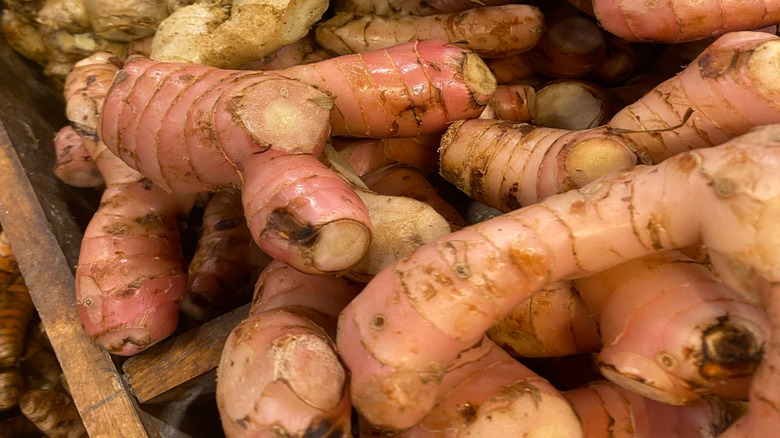
Upon first glance, galangal and ginger may appear strikingly similar, both displaying a knob-like, tuberous root structure, a brownish skin, and pale, fibrous flesh. In fact, an alternate name for galangal is "Thai ginger." Their similarities don't end there. They belong to the Zingiberaceae family, a family of flowering plants and aromatic herbs that are frequently used in cuisines spanning Asia. Both are typically sliced, minced, or grated into a variety of traditional dishes, infusing every bite with bold, aromatic notes. Despite their somewhat close relation and culinary applications, there is enough to set them apart that makes swapping one rhizome with the other a tad tricky, depending on what you're making. Flavor-wise, ginger is less intense than galangal, featuring peppery, mildly spicy, subtly sweet, and warming notes. Galangal has a much sharper, citrusy flavor, with deep, earthy undertones.
If you are an avid connoisseur of curry, you may notice significant differences between Indian-style and Thai curries. In addition to other core ingredients, the former utilizes the slightly pungent ginger, while galangal is a key component in Thai cuisine. So, what happens if you're in the middle of a recipe and realize you only have one or the other on hand? Because of the notable differences in flavor profile, when swapping one for the other, you run the risk of either serving a dish that falls short, with muted flavors, or one that is aggressively overwhelming. However, some culinary hacks can come to the rescue, ensuring that your finished recipe hits the spot.
How to replace ginger or galangal in your recipes
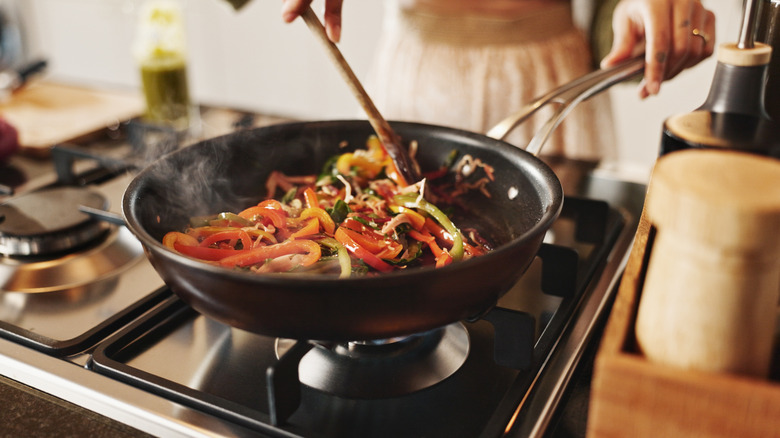
If you don't have galangal but you're in the midst of cooking a Thai-style curry, Indonesian-inspired stew, or a Vietnamese sauté, you may need to improvise. Ginger is a suitable swap, especially with added reinforcements from lemon juice to more closely mimic galangal's citrus-forward notes, or turmeric and black pepper for an earthy bite. (Use three to four times more ginger than galangal called for.) That said, if you're curious to cook with galangal, check out your local Asian store, or shop online for products like Soeos' galangal powder, which is ready to use in soups, stews, teas, and more. Ginger, on the other hand, is easier to find at any conventional grocery store in the United States.
Cooking with ginger requires attention to detail for maximum flavor. For instance, your choice of ginger at the store can impact the flavor of the final product. A mature root is likely to be more fibrous, pungent, and potent, while younger ones are more palatable and milder in flavor. Out of fresh ginger? The next best thing would be ground ginger. A little goes a long way, as ground ginger is more potent than its fresh counterpart.
Other reasonable replacements in savory dishes include horseradish and sometimes even wasabi, as these ingredients can deliver a warming kick. Using galangal in place of ginger makes the dish more bitter and bolder, which may pass in savory stir-fries but not for sweet preparations or recipes that require a careful balance of flavors. For any ingredient swap, the best route is to start small and gradually build on the flavors for a well-rounded meal that satisfies your tastes.